

Choosing between A325 and A490 fasteners is one of the most consequential decisions structural engineers and contractors make during the pre-construction phase. While both fall under the high-strength structural bolt category, their performance profiles, material compositions, and cost structures differ significantly. In the world of structural steel, selecting the right fastener is not merely a technical requirement; it is a strategic decision that impacts project timelines, safety margins, and the bottom line.
At LRKD Industries, we recognize that every connection in a high-rise building or a bridge represents a critical point of integrity. Understanding the nuances between a325 tension control bolts and a490 bolts allows professionals to optimize their designs for both strength and economic efficiency. We provide the expertise and the inventory to ensure your choice aligns with the specific demands of your project.
THE CORE STRENGTH DIFFERENCE: KSI AND CAPACITY
The primary distinction between A325 and A490 is found in their tensile strength. Structural engineers specify these bolts based on the load requirements of the connection. a325 bolts are manufactured from medium carbon steel and offer a minimum tensile strength of 120 ksi for diameters up to one inch. This makes them the industry standard for the vast majority of commercial and industrial applications.
In contrast, a490 bolts are produced from alloy steel and are heat-treated to achieve a higher strength profile. These bolts provide a minimum tensile strength of 150 ksi. This approximately 25% increase in strength allows for higher clamping forces and greater shear capacity per fastener. We often see A490 specifications in projects where space is limited or where fewer bolts must carry extreme loads, such as in moment frames or heavy industrial facilities.
a490 bolts provide superior strength for high-demand environments. a325 tension control bolts provide reliable, standard high-strength performance for routine structural connections.

TENSION CONTROL BOLTS: THE EFFICIENCY ADVANTAGE
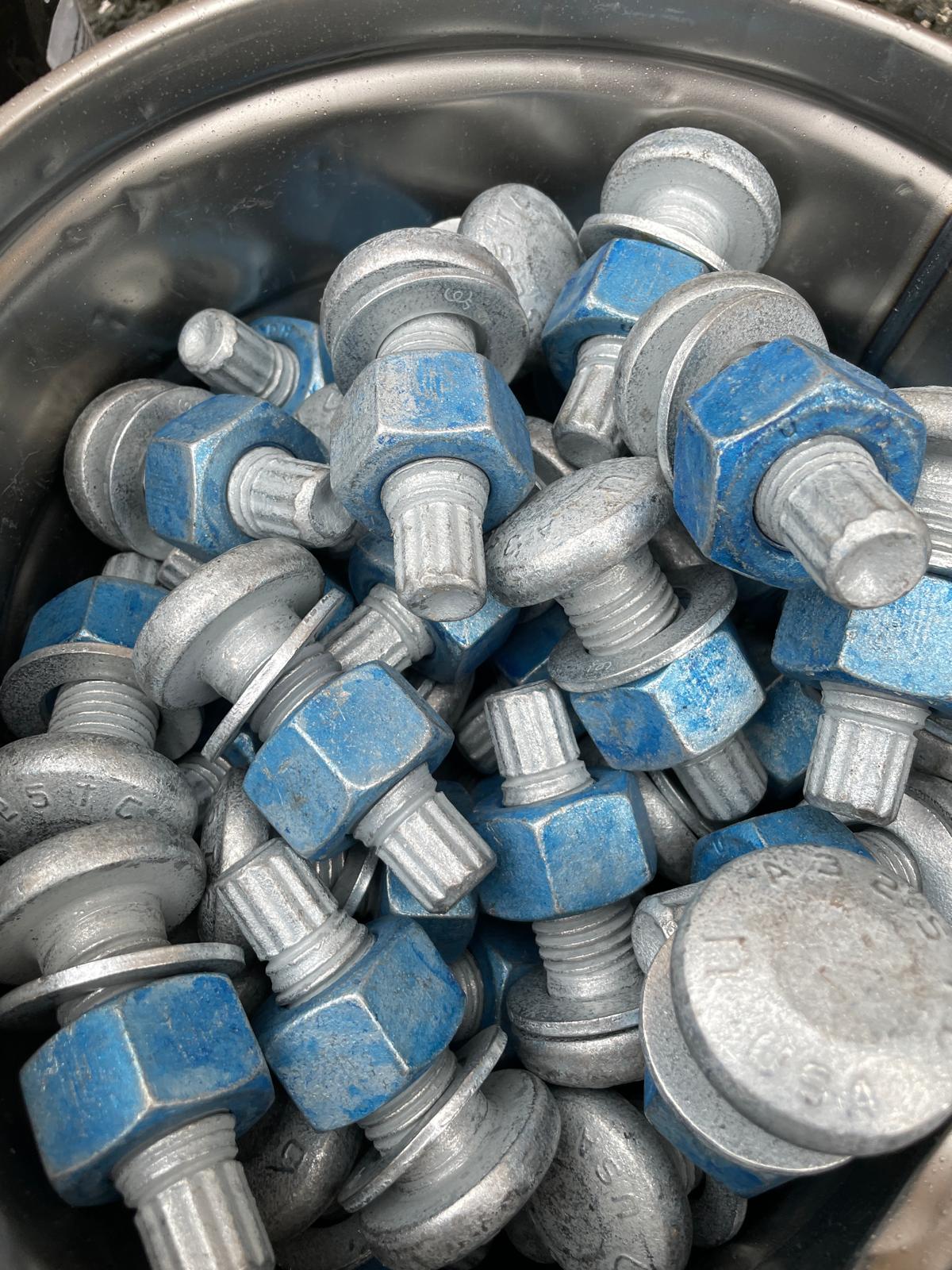
Regardless of the grade, tension control bolts (often referred to as tc bolts) have revolutionized the speed of installation on-site. The unique design of a TC bolt features a splined end that extends beyond the nut. During installation, a specialized electric shear wrench grips the nut and the spline simultaneously. When the required tension is reached, the spline shears off, providing a visual confirmation that the connection is properly tightened.
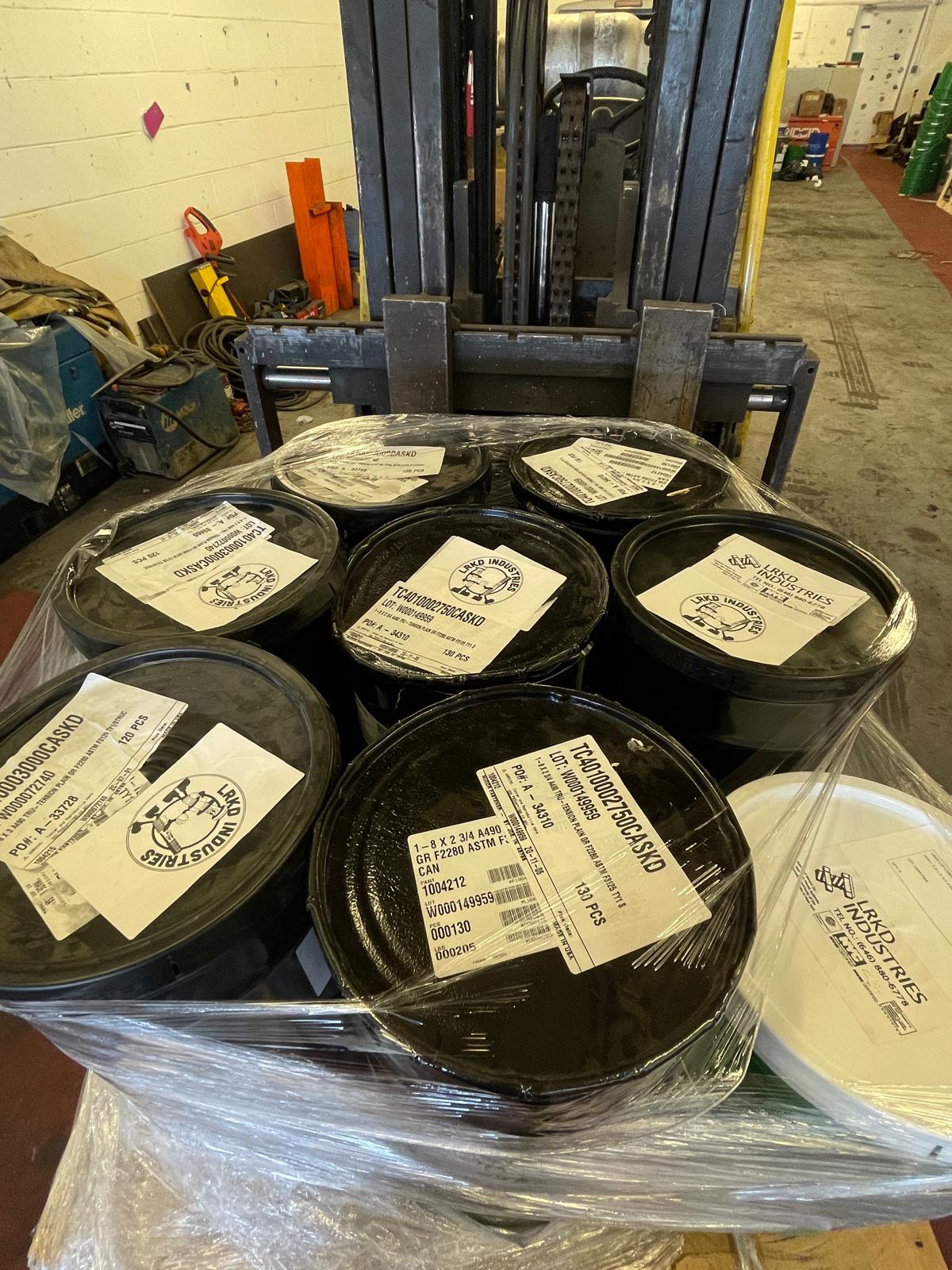
We advocate for the use of tc bolts because they eliminate the need for manual torque testing and provide consistent results across every connection. Whether you are using A325-equivalent (formerly F1852) or A490-equivalent (formerly F2280) versions, the labor savings are substantial. The built-in tension indicators simplify the pre-tensioning process and minimize errors during the critical erection phase.
tc bolts ensure accurate tensioning without the need for complex calibration. tension control bolts reduce labor costs by streamlining the inspection process.
THE GALVANIZATION FACTOR AND CORROSION RESISTANCE
One of the most practical differences between these two grades involves their compatibility with protective coatings. a325 bolts are highly versatile in this regard. They can be hot-dip galvanized or mechanically galvanized, making them the preferred choice for bridges, outdoor structures, and environments exposed to moisture. The ability to apply a robust zinc coating ensures long-term durability against corrosion.
a490 bolts, however, are generally restricted from hot-dip galvanizing. Due to their high-strength alloy composition, they are susceptible to hydrogen embrittlement when exposed to the pickling and dipping process required for traditional galvanizing. While alternative coatings like mechanical galvanizing or specialized zinc-flake finishes exist, many engineers prefer A325 for exposed applications to avoid the risk of brittle fracture.
BALANCING THE BUDGET: MATERIAL COST VS. TOTAL VALUE
When evaluating the budget, it is tempting to look solely at the price per unit. a490 bolts typically carry a material cost premium of 20% to 50% over a325 bolts. On a large-scale project requiring tens of thousands of fasteners, this price gap is significant. However, the higher strength of A490 can lead to a reduction in the total number of bolts required for a connection, which can offset the higher unit price.

For most standard steel buildings, a325 tension control bolts deliver the best overall value. They meet the structural requirements of the vast majority of beam-to-column connections while keeping material costs manageable. We recommend reserving A490 for high-load areas where the increased capacity is truly necessary. By choosing the appropriate grade for each specific joint, contractors can maintain structural integrity without overspending on unnecessary material specifications.
a325 bolts are the cost-effective choice for standard structural projects. a490 bolts offer value in specialized, high-load scenarios where connection density is a concern.
APPLICATIONS: WHERE EACH GRADE EXCELS
The choice between these fasteners often depends on the type of structure being built. We see a325 tension control bolts utilized extensively in:
- Commercial warehouses and distribution centers.
- Standard highway bridges and overpasses.
- Residential mid-rise developments.
- General industrial maintenance and retrofitting.
a490 bolts are the preferred choice for:
- High-rise buildings with significant wind or seismic loads.
- Long-span bridges and heavy infrastructure.
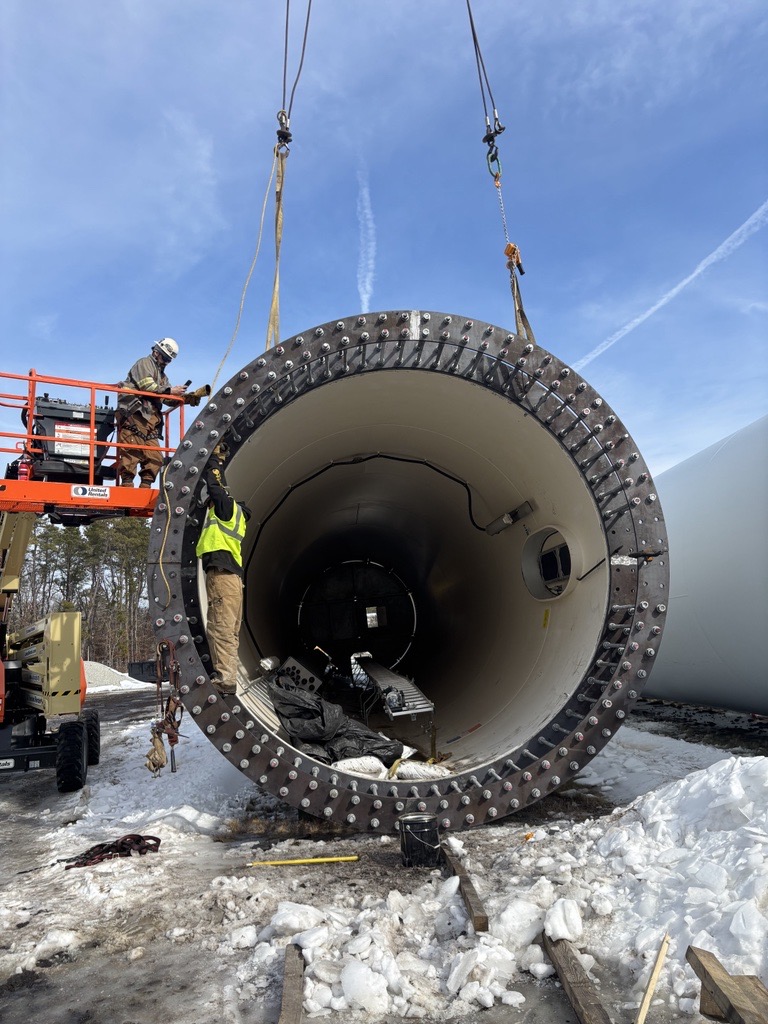
- Wind turbine towers and energy infrastructure.
- Heavy machinery bases and crane rails.
We firmly believe that understanding these application profiles is essential for maintaining safety and efficiency. For foundation work, it is important to remember that neither A325 nor A490 should be used as anchor bolts. For those applications, we provide specialized F1554 anchor bolts in grades 36, 55, and 105 to ensure proper embedment and grip in concrete.
PARTNERING WITH LRKD INDUSTRIES FOR STRUCTURAL SUCCESS
At LRKD Industries, we do more than just supply hardware. We provide a centralized resource for high-quality steel fasteners and construction solutions. Our commitment to accuracy begins in the design phase. We offer professional in-house detailing and engineering services, utilizing drafting technology to build virtual projects before a single bolt is shipped. This proactive approach minimizes errors and ensures that the fasteners you receive: whether A325 or A490: fit perfectly the first time.
We are proud to represent the global community of Women-Minority Business Enterprises (WMBEs). Our diversity is a cornerstone of our success, fostering an environment of innovation and reliability that our customers depend on. When you partner with us, you are choosing a supplier that values dependability, prompt service, and industry-standard excellence.
SELECTING THE RIGHT BOLT FOR YOUR PROJECT
Deciding between A325 and A490 is a balance of strength, corrosion resistance, and budget. While A490 offers the peak of tensile performance, the versatility and cost-efficiency of A325 make it the workhorse of the construction industry. For more detailed insights into high-strength fastening, you can explore our ultimate guide to A490 bolts or our comparison of TC bolts for New York projects.
We stand ready to support your next project with the fasteners and engineering expertise required to build with confidence. Whether you are working on a high-rise in the Bronx or a bridge on Long Island, our team is committed to delivering the high-quality steel supply your project deserves.
Author: MEDIA_LRKD