

In the high-stakes world of New York construction, structural integrity is not just a regulatory requirement; it is a foundational commitment to public safety and long-term durability. When you are managing a project: whether it is a mid-rise commercial development in Brooklyn or a complex infrastructure upgrade for the Port Authority: the components you choose dictate the speed of your assembly and the strength of your connections.
Tension Control (TC) bolts have become the industry standard for structural steel connections due to their efficiency and the visual assurance they provide during installation. However, selecting between the two primary grades, ASTM A325 and ASTM A490, requires a clear understanding of their mechanical properties, environmental limitations, and cost implications. At LRKD Industries, we recognize that our clients face tight deadlines and rigorous inspections, which is why we prioritize providing the right technical guidance alongside our high-quality supply.
The Fundamentals of Tension Control Technology
Tension Control bolts, often referred to as "lextension" or "twist-off" bolts, are designed to simplify the installation of high-strength structural fasteners. Unlike traditional heavy hex bolts that require a calibrated torque wrench and a two-person team, TC bolts utilize a built-in spline that snaps off once the correct tension is achieved. This is accomplished using an electric shear wrench, which holds the spline while turning the nut.
The primary advantage of this system is consistency. By eliminating the reliance on manual torque measurements, which can be affected by lubrication or thread friction, TC bolts ensure that every connection meets the specified pre-tension. For New York contractors, this means faster inspections and reduced labor costs.
ASTM A325: The Versatile Workhorse
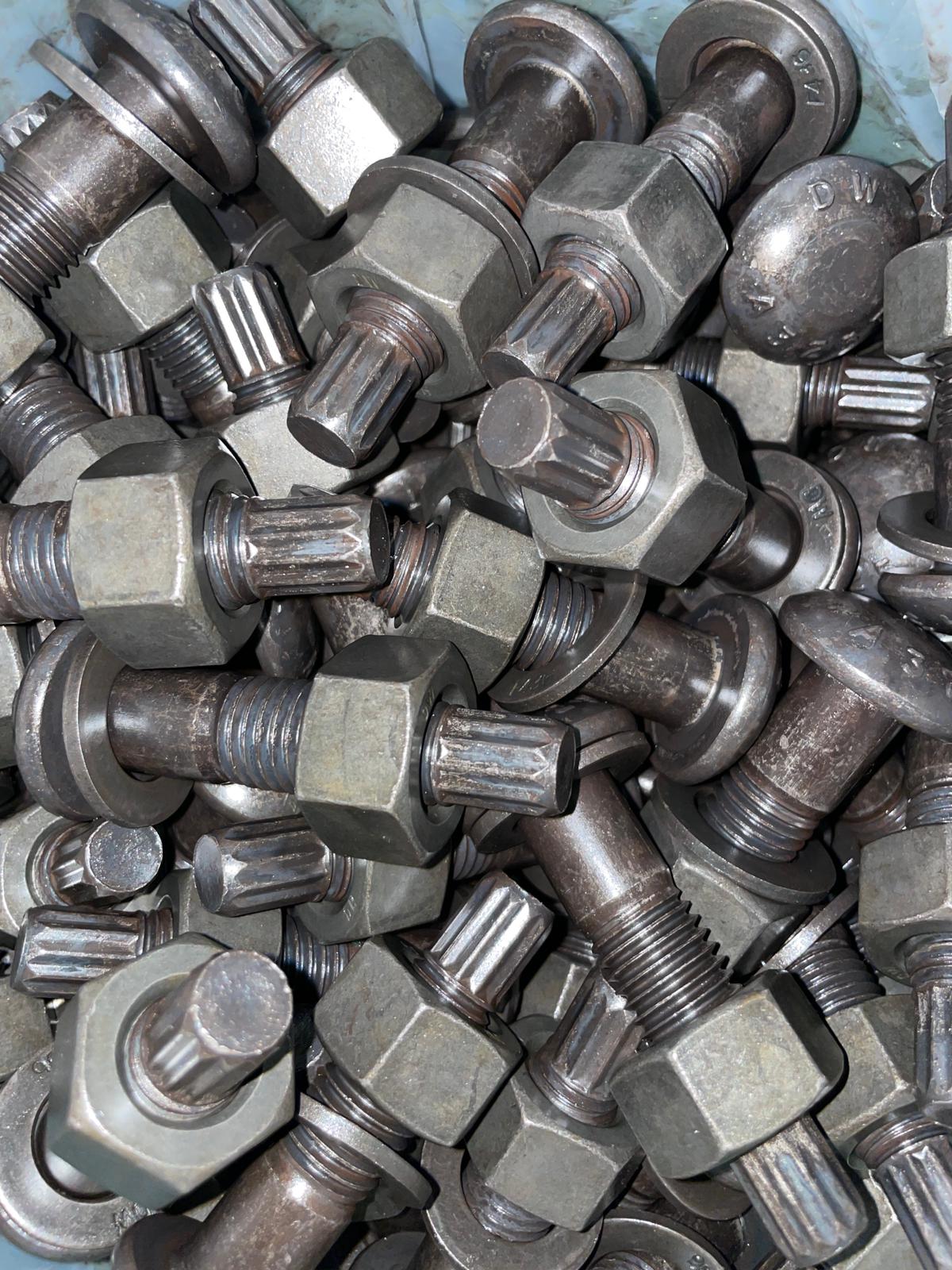
ASTM A325 is the most frequently specified bolt for structural steel applications. These bolts are manufactured from medium carbon steel and offer a minimum tensile strength of 120,000 psi for diameters up to one inch. They are designed to provide a reliable, high-strength connection for the vast majority of building frames, bridges, and industrial structures.
Practical Applications in NY Construction
In standard commercial construction across the five boroughs, A325 TC bolts are the preferred choice. We recognize that versatility is key for our clients. Whether you are connecting floor beams to columns or assembling secondary steel frames, the A325 provides more than enough strength for standard load requirements.
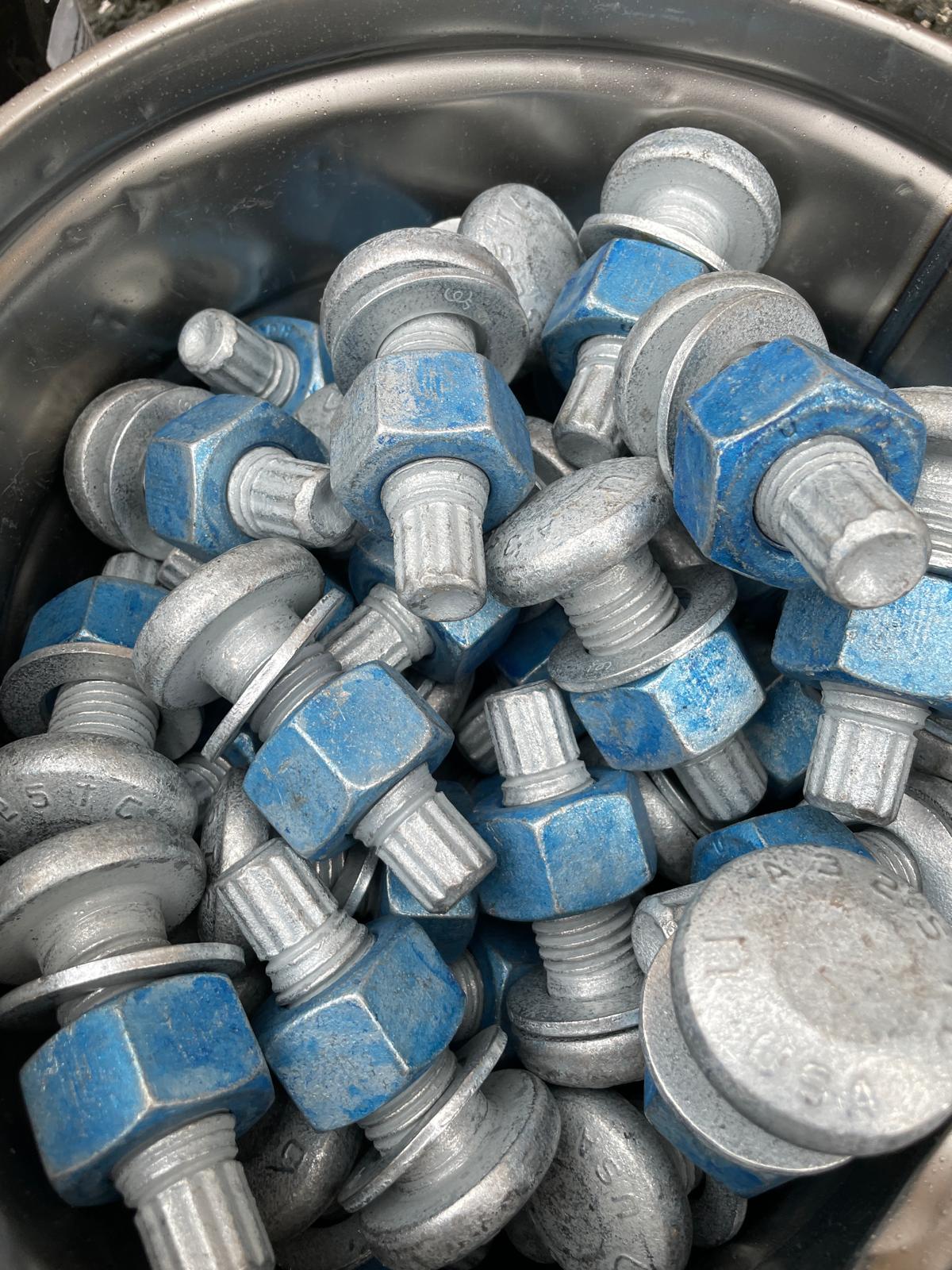
One of the most significant advantages of the A325 grade is its compatibility with corrosion protection. New York’s environment: ranging from the humid summers to the salt-heavy winters: demands fasteners that can withstand the elements. ASTM A325 bolts can be hot-dip galvanized or galvanized for enhanced durability. This makes them ideal for outdoor structures, parking garages, and any project exposed to the elements.
ASTM A490: Engineered for Extreme Loads
When your project demands higher load-bearing capacity without increasing the number of fasteners, ASTM A490 is the specification of choice. These bolts are made from alloy steel and provide a minimum tensile strength of 150,000 psi. This represents approximately a 25% to 30% increase in strength over the A325.
When to Specify A490
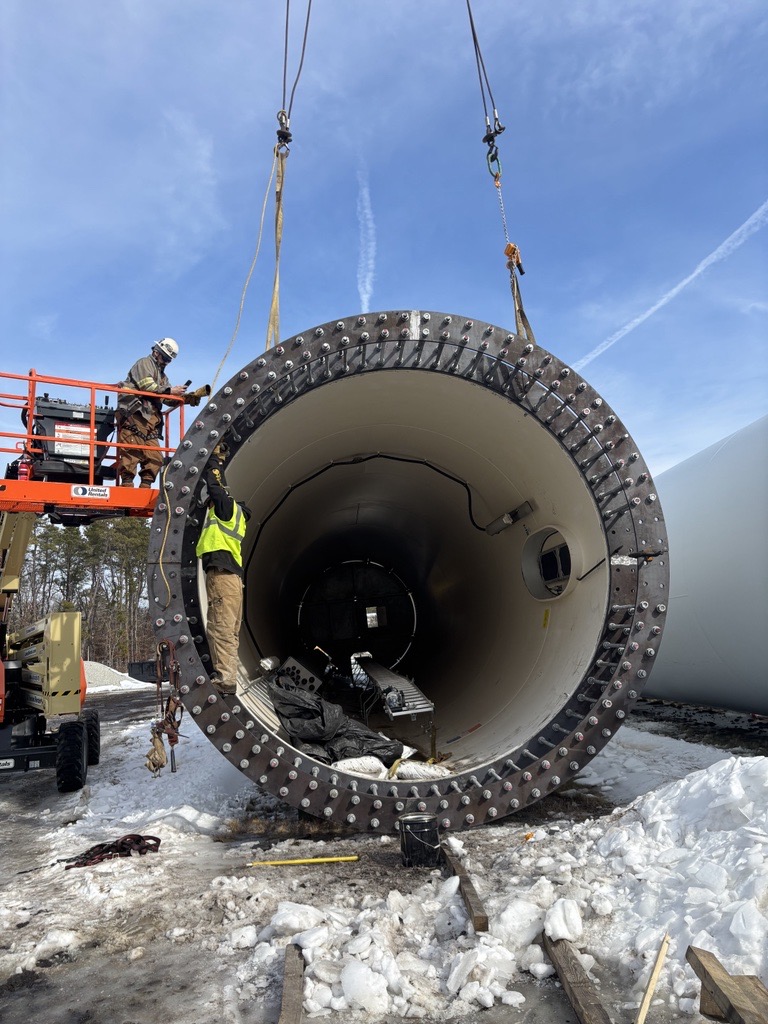
We advocate for the use of A490 TC bolts in scenarios where structural demands are extreme. This includes high-rise skyscrapers where the lower levels must support immense weight, or in heavy industrial machinery supports and large-span bridges.
Using A490 bolts allows engineers to reduce the total bolt count or use smaller diameter bolts while maintaining the necessary structural integrity. This can lead to cleaner designs and potentially less weight in the overall steel package. However, this increased strength comes with specific considerations regarding environmental exposure and installation precision.

Critical Comparison: A325 vs. A490
Choosing between these two grades is not merely a matter of "stronger is better." It is a strategic decision based on the specific needs of your project site and the long-term maintenance plan of the structure.
Corrosion Protection and Hydrogen Embrittlement
A critical distinction that every New York contractor must understand is the limitation of A490 bolts regarding galvanization. Because A490 bolts are made of high-strength alloy steel, they are susceptible to hydrogen embrittlement if they undergo the hot-dip galvanizing process. Consequently, ASTM standards prohibit the hot-dip galvanizing of A490 bolts.
If your project is near the waterfront or exposed to significant moisture and requires the strength of an A490, you must look toward Type 3 weathering steel versions or specific approved coatings that do not risk embrittlement. For most "standard" corrosive environments in NY, the A325 with a galvanized finish remains the superior, more practical choice.
Installation and Torque Requirements
While both utilize the shear wrench method, A490 bolts require significantly higher installation torque to reach their required pre-tension. This puts more strain on the equipment and requires the installation crew to be highly proficient. We recognize that time on the job site is money; therefore, using A490 bolts should be a deliberate choice driven by engineering necessity rather than a "default" for strength.
The Role of LRKD Industries in Your Supply Chain
Navigating the specifications of TC bolts and structural integrity is only half the battle. The other half is ensuring that your materials arrive on-site exactly when they are needed. In the congested streets of New York, logistics can often be the biggest hurdle to a successful project.
At LRKD Industries, we have tailored our operations to meet the specific demands of the NY construction scene. As a certified minority- and woman-owned business (MWBE) by the Port Authority of NY & NJ, we understand the regulatory landscape and the excellence required to participate in major regional projects.
Prompt Delivery and Local Expertise
We recognize that a crane waiting for a bucket of bolts is an expensive delay. Our centralized logistics allow us to offer prompt delivery across the New York metropolitan area. Whether you are working on a bridge in Queens or a renovation in Manhattan, we provide the steel fasteners and construction supply necessary to keep your timeline on track.

Our inventory is staged to ensure that whether you need standard A325 TC bolts or specialized A490 fasteners, we can fulfill your order with the documentation and traceability required by modern building codes. We don't just supply products; we provide the reliability that allows you to focus on the build.
Integrating Foundation and Structural Steel
While TC bolts are essential for the steel frame above ground, every project begins with the foundation. It is important to distinguish structural bolts like the A325 and A490 from the hardware used to secure the building to its concrete base. For foundation work, foundation cages, and embed hardware, we supply anchor bolts explained under ASTM F1554.
Understanding the difference between these specifications is vital. While A325 and A490 bolts are designed for steel-to-steel connections, F1554 (Grades 36, 55, or 105) is the industry standard for anchoring those steel structures to concrete. By sourcing both your structural TC bolts and your foundation anchors from a single, reliable partner like LRKD Industries, you ensure consistency across your entire project.
Best Practices for NY Project Managers
- Review the Engineering Specs Early: Ensure your team knows whether A325 or A490 is required, especially concerning the finish. If the drawings call for galvanized A490, a RFI (Request for Information) should be issued immediately to clarify the coating, as hot-dip galvanizing is not an option.
- Plan for Tooling: A490 bolts require more power to shear. Ensure your electric shear wrenches are serviced and that you have adequate power on-site to handle the higher torque requirements.
- Verify MWBE Requirements: Many NY public and private projects have strict MWBE participation goals. Partnering with LRKD Industries helps you meet these requirements without sacrificing quality or delivery speed.
- Check Lead Times for Weathering Steel: If your project specifies Type 3 (weathering steel) TC bolts, which are common in NY bridge work, ensure you account for the specific lead times associated with these specialty materials.
Conclusion
Choosing the best TC bolts for your New York project comes down to balancing the high-strength requirements of the design with the environmental realities of the job site. The ASTM A325 is the reliable, galvanizable choice for most applications, while the ASTM A490 offers the necessary power for the most demanding structural loads.
At LRKD Industries, we are committed to being more than just a vendor. We are a collaborative partner dedicated to the success of New York’s builders. From the initial anchor bolt fabrication to the final structural connections, we provide the high-quality supply and prompt delivery that your project deserves. We invite you to explore our comprehensive range of steel fasteners and construction supplies to see how we can support your next build.
Author: MEDIA_LRKD