

We recognize that the foundation of any structural project: whether it is a bridge in Long Island or a high-rise in the Bronx: rests on the integrity of its anchor bolts. While ASTM F1554 is the industry standard for these critical components, specifying them correctly is a complex process that leaves little room for error. When miscalculations occur, they lead to costly fabrication delays, site reworks, and potential structural compromises.
At LRKD Industries, we serve as a collaborative partner to engineers and contractors, providing not just the hardware but the technical insight needed to ensure every embedment is accurate. We have identified five recurring mistakes in the specification of F1554 anchor bolts and provide the definitive solutions to streamline your next project.
1. THE STRUCTURAL BOLT TRAP: SPECIFYING A325 OR A490
We frequently observe specifications calling for ASTM A325 or ASTM A490 bolts to be used as foundation anchors. While these are exceptional high-strength fasteners for steel-to-steel connections, they are not designed for embedment in concrete. Structural bolts have fixed thread lengths and heading requirements that are incompatible with the varied lengths and projection needs of foundation work.
THE SOLUTION
Engineers must specify ASTM F1554 (Grades 36, 55, or 105) for all foundation anchor applications. F1554 is specifically engineered for structural anchorage, offering the ductility and thread length flexibility required for secure embedment. If your project requires high strength, F1554 Grade 105 provides the performance of an A325 bolt while maintaining the geometric properties necessary for foundation anchors. For more detail on these distinctions, we recommend reviewing our comprehensive guide to anchor bolt grades.
2. INACCURATE THREAD PROJECTION AND LENGTH
A common point of failure in detailing is the omission of precise thread projection or the specification of unrealistic thread lengths. We often see designs that provide the overall bolt length but fail to account for the thickness of the base plate, the grout pad, the washer, and the double-nutting requirement. When the projection is too short, the nut cannot be fully engaged; when it is too long, the threads may be exhausted before the nut is tight.

THE SOLUTION
Calculate the required thread projection by totaling the base plate thickness, grout height, washer thickness, and a minimum of two full nuts, plus a safety margin of at least one-half inch. We believe in building virtual projects before fabrication. By utilizing our in-house detailing and engineering services, we can verify these dimensions in a 3D environment, ensuring that the anchor bolts delivered to your New York job site are accurate to the millimeter.
3. THE GALVANIZATION AND HARDWARE MISMATCH
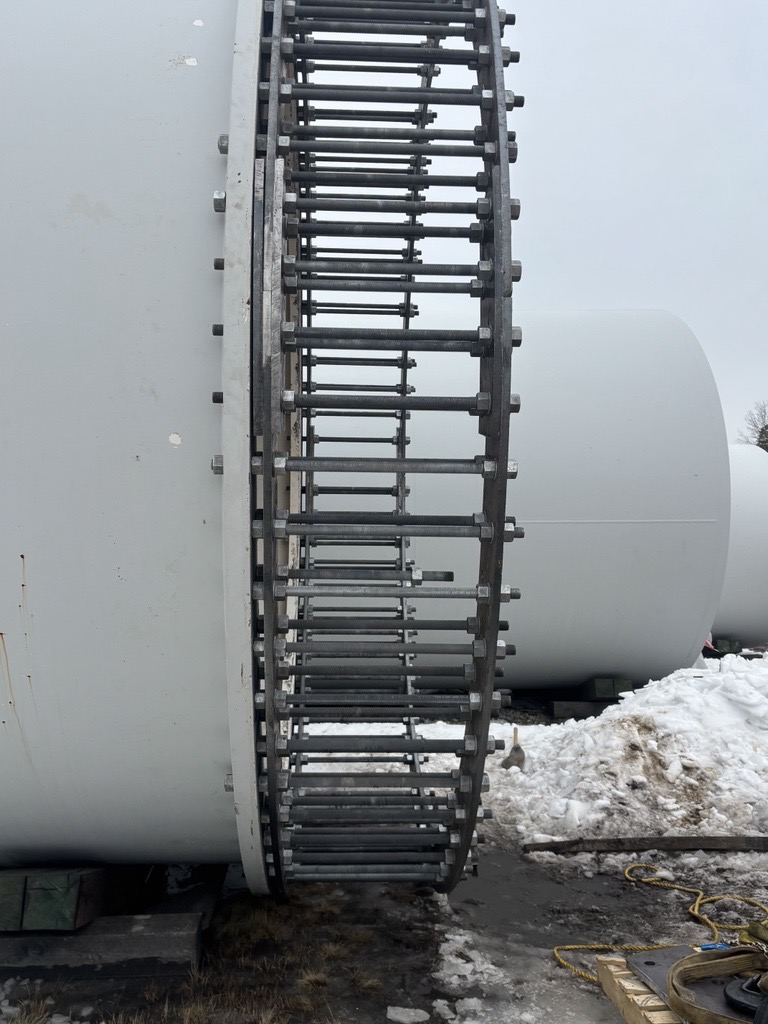
Corrosion protection is vital, yet specifying Hot-Dip Galvanization (HDG) without considering hardware compatibility is a recipe for assembly failure. Hot-dip galvanizing adds a significant layer of zinc to the threads. If an engineer specifies standard nuts for galvanized F1554 bolts, the components will not fit together in the field. Furthermore, "chasing" or re-threading galvanized bolts to make them fit is a violation of ASTM F2329 and compromises the corrosion resistance.
THE SOLUTION
Always specify "over-tapped" nuts that are specifically designed to accommodate the thickness of the HDG coating. We ensure that all our galvanized F1554 assemblies are supplied as a matched system, with nuts and washers that meet the requirements of ASTM A563 and F436. This eliminates the need for field modifications and guarantees the longevity of the structural connection.
4. RIGID HOLE SPECS VS. REAL-WORLD TOLERANCES
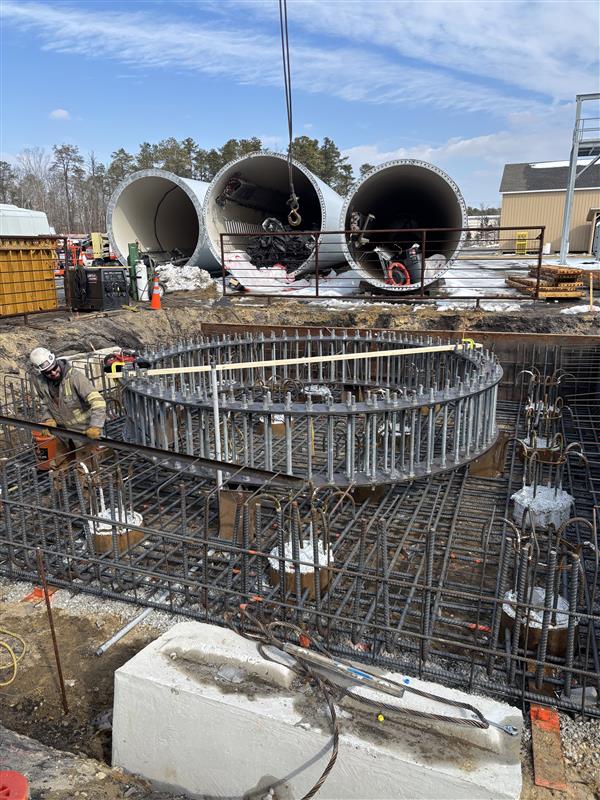
Foundation construction is rarely as precise as shop fabrication. We recognize that anchor bolt patterns often shift during the concrete pour. A critical mistake is specifying standard oversized holes in base plates that follow the same tolerances as structural steel-to-steel connections. This leaves no room for the inevitable minor misplacements that occur on-site, leading to base plates that cannot be seated.
THE SOLUTION
Follow the recommendations of AISC Design Guide 1 and use significantly larger anchor rod holes. For a 1-inch diameter bolt, a 2-inch diameter hole is often recommended, paired with a heavy plate washer. This allows for field adjustments without compromising the structural integrity of the connection. We advocate for the use of anchor bolt templates and cages during the pour to minimize these deviations from the start.
5. OVERLOOKING WELDABILITY: GRADE 36 VS. GRADE 55
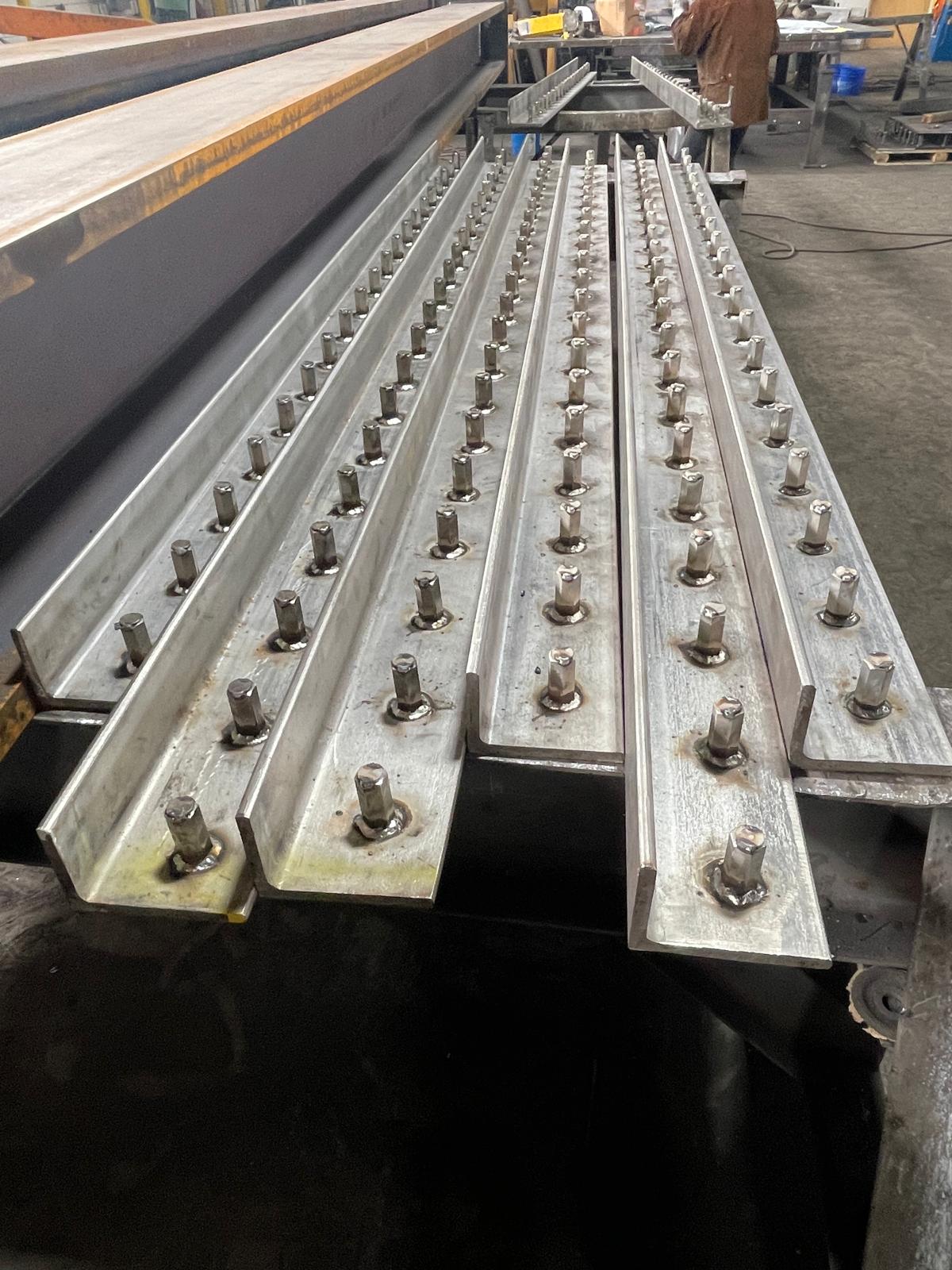
When anchor bolts need to be welded to a cage or a plate, the material grade becomes a matter of safety. While F1554 Grade 36 is inherently weldable, Grade 55 is only weldable if it is specified with "Supplement S1." Many engineers assume all Grade 55 steel can be welded, but without the S1 requirement, the carbon equivalent may be too high, leading to brittle welds and potential failure under load.
THE SOLUTION
Explicitly state "ASTM F1554 Grade 55 with Supplement S1" on all drawings where welding is required. We maintain a rigorous quality control process to ensure that our materials meet these exact supplemental requirements. For complex projects requiring high-strength and weldability, our team provides the technical oversight to confirm that the steel delivered matches the engineering intent.
PRECISION THROUGH COLLABORATION
We believe that successful construction projects are the result of meticulous planning and reliable supply chains. LRKD Industries is not merely a vendor; we are an extension of your engineering team. From our virtual project detailing to our prompt delivery in the Bronx, Long Island, and beyond, we are committed to accuracy.
Our status as a Women-Minority Business Enterprise (WMBE) reflects our dedication to breaking barriers and fostering excellence within the global construction community. We invite you to leverage our expertise to ensure your next foundation is specified without error.
Author: MEDIA_LRKD