

When you manage complex structural projects: whether erecting a soaring commercial high-rise in the New York metropolitan area or engineering a multi-span highway bridge: the integrity of every steel connection is paramount. Structural engineers and contractors demand fastening systems that deliver uncompromised safety, consistent pre-tension, and absolute reliability under heavy dynamic loads. In modern structural engineering, a325 tension control bolts (commonly referred to as tc bolts) have established themselves as the gold standard for heavy steel construction.
At LRKD Industries, we recognize the rigorous demands placed on structural steel erection, which is why we supply premium-grade structural bolts engineered to exceed industry specifications. Understanding why these specialized fasteners outperform traditional heavy hex configurations can help project teams optimize both installation speed and structural safety.
Engineering Precision in Modern Steel Construction
Modern steel construction leaves no room for guesswork. When connecting primary members in bridges, industrial facilities, and high-rise towers, engineers require absolute certainty that every bolt achieves its precise specified pretension. Traditional high-strength a325 bolts rely on calibrated torque wrenches, turn-of-nut methods, or direct tension indicators (DTIs) which can introduce human error, variable friction, and inconsistent preload across large job sites.
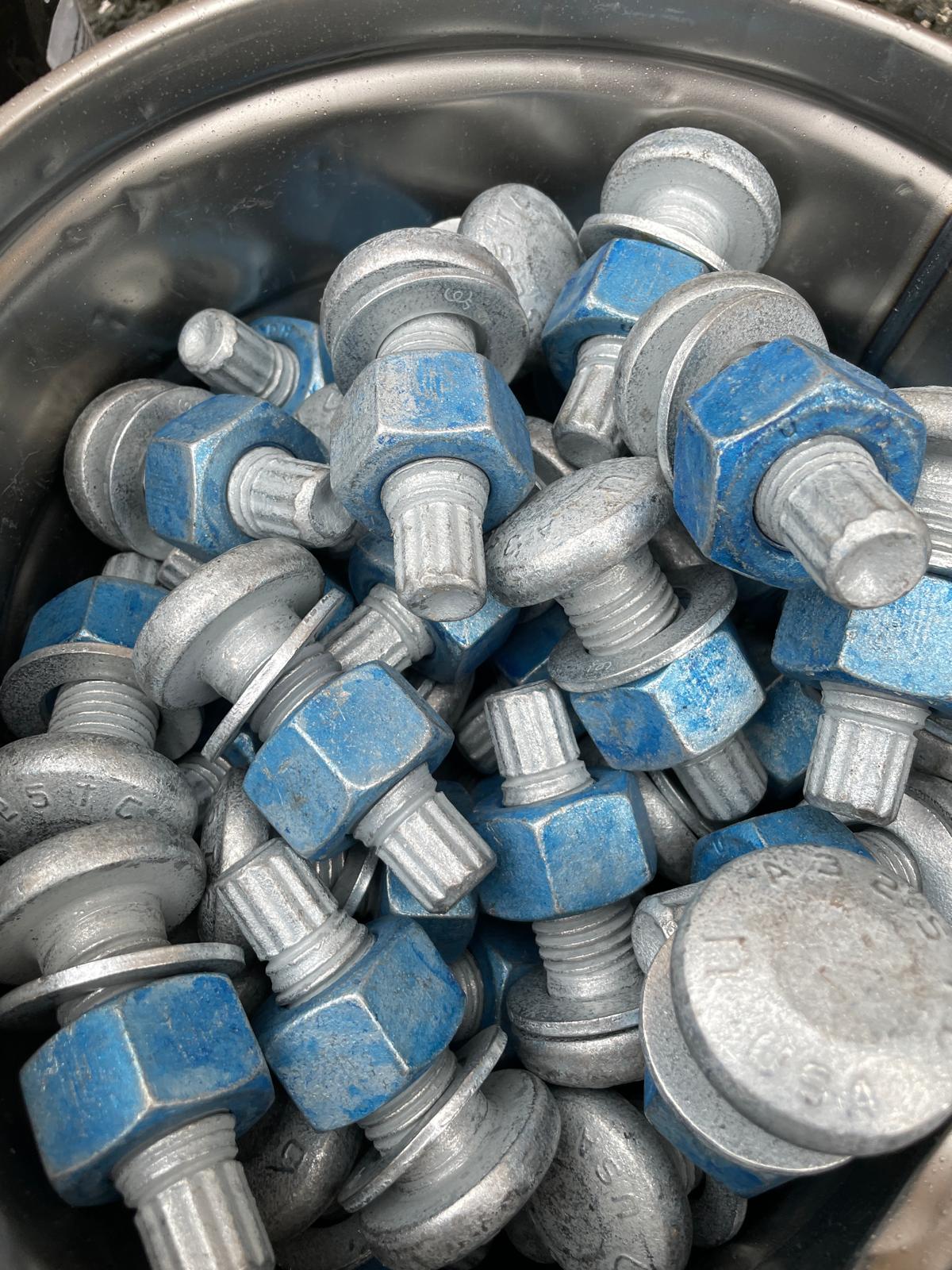
Tc bolts eliminate these installation variables through an ingenious, self-contained design. Each fastener arrives as a pre-assembled, matched set consisting of a heavy hex structural bolt, a matching heavy hex nut, and a hardened structural washer. The defining characteristic of a tension control bolt is its engineered splined end extending beyond the threaded shank. When a dedicated shear wrench engages both the nut and the spline, it applies a controlled rotational force until the precise minimum pretension is attained. At that exact threshold, the spline shears off cleanly, providing immediate, visual confirmation that the connection is correctly tensioned.
We recognize that consistency is the cornerstone of structural safety, which is why we supply precision-engineered fasteners that empower installation crews to perform with absolute confidence.
Navigating ASTM Standards: From Traditional A325 to F1852 and F2280
To specify structural fasteners accurately, professionals must understand how material standards have evolved. Historically, a325 structural bolts and heavy hex configurations served as the foundation for steel-framed construction. However, as pre-assembled twist-off systems gained prominence, ASTM introduced specific designations to govern their manufacturing, mechanical properties, and quality control.
The American Society for Testing and Materials officially consolidated these specifications under ASTM F3125, which serves as the overarching standard for high-strength structural bolts. Within this comprehensive framework:
- ASTM F1852 designates the tension-control fastener assemblies equivalent in strength and performance to traditional a325 tension control bolts (providing a minimum tensile strength of 120 ksi).
- ASTM F2280 designates the higher-strength tension-control fastener assemblies equivalent to A490 bolts (engineered for heavily stressed connections requiring a minimum tensile strength of approximately 150 ksi).
By streamlining these grades under ASTM F3125, the industry ensures uniform chemistry, strict heat-lot traceability, and rigorous mechanical testing. When engineers specify a325 tc bolts or F1852 assemblies, they secure fasteners designed for optimal ductility and dependable load transfer.
Real-World Applications Across Critical Infrastructure
The true value of tc bolts becomes evident when examining their performance in demanding real-world environments. Major transportation agencies, civil engineers, and heavy commercial contractors rely on these fasteners for projects where structural failure is simply not an option.
Bridges and Overpasses
Highway bridges experience continuous cyclic loading from heavy commercial traffic, thermal expansion, and environmental exposure. A325 tension control bolts provide the slip-critical connection performance required in steel plate girders, cross-frames, and truss members. Furthermore, when finished with mechanical galvanization or protective coatings, these fasteners resist corrosion in harsh coastal or de-iced winter environments without sacrificing clamping force.
High-Rise Buildings and Stadiums
Erecting multi-story steel towers requires rapid ironwork cycles without compromising quality. Structural bolts with built-in tension control allow erection crews to bolt up moment connections and bracing frames at unprecedented speeds. Because the shear wrench handles the calibration automatically, ironworkers can complete connections securely even in challenging elevated positions where traditional two-person calibration is cumbersome.
Industrial Facilities and Energy Infrastructure
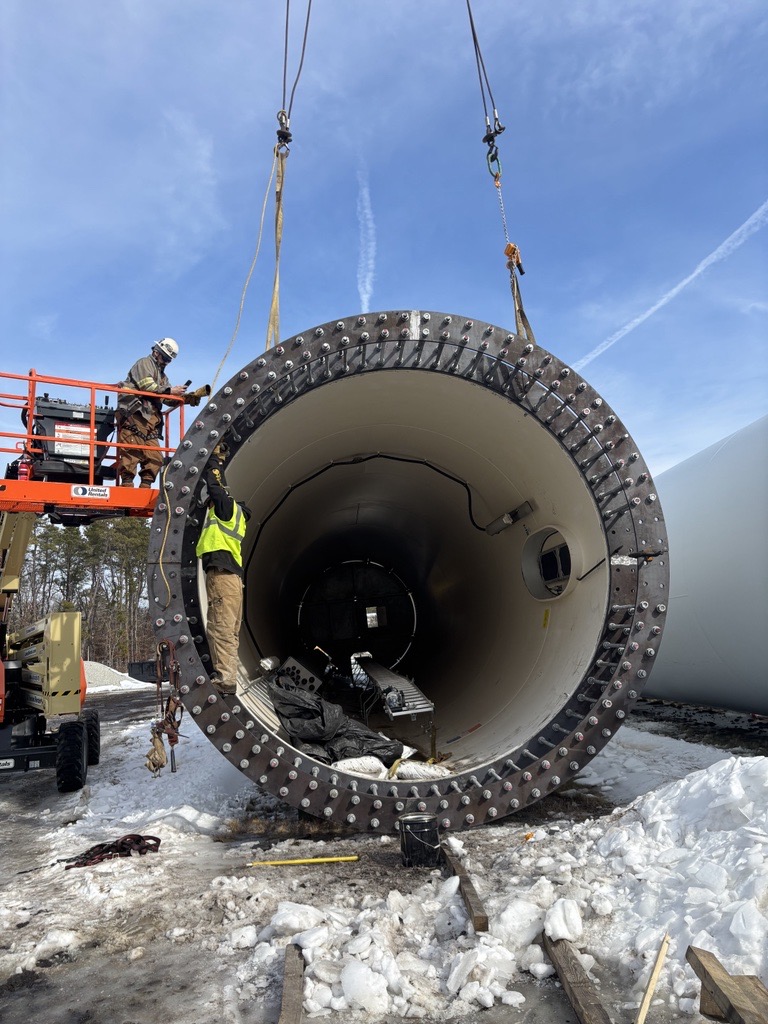
Heavy industrial complexes, manufacturing plants, and wind turbine support structures subject structural frames to immense vibratory forces and dynamic loads. The reliable preload delivered by tc bolts prevents joint relaxation and fatigue over decades of continuous operation.
Streamlining Field Inspection and Reducing Labor Overhead
On complex job sites, inspection bottlenecks can delay project schedules and inflate labor costs. Traditional bolting methods often require third-party inspectors to verify torque values using calibrated manual wrenches on a percentage of installed fasteners: a time-consuming process that can disrupt workflow.
Tension control bolts transform the inspection process entirely. Because the shearing of the spline serves as a physical, built-in indicator that correct tension has been reached, visual inspection becomes remarkably straightforward. An inspector can verify an entire structural connection at a glance simply by confirming that all splines have twisted off.
This visual verification model offers distinct operational advantages:
- Reduced Inspection Time: Field inspectors can review thousands of connections rapidly and accurately.
- Elimination of Calibration Disputes: The tension is governed by the fastener's metallurgy and spline design rather than external tool calibration alone.
- Minimized Rework: Crews catch and correct improper installations immediately during the erection phase.
We recognize that project efficiency is just as critical as raw material strength, which is why we maintain robust stock levels of certified structural fasteners to keep your job site moving forward without interruption.
Distinguishing Structural Connections from Foundation Applications
When planning large-scale construction projects, it is essential to distinguish upper-structure fastening systems from foundation anchorage. While a325 bolts, tc bolts, and high-strength structural bolts excel in steel-to-steel connections above the grade line, they serve a fundamentally different purpose than cast-in-place anchor bolts.
For structural foundations, machinery base plates, and concrete embedments, engineers rely on anchor bolts such as ASTM F1554 (available in Grades 36, 55, and 105). Unlike high-strength structural bolts designed for clamping steel plates together, foundation anchor bolts are engineered for embedment into concrete to resist tensile uplift and shear forces at the base of columns.
Understanding this distinction ensures that every phase of a build: from the foundation anchor cage up to the roof truss: utilizes the precise fastener grade mandated by structural calculations and building codes. Whether you need foundation embedments or upper-level steel fasteners, sourcing from a knowledgeable supplier guarantees compatibility across your entire bill of materials.
Partnering for Long-Term Structural Reliability
Selecting the right fastening system is a foundational decision that impacts the safety, durability, and constructability of any major infrastructure project. By combining the proven mechanical performance of a325 tension control bolts with streamlined installation and foolproof visual inspection, construction professionals can achieve flawless structural integrity on every project.
At LRKD Industries, we combine comprehensive product availability with deep-rooted industry expertise. As a certified minority- and woman-owned business enterprise (WMBE), we take pride in supporting contractors, fabricators, and engineers across the New York area and nationwide with reliable steel supply solutions, professional in-house detailing, and prompt customer support.
Contact our team today to discuss your next bridge, high-rise, or industrial construction project and discover how our premium structural fasteners can elevate your standards of execution.
Author: MEDIA_LRKD