

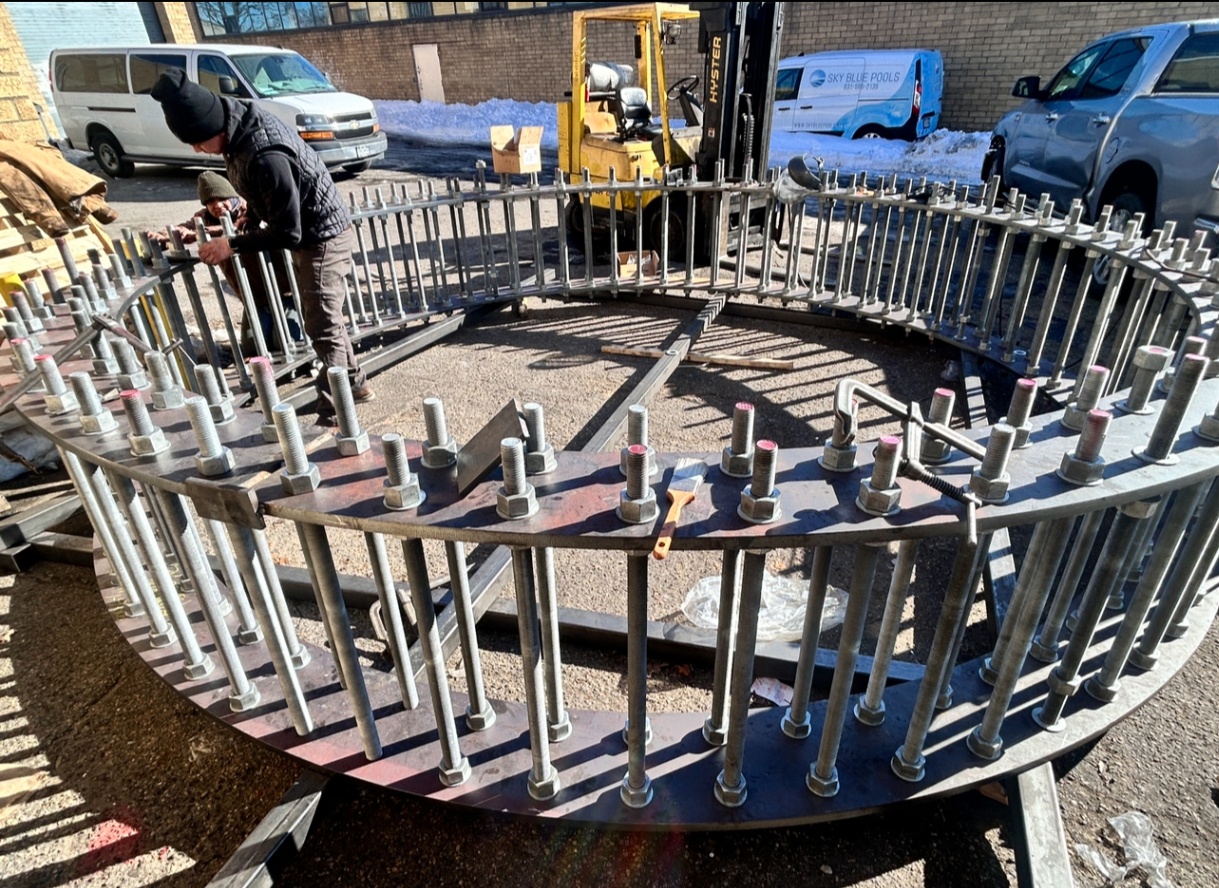
When you're anchoring a wind turbine tower, a bridge column, or any critical structural element, the anchor bolt cage isn't just holding things down: it's the foundation's backbone. These assemblies of ASTM F1554 anchor bolts, templates, and reinforcing steel must withstand decades of load cycling, environmental exposure, and the kinds of forces that would make most hardware fold. The welding that holds these cages together isn't a detail. It's everything.
We recognize that structural integrity begins in the fabrication shop, which is why understanding welding standards for F1554 cages isn't optional: it's fundamental to every project's success.
The Three Grades of F1554: Not All Are Created Equal for Welding
ASTM F1554 anchor bolts come in three grades, and their weldability ranges from straightforward to absolutely prohibited. Getting this right at the specification stage determines whether your cage can even be fabricated to code.
Grade 36 is the workhorse for general construction applications. This carbon steel is weldable without special requirements or supplementary designations. Standard welding procedures using appropriate filler materials maintain the integrity of Grade 36 throughout the fabrication process. For anchor bolt cages in commercial buildings, light industrial applications, or precast concrete connections, Grade 36 offers reliable performance with straightforward fabrication requirements.
Grade 55 occupies the middle ground and demands attention to detail. This grade is weldable only when it meets supplementary requirement S1, which specifies chemical composition limits that ensure weldability without compromising mechanical properties. The distinction matters enormously in the shop. Grade 55 without the S1 designation should never be assumed weldable. Mill certifications must explicitly indicate both "Grade 55" and "S-1" to confirm the steel is compliant with welding requirements. For highway structures, bridge foundations, and applications requiring higher strength than Grade 36, specifying Grade 55 with S1 is essential.
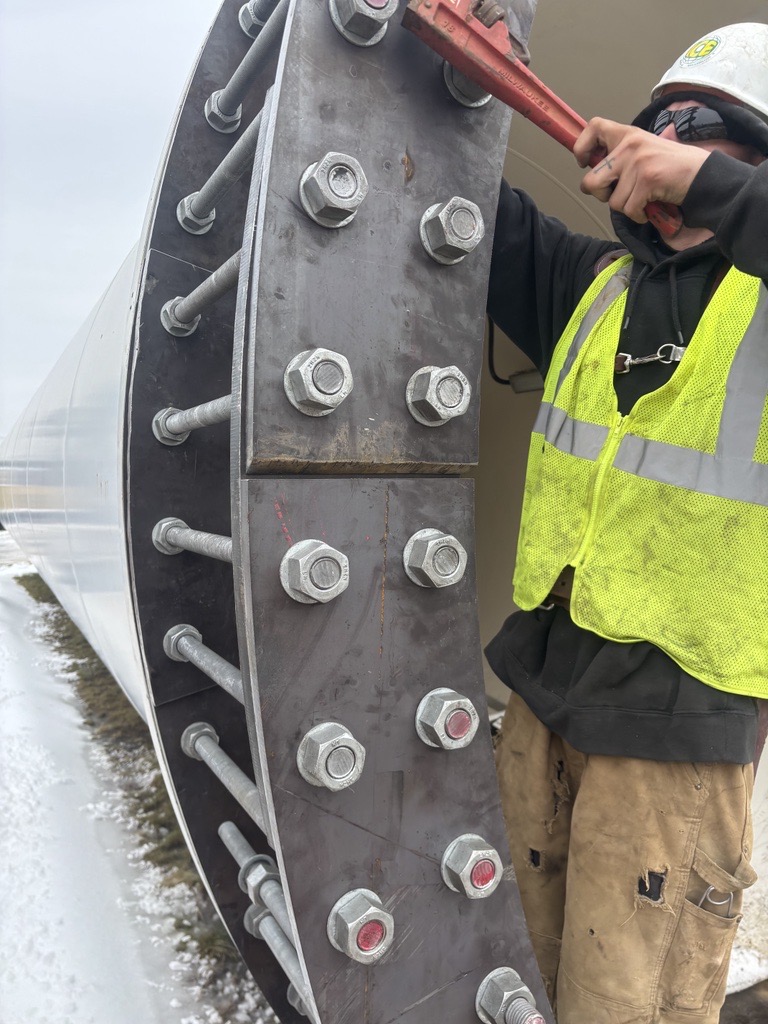
Grade 105 is not recommended for welding under any circumstances. As a heat-treated alloy steel, welding alters its mechanical properties and can adversely affect performance. This includes tack welding hex nuts in place on Grade 105 anchor bolts: a practice that may result in brittleness and strength modification. Grade 105 serves critical applications in seismic zones and high-load environments, but its fabrication must be approached differently than lower grades.
The consequences of specifying the wrong grade or assuming weldability without proper supplementary requirements show up as rejected shop fabrication, project delays, and expensive material replacements.
AWS and AISC: The Specifications That Define Quality
The American Welding Society (AWS) and American Institute of Steel Construction (AISC) don't publish standards as suggestions. These specifications exist because decades of structural engineering have identified exactly what works and what fails. When we fabricate anchor bolt cages, these standards govern every aspect of the welding process.
AWS D1.1, Structural Welding Code - Steel, establishes the requirements for welding procedures, welder qualification, inspection criteria, and acceptance standards. This document defines everything from joint preparation and electrode selection to visual inspection criteria and nondestructive testing requirements. Fabrication shops working to AWS D1.1 maintain documented welding procedures, employ certified welders, and implement quality control programs that ensure every weld meets code.
AISC specifications address the broader structural context. These standards define how anchor bolt cages interface with other structural components, establish dimensional tolerances, and specify material requirements that complement AWS welding standards. Together, AWS and AISC create a framework where structural steel fabrication achieves predictable, reliable performance.
The technical requirements aren't arbitrary. Weld size, throat dimension, penetration depth, and fusion characteristics directly determine load transfer capacity. Anchor bolt cages experience complex loading: tension from uplift forces, shear from lateral loads, and combined stresses from dynamic loading. The welds connecting template plates to anchor bolts must develop the full strength of the base material while maintaining ductility under cyclic loading.
What Happens When Fabrication Isn't Certified
Non-certified fabrication represents more than procedural shortcomings: it introduces structural uncertainty that no calculation can overcome. We've seen the aftermath when projects attempt to cut corners.
Uncertified welders may produce visually acceptable welds that lack proper penetration, contain hidden defects, or use incompatible filler materials. These deficiencies remain invisible until loading occurs, at which point remediation becomes exponentially more complex and expensive. In anchor bolt cage applications, weld failure can mean foundation reconstruction, which impacts project schedules measured in months and budgets measured in hundreds of thousands of dollars.
Material traceability disappears in non-certified shops. When Grade 55 material without S1 designation gets welded, the resulting assembly may appear compliant but contains mechanical properties that don't match engineering assumptions. Heat-affected zones around welds can develop brittleness or reduced strength when welding procedures don't account for base material chemistry.
Documentation gaps create liability exposure. Certified fabrication generates paper trails: mill test reports, welding procedure specifications, welder qualification records, and inspection reports. These documents prove compliance and provide the foundation for structural acceptance. Without them, even properly executed work lacks the verification that engineers, inspectors, and building officials require.
The structural engineering community has standardized on certified fabrication because the alternative introduces unacceptable risk. When anchor bolt cages support critical infrastructure: power generation facilities, transportation structures, industrial plants: the fabrication quality directly correlates with public safety.
The Certified Fabrication Process: From Drawing to Installation
Certified fabrication begins with engineering coordination. Shop drawings translate structural plans into fabrication details, identifying weld locations, specifying joint configurations, and establishing inspection hold points. This coordination ensures that fabricators understand design intent and can execute the work using qualified procedures.
Material verification occurs before fabrication begins. Mill test reports confirm that F1554 material meets grade requirements and, for Grade 55, includes S1 supplementary requirements. Material identification systems maintain traceability throughout the fabrication process, preventing grade mixing or specification errors.
Welder qualification follows AWS requirements. Certified welders demonstrate proficiency in specific positions, joint configurations, and material thicknesses through standardized testing. These qualifications must remain current, and shops maintain records proving welder certification for every project.
Welding procedures receive formal documentation through Welding Procedure Specifications (WPS). These documents define every parameter: base material, filler material, current settings, travel speed, preheat requirements, and interpass temperature limits. Each WPS undergoes qualification testing to verify that it produces welds meeting mechanical property requirements.
Quality control encompasses multiple inspection stages. Visual inspection identifies surface defects, dimensional conformance, and weld profile. Nondestructive testing: magnetic particle, ultrasonic, or radiographic examination: detects internal discontinuities. Dimensional verification ensures that anchor bolt spacing, template flatness, and projection heights meet tolerance requirements.
Final documentation packages include material certifications, welding records, inspection reports, and dimensional verification. This paper trail demonstrates compliance and provides the foundation for structural acceptance by engineers and inspectors.
The Value Proposition: Why It Matters to Your Bottom Line
Certified fabrication costs more upfront than uncertified alternatives. This price differential reflects genuine value: qualified personnel, documented procedures, inspection protocols, and quality systems. The return on that investment appears in multiple forms.
Schedule reliability improves when fabrication meets standards the first time. Rejected material, rework cycles, and field modifications evaporate when shops execute proper procedures. Projects maintain momentum instead of stalling for fabrication corrections.
Liability protection comes through documentation. When anchor bolt cages perform as designed, the paper trail confirms that fabrication met applicable standards. This documentation matters during project closeout, warranty periods, and any future structural evaluations.
Structural performance justifies the entire exercise. Anchor bolt cages fabricated to AWS and AISC standards deliver the strength, ductility, and durability that structural calculations assume. This reliability extends project service life and maintains safety margins under actual loading conditions.
We firmly believe that structural steel fabrication deserves the same attention to standards and certification that welders, engineers, and inspectors bring to their respective roles. Anchor bolt cages represent the critical connection between concrete foundations and steel superstructures. Getting the welding right isn't negotiable: it's fundamental to structural integrity.
When you're specifying anchor bolt fabrication for your next project, the conversation should begin with welding standards, material grades, and fabrication certification. These aren't add-ons or upgrades. They're the baseline for quality work that performs as designed, lasts as long as intended, and delivers the reliability that your project demands.
The alternative isn't worth considering.
Author: MEDIA_LRKD