

In the world of heavy construction and large-scale infrastructure, the integrity of a connection is the difference between a project that stands the test of time and one that fails under pressure. For engineers, project managers, and steel erectors, the challenge has always been achieving consistent, verifiable tension across thousands of fasteners. Traditional bolting methods often require a two-person crew and a significant amount of guesswork or secondary testing.
Tension Control Bolts, commonly referred to as TC bolts or "Lejeune" bolts, have fundamentally changed the landscape of structural steel connections. At LRKD Industries, we recognize that efficiency and safety are not mutually exclusive. We provide the high-strength fasteners that allow your team to move faster while maintaining the highest standards of structural reliability.
Understanding the Anatomy of a Tension Control Bolt
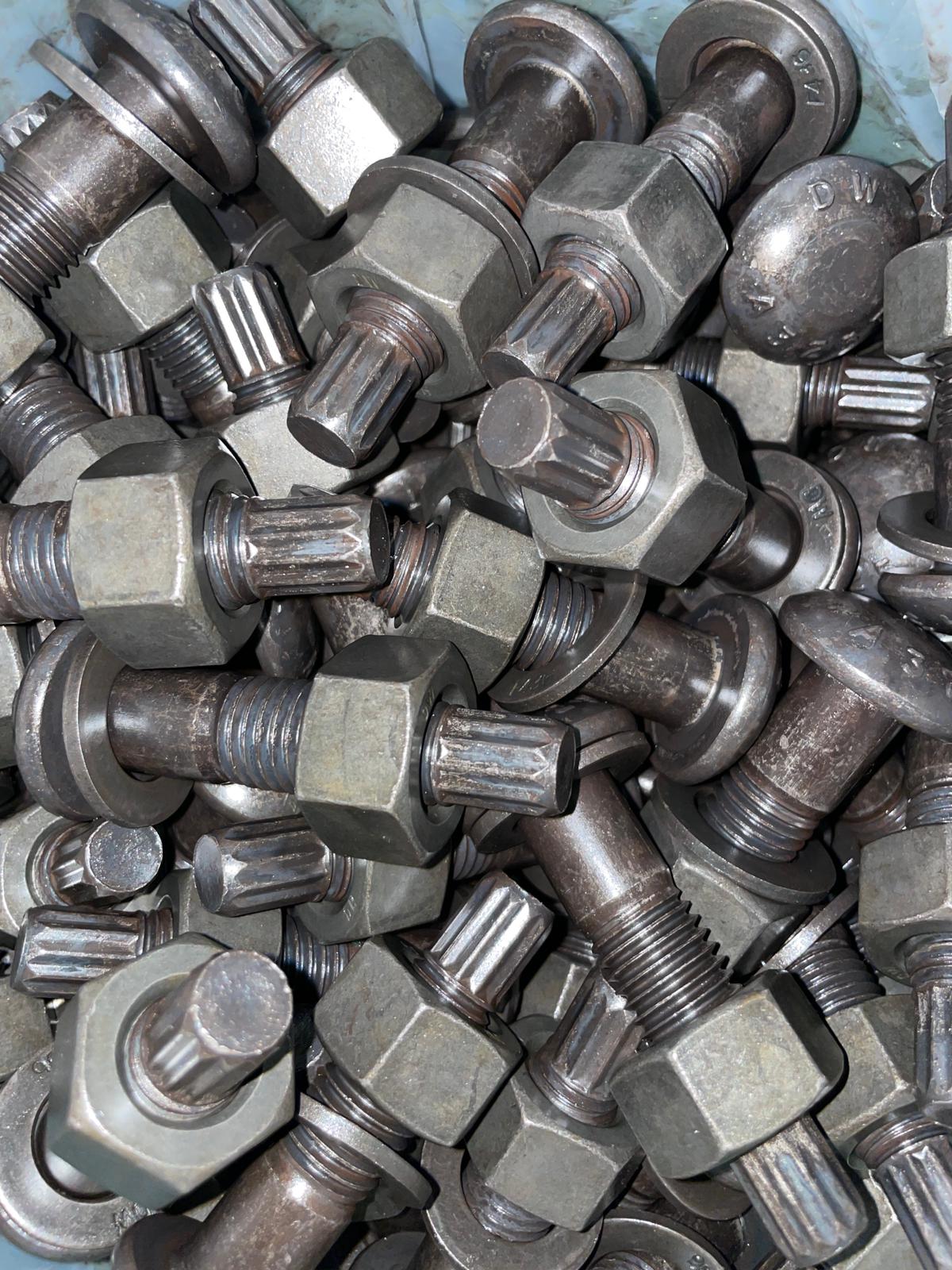
A Tension Control Bolt is not a standard fastener. It is a precision-engineered system designed to take the human element out of the tensioning process. The assembly typically consists of a high-strength bolt with a unique domed head, a partially threaded shank, a heavy hex nut, and a hardened washer.
The defining feature of the TC bolt is the "spline" located at the end of the bolt shank. This spline is designed with a specific break-neck point. When the bolt is installed using a specialized electric shear wrench, the tool grips the spline and rotates the nut in the opposite direction. Once the bolt reaches the predetermined tension required by industry standards, the spline shears off.
This mechanism ensures that every single bolt in a structural steel connection is tightened to exactly the right specification. There is no need for a calibrated torque wrench or constant monitoring of air pressure on pneumatic tools. The bolt itself tells you when the job is done.
The Mechanics of the Shear Process
We recognize that consistency is the foundation of structural integrity. In traditional hex bolting, achieving the correct tension: often referred to as "pre-tension": is dependent on the friction between the nut and the bolt threads, which can vary based on lubrication, weather conditions, or the skill of the installer.
With TC bolts, the tensioning process is mechanical and internal. The shear wrench features two sockets: an inner socket that holds the spline and an outer socket that turns the nut. As the wrench operates, it applies equal and opposite forces. The spline is engineered to fail only when the internal tension in the bolt reaches its specified limit.
This process eliminates the risk of over-tightening or under-tightening. When the spline snaps off, it serves as an immediate visual confirmation that the connection is secure. For inspectors on a bridge or high-rise project, a quick glance at the missing splines is often enough to verify that the bolting crew has completed their work correctly.
Why Infrastructure Projects Demand TC Bolts
Infrastructure projects such as bridges, highways, and high-rise towers are subject to immense dynamic loads, thermal expansion, and vibration. In these environments, the reliability of high-strength bolts is non-negotiable.
We provide TC bolts because they offer several distinct advantages for heavy industry:
1. Superior Vibration Resistance Because TC bolts are installed to a high level of pre-tension, they are significantly more resistant to loosening caused by vibration compared to standard fasteners. This is critical for railway bridges and industrial facilities housing heavy machinery.
2. Uniformity Across the Grid On a project involving thousands of fasteners, maintaining uniformity is difficult with manual torque methods. TC bolts ensure that every connection point across a massive steel flange or gusset plate behaves identically under load.
3. Single-Worker Installation Traditional structural bolting often requires one person to hold the bolt head with a wrench while another person tightens the nut. TC bolts are designed for one-sided installation. A single worker can operate the shear wrench, significantly reducing labor costs and increasing the speed of the erection process.
Installation Efficiency and Job Site Safety
Efficiency on a job site is about more than just speed; it is about reducing the margin for error. We understand that project timelines are often tight, and delays in structural inspections can set a schedule back by weeks.
The installation of TC bolts is remarkably straightforward:
- Insertion: The bolt is inserted through the aligned holes of the steel members.
- Placement: The washer and nut are placed onto the bolt.
- Engagement: The shear wrench is engaged, with the inner socket over the spline and the outer socket over the nut.
- Tensioning: The tool is activated, and the nut is tightened until the spline shears off.
- Verification: The snapped spline is collected (often in a catchment bag on the wrench), leaving a clean, finished connection.
This process is not only faster but also quieter and safer than using traditional impact wrenches. Reduced noise levels contribute to a better working environment, and the lack of "kickback" from the shear wrench reduces worker fatigue and the risk of repetitive motion injuries.
TC Bolts vs. Traditional Hex Bolts
While standard heavy hex bolts remain a staple in construction, TC bolts are increasingly becoming the standard for structural applications. The primary difference lies in the verification process.
Traditional bolts require complex testing methods such as the "turn-of-nut" method, the use of direct tension indicators (DTIs), or calibrated wrench tensioning. Each of these methods adds a layer of complexity and potential for error. TC bolts integrate the tensioning and verification into a single step.
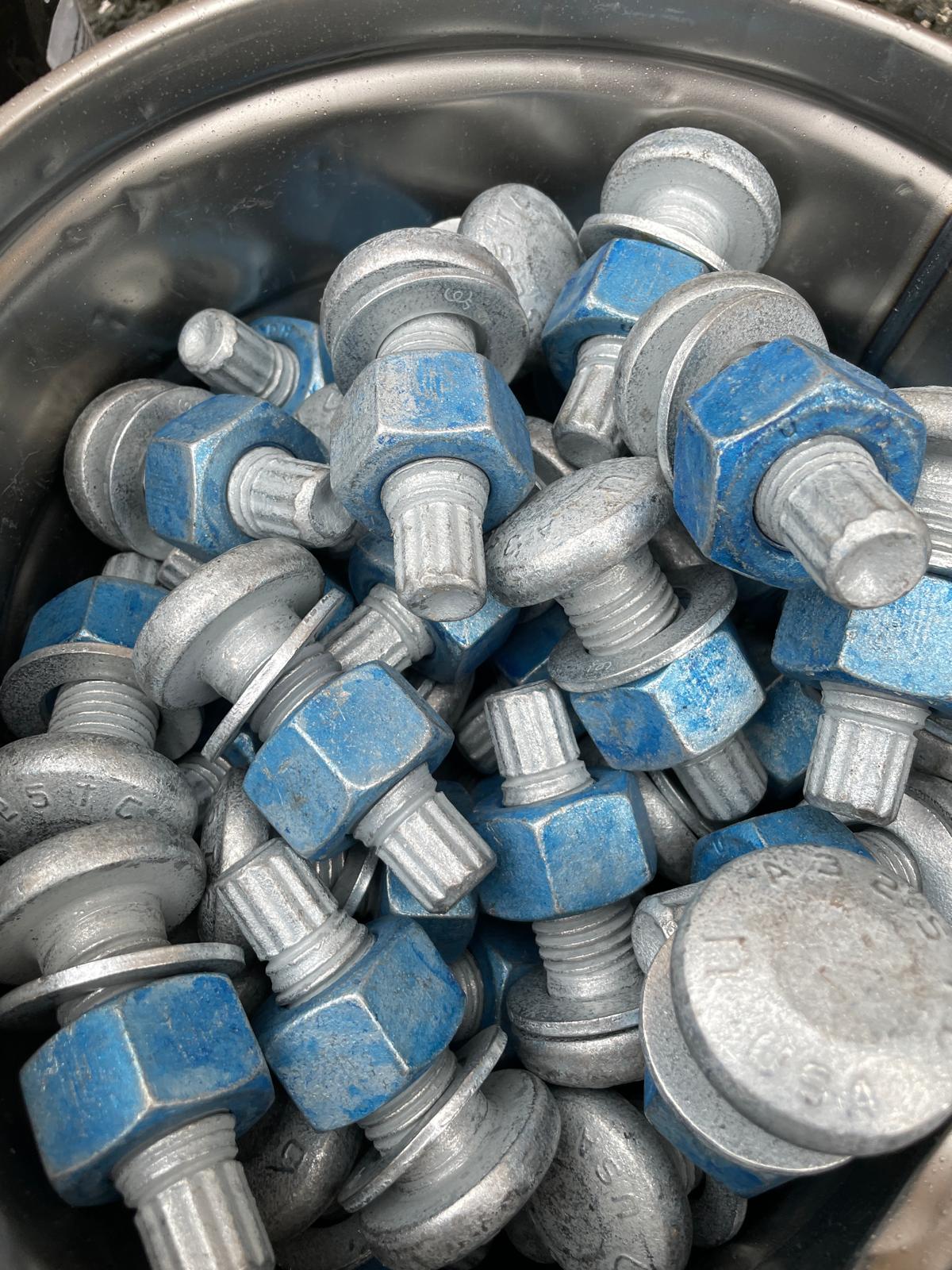
Furthermore, TC bolts are typically supplied as a pre-assembled set. This ensures that the nut and bolt are from the same manufacturer and are properly lubricated to work together. This "assembly" approach minimizes the risk of mixing components that might not meet the required structural grades. For projects requiring specific durability, we offer galvanized TC bolts that provide excellent corrosion resistance in harsh environments.
Applications in Specialized Heavy Industry
The versatility of Tension Control Bolts extends beyond standard building frames. We see these fasteners being utilized in some of the most demanding engineering environments today:
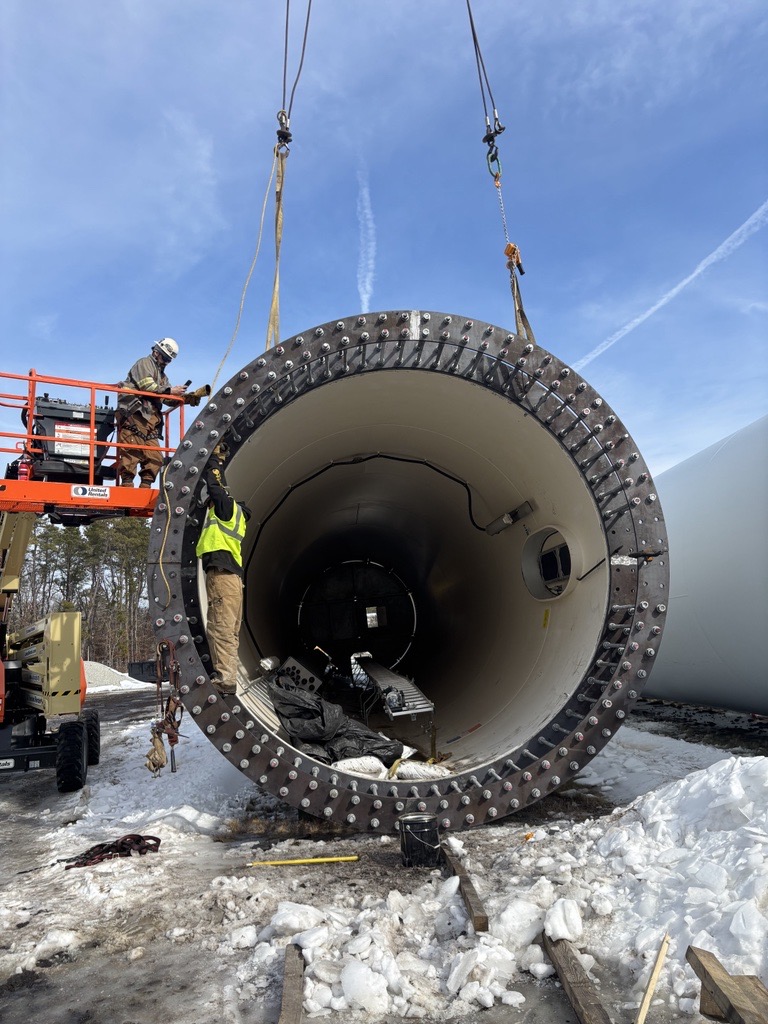
Wind Energy Infrastructure Wind turbine towers are subject to constant, varying wind loads that create significant fatigue on fasteners. The use of high-strength structural bolts in the flange connections of these towers is essential. TC bolts provide the precision necessary to ensure these structures remain stable for their 20- to 30-year lifespans.
Bridge Construction and Rehabilitation Bridges require fasteners that can withstand both environmental elements and constant traffic. Whether it is a new highway overpass or the rehabilitation of a historic rail bridge, TC bolts offer the speed and reliability required for critical transportation infrastructure.
Mining and Industrial Facilities In the mining industry, structures must support massive weights and withstand abrasive environments. TC bolts are used in crane support structures, processing plants, and seismic-resistant frames where failure is not an option.
LRKD Industries: Your Partner in Structural Supply
At LRKD Industries, we are more than just a supplier; we are a centralized resource for the heavy construction industry. We recognize the importance of order accuracy and traceability. Every structural bolt we provide is staged and handled with the professional care required for high-stakes infrastructure.
Our commitment to quality is backed by our certifications as a minority- and woman-owned business (MWBE) recognized by the Port Authority of NY & NJ. We provide the technical support and the high-grade steel fasteners needed to keep your project moving forward without delay.
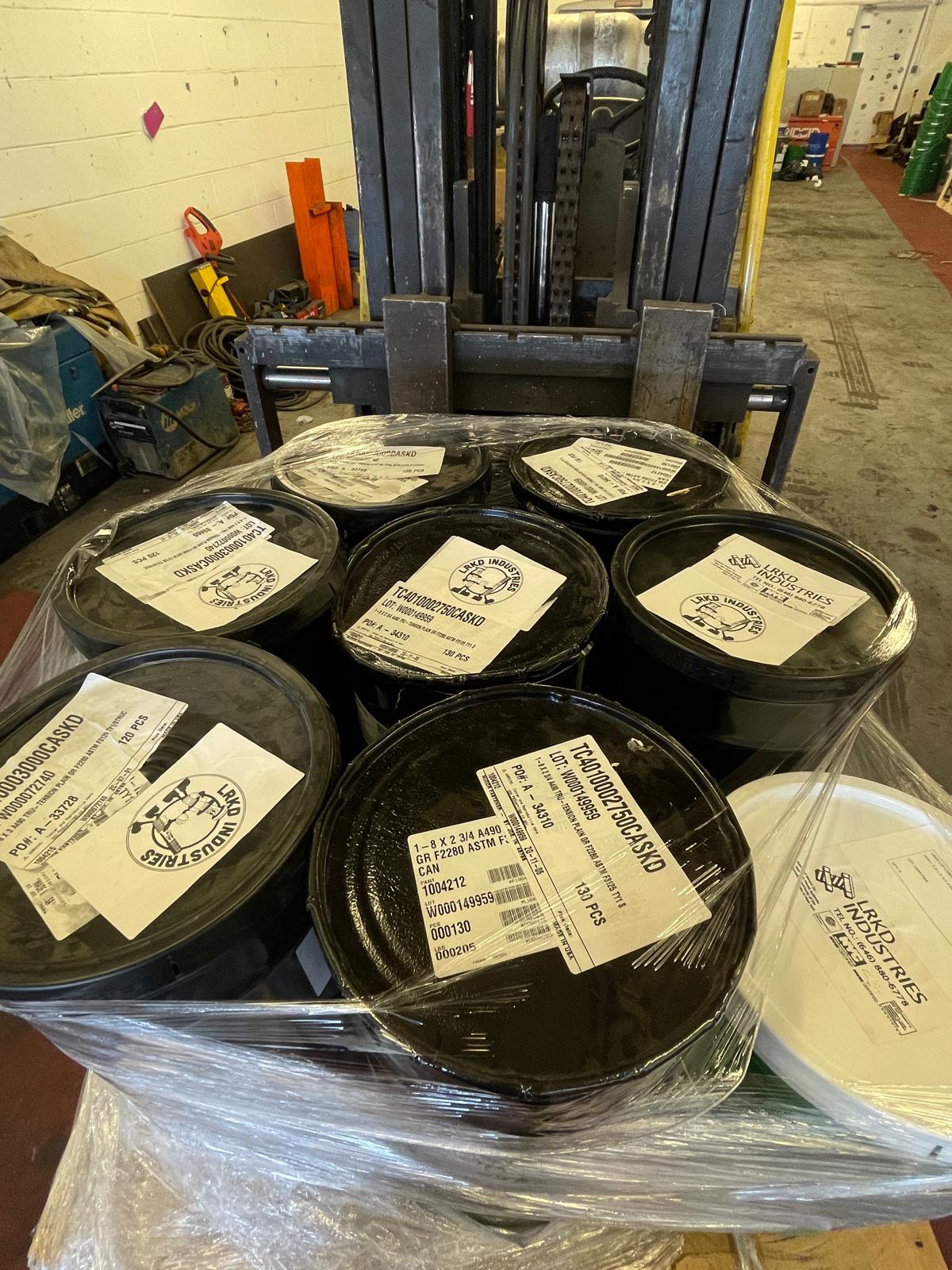
Whether you are working on a high-rise in the city or a bridge in a remote location, the fasteners you choose define the strength of your work. Tension Control Bolts represent the pinnacle of modern structural fastening: combining engineering precision with practical, on-site efficiency.
We advocate for the use of TC bolts in all critical structural applications because we believe in the safety and reliability they bring to the built environment. From heavy hex nuts to complete TC assemblies, we have the inventory to support your most ambitious projects.
For more information on our full range of structural fasteners and to see how we can streamline your supply chain, visit our collections page or contact our team directly. We are here to ensure that every connection you make is a secure one.
Author: MEDIA_LRKD