

In the demanding world of heavy construction and infrastructure, the integrity of a steel connection is non-negotiable. Whether you are erecting a skyscraper in the heart of a city or assembling a bridge that must withstand decades of high-velocity winds and traffic, the fasteners you choose dictate the project’s longevity. Among the various solutions available to engineers and site managers today, Tension Control (TC) bolts have emerged as the gold standard for efficiency, reliability, and precision.
We recognize that in heavy industry, time is just as valuable as structural safety. Tension Control bolts address both of these priorities by simplifying the installation process while providing an infallible method for verifying tension. At LRKD Industries, we specialize in providing high-strength structural bolts that meet the rigorous demands of modern engineering. This guide provides a deep dive into why TC bolts are the preferred choice for major infrastructure projects and how they can streamline your next build.
Understanding the Mechanics of Tension Control Bolts
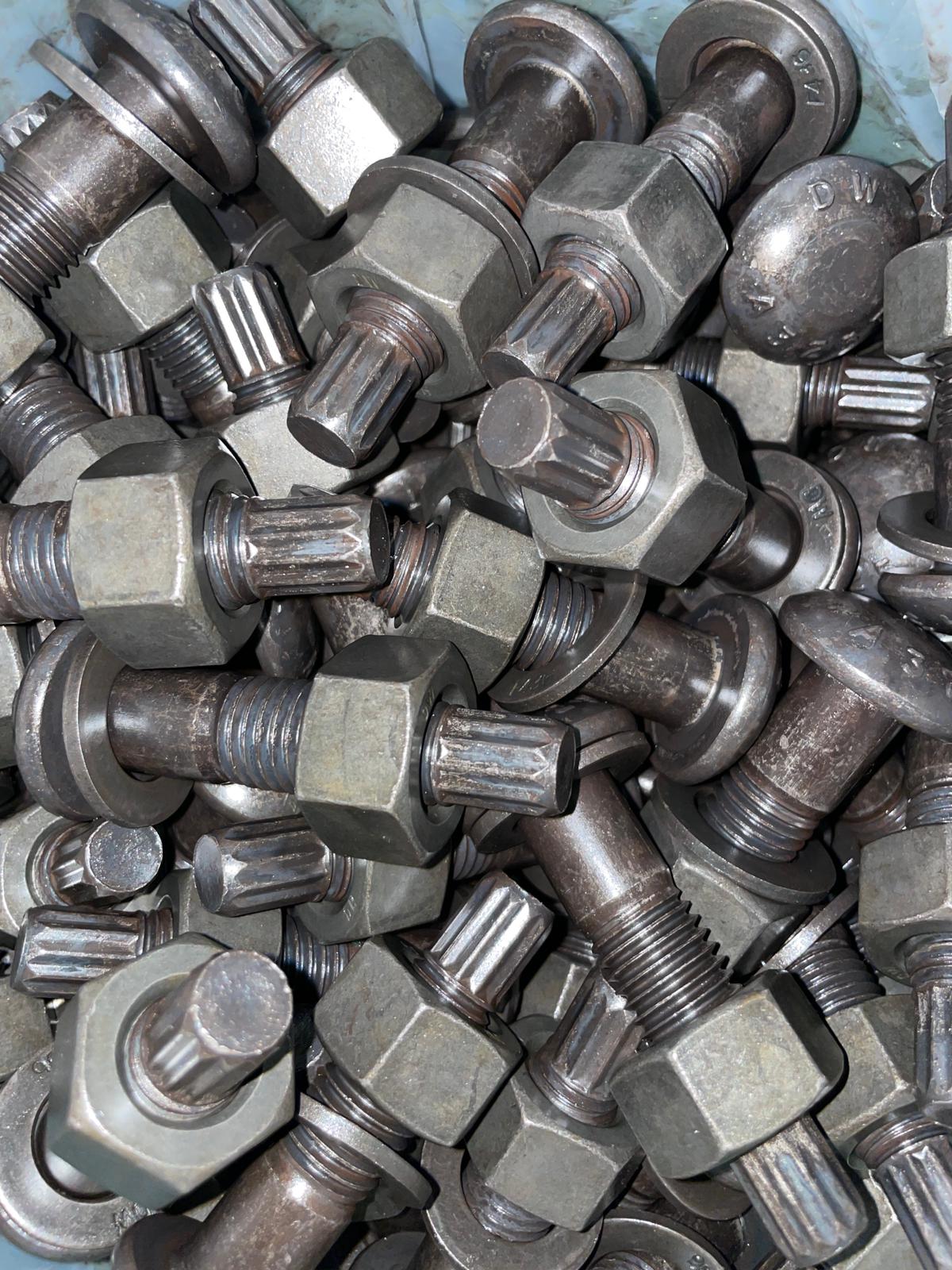
A Tension Control bolt is not a standalone fastener; it is a precision-engineered assembly consisting of a bolt, a nut, and a washer. The bolt itself is characterized by its unique domed head and a sacrificial "spline" at the tip of the shank. Unlike traditional hex bolts that require two workers and calibrated torque wrenches to ensure proper tensioning, the TC bolt utilizes a specialized electric shear wrench to reach the required preload.
The magic of the TC bolt lies in the spline. During installation, the shear wrench holds the spline while rotating the nut. Once the internal tension within the bolt reaches the specified limit, the spline shears off. This mechanical "break-point" is calibrated to the exact tension requirements of the bolt grade, providing an immediate, visual confirmation that the connection is secure.
The Structural Advantages of TC Bolts
The primary reason engineers specify TC bolts in heavy industry is their superior resistance to vibration and load reversal. In structures subject to dynamic loads: such as bridges, cranes, and offshore platforms: traditional fasteners can eventually loosen if they are not perfectly tensioned.
Vibration and Slip Resistance TC bolts create a high-strength friction-grip connection. Because the bolts are installed to a precise preload, they distribute tension evenly across the entire structural joint. This heavy preload prevents slippage between steel plates, even in moment-resisting components. Furthermore, because the tensioning process does not induce torsional shear in the bolt shank itself, there is no "relaxation" of the bolt over time.
Consistent Tensioning When using traditional hex bolts, the accuracy of the tension depends heavily on the operator's skill and the calibration of the tools. With TC bolts, the "intelligence" of the tensioning is built into the bolt itself. The spline will only shear once the proper tension is achieved, regardless of the installer's experience level. This eliminates the guesswork and variability that can lead to structural vulnerabilities.
Streamlining Installation for Maximum Productivity
Efficiency on the job site is often the difference between a project coming in under budget or spiraling into delays. TC bolts offer significant logistical and labor advantages over traditional bolting methods.
The One-Man Installation Crew Traditional high-strength bolting often requires two workers: one to hold the bolt head with a wrench and another to tighten the nut. Because the shear wrench used for TC bolts reacts against the spline of the bolt itself, it is a non-impacting, one-sided installation process. A single ironworker can install TC bolts quickly and safely, effectively doubling the productivity of your bolting crew.
Simplified Visual Inspection Inspection is a critical phase of any heavy industry project. With traditional fasteners, inspectors must often use torque wrenches to verify a percentage of the installed bolts, a process that is both time-consuming and prone to error. With Tension Control bolts, the inspection is purely visual. If the spline is sheared off, the bolt is properly tensioned. This "guaranteed" tensioning allows projects to move through the inspection phase at an accelerated pace, ensuring that structural steelwork stays on schedule.

Technical Specifications and Standards
At LRKD Industries, we ensure that our supply meets the strictest industry regulations. Tension Control bolts are manufactured according to ASTM F3125, which covers high-strength structural bolts. Within this standard, there are two primary grades used in heavy industry:
- Grade F1852: This is the TC equivalent of the standard A325 bolt, commonly used in general structural steel applications.
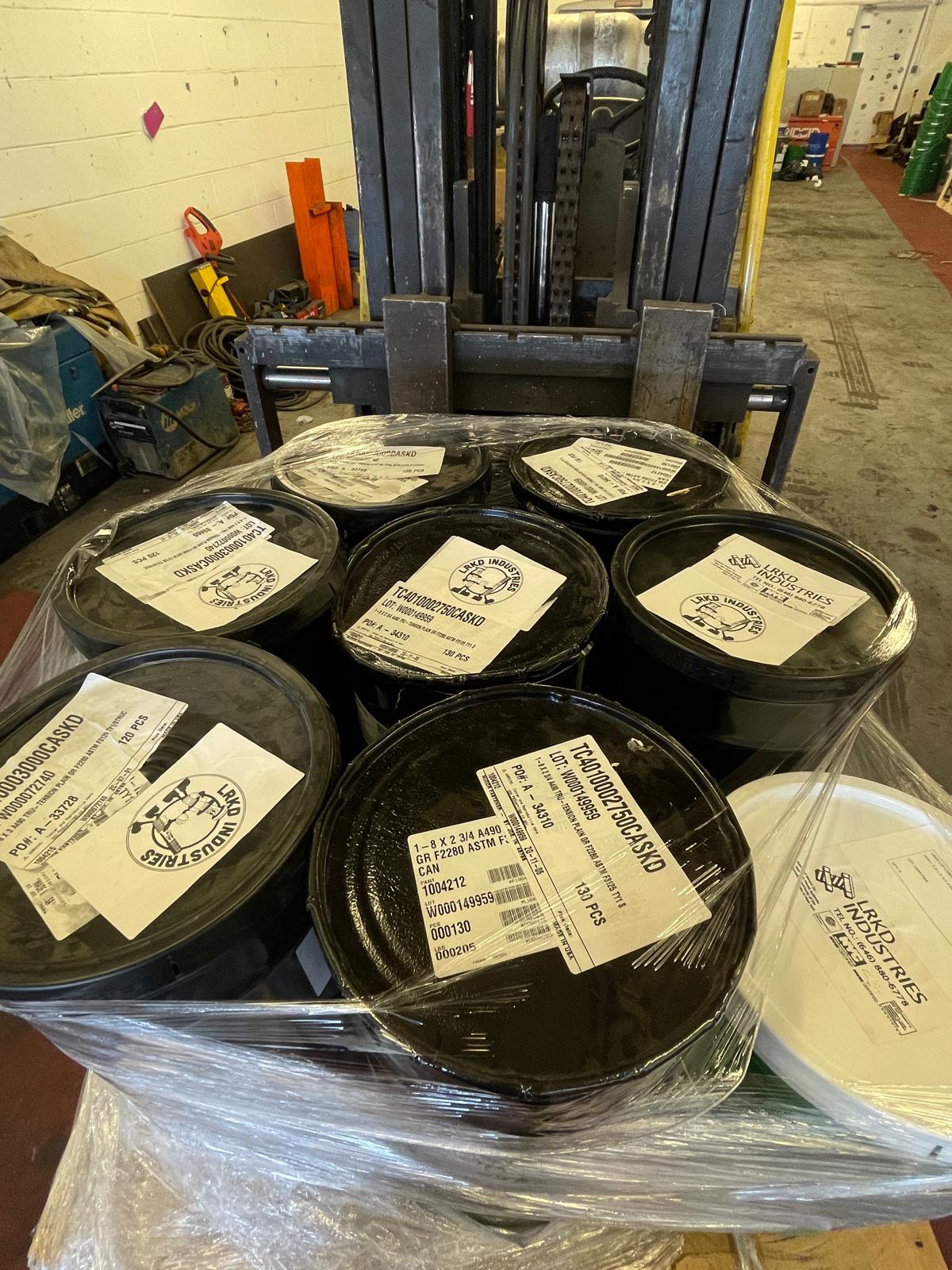
- Grade F2280: This is the TC equivalent of the higher-strength A490 bolt, utilized in heavy industrial projects where maximum tensile strength is required.
It is important to note that TC bolts are provided as a single, pre-lubricated assembly with a specific lot number. This ensures that the friction between the nut and the bolt remains constant, which is essential for the spline to shear off at the correct tension. Mixing nuts or washers from different lots can compromise the accuracy of the tensioning.
Calculating the Correct Bolt Length
For engineers and project managers, selecting the correct bolt length is vital to ensure that the spline extends far enough beyond the nut for the shear wrench to engage. The bolt diameter determines the additional length required beyond the "grip" (the total thickness of the steel being joined):
- 5/8" diameter: Add 7/8" to the grip length.
- 3/4" diameter: Add 1" to the grip length.
- 7/8" diameter: Add 1 1/8" to the grip length.
- 1" diameter: Add 1 1/4" to the grip length.
Ensuring these measurements are accurate during the procurement phase prevents costly delays and re-orders during the erection process.
Applications Across Heavy Infrastructure
The versatility of TC bolts makes them indispensable in various sectors. We see their application most frequently in projects where safety and structural integrity are the highest priorities.
Bridge and Highway Construction Bridges are subject to constant vibration and thermal expansion. The friction-grip connections provided by TC bolts are essential for maintaining the alignment of massive steel girders over decades of use.
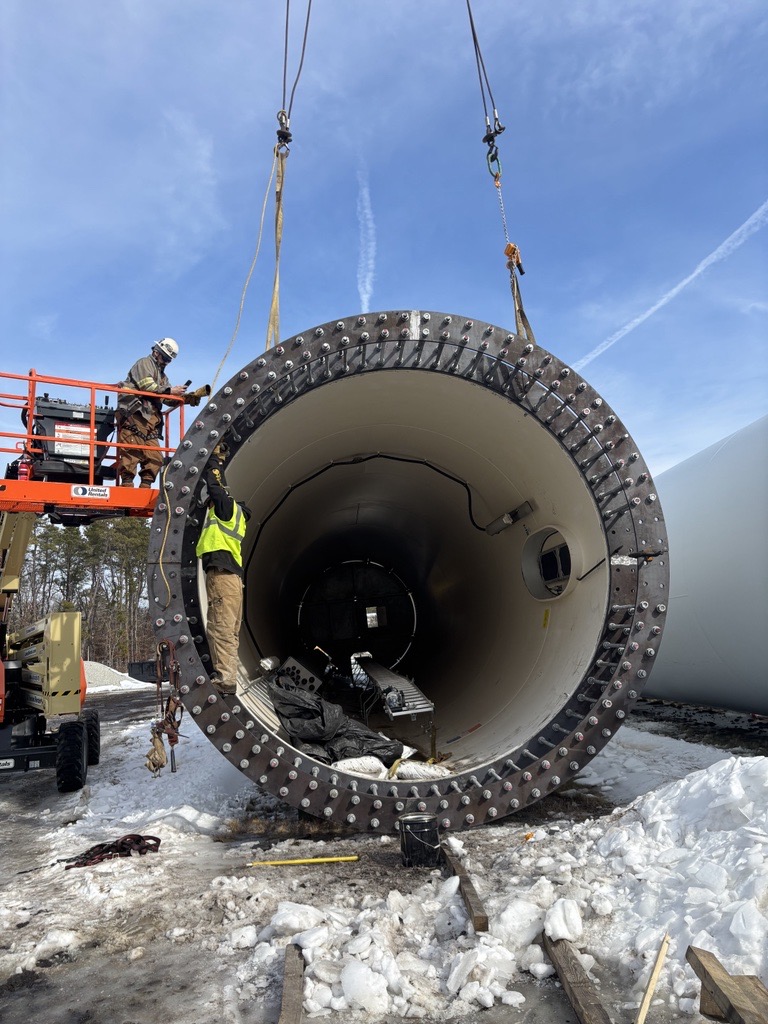
Power Generation and Wind Energy As the energy sector moves toward larger, more complex structures, the demand for high-strength fasteners has grown. From the bases of massive wind turbines to the structural frames of power plants, TC bolts provide the necessary strength to support heavy machinery and resist environmental stressors.
High-Rise Commercial Buildings In high-rise construction, speed and safety are paramount. The ability for a single worker to quickly secure beam-to-column connections allows the building's skeleton to rise faster, enabling following trades to begin their work sooner.
Beyond the Bolt: Comprehensive Support for Construction
While Tension Control bolts are a cornerstone of structural steel, heavy industry projects require a wide array of specialized hardware. At LRKD Industries, we understand that the fasteners are only part of the equation.
For foundation work and anchoring massive steel structures to concrete, we provide precision-engineered anchor bolt cages and hardware. It is important to distinguish these from structural TC bolts; foundation anchors are typically manufactured to ASTM F1554 standards (Grades 36, 55, or 105) to ensure they can handle the unique stresses of embedment in concrete. We pride ourselves on being a centralized resource for everything from hex bolts to custom-fabricated embed plates.
Why Partner with LRKD Industries?
We recognize that our clients are not just looking for a vendor; they are looking for a reliable partner who understands the high stakes of heavy industry. As a minority- and woman-owned business certified by the Port Authority of NY & NJ, we bring a commitment to excellence and diversity to every project we touch.
Our team is dedicated to providing tailored solutions that meet the specific technical requirements of your project. We maintain a robust inventory of priority products in stock to ensure that when your site needs fasteners, they arrive without delay. We believe that by providing the highest quality Tension Control bolts and structural fasteners, we are helping to build the infrastructure that powers our communities and fuels our economy.
Heavy industry is built on a foundation of precision and trust. By choosing Tension Control bolts from LRKD Industries, you are investing in a fastener system that offers unparalleled safety, efficiency, and structural performance. Whether you are working on a transit project, a power plant, or a commercial high-rise, we have the expertise and the inventory to help you succeed.
Author: MEDIA_LRKD