

Author: LRKD Team
Structural steel connections demand precision. When bridge girders meet support columns, when building frames rise floor by floor, when industrial infrastructure bears dynamic loads, the fasteners holding these connections together must perform without compromise. Tension Control Bolts represent a fundamental shift in how we approach high-strength steel-to-steel connections, eliminating guesswork and delivering consistent, verifiable tension in every installation.
What Sets Tension Control Bolts Apart
Tension Control Bolts differ from conventional structural fasteners in both design and function. Where standard hex head bolts require torque wrenches and calculation, TC bolts incorporate built-in tension verification through their distinctive spline-end design. The dome-shaped head replaces the traditional hex configuration, while the spline at the bolt's end serves as both an installation interface and a precise tension indicator.
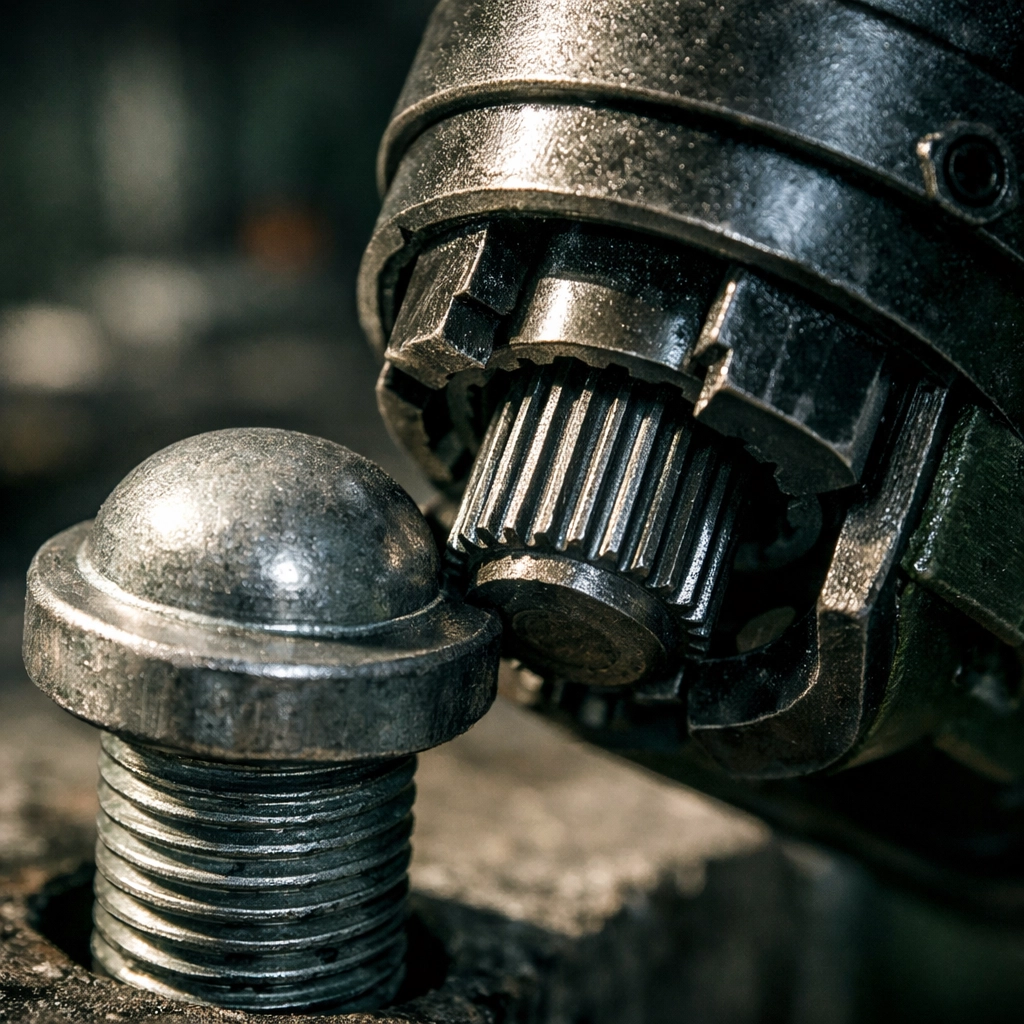
Most TC bolts arrive as pre-assembled units, with the bolt, nut, and washer matched as a system. This assembly approach ensures component compatibility and streamlines jobsite logistics. The bolts themselves are manufactured to property class 10.9/10, delivering superior tensile strength that meets the demands of critical structural applications.
The engineering behind this design addresses a persistent challenge in structural steel work: achieving consistent, adequate preload across multiple connections. Traditional methods rely on operator skill, calibrated equipment, and favorable conditions. TC bolts move tension verification from external measurement to mechanical certainty.
The Installation Process: Precision Through Simplicity
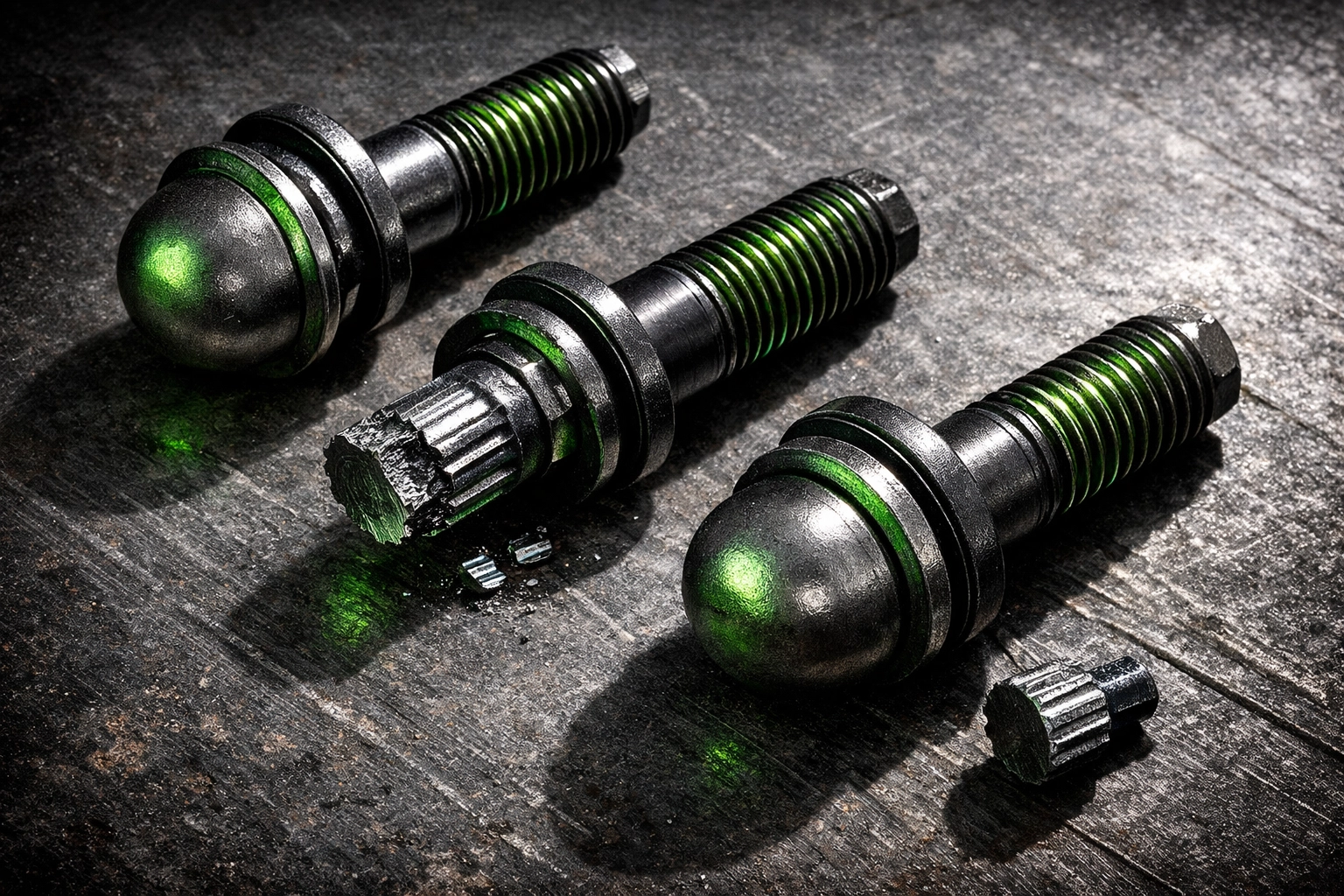
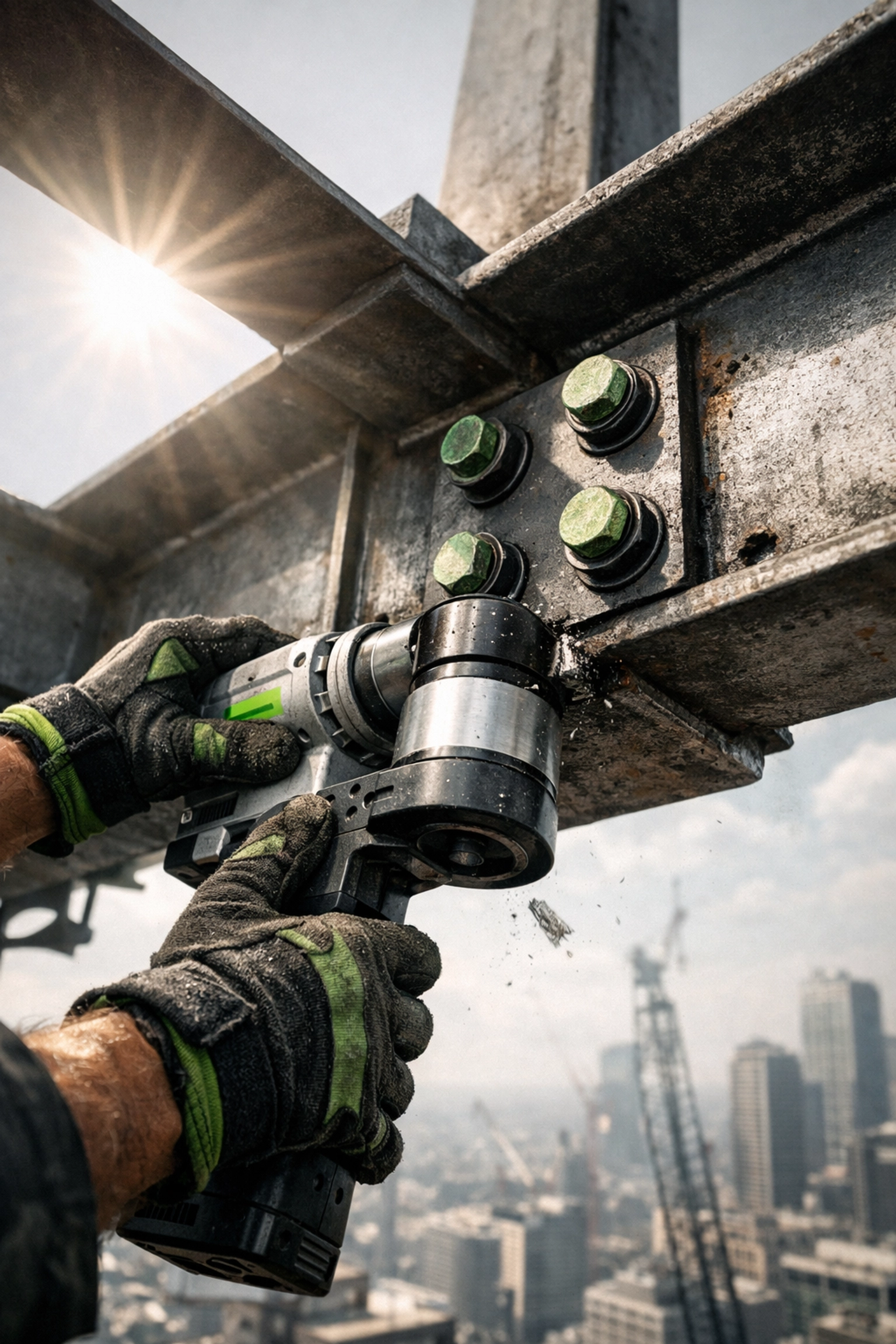
Installation of Tension Control Bolts requires a specialized shear wrench that engages the spline end while the nut rotates. The wrench prevents bolt rotation during tightening, maintaining alignment and protecting thread integrity. As torque increases and the assembly reaches its predetermined tension threshold, the spline automatically shears off at its engineered failure point.
This mechanical break serves as physical confirmation that proper tension has been achieved. There's no need for calibration checks, no torque calculations, no second-pass verification. The absence of the spline indicates a properly tensioned connection.
The process allows single-operator installation on most applications. One ironworker can move from connection to connection, completing installations efficiently without coordinating with a partner to prevent bolt rotation. This operational efficiency translates directly to labor cost reduction and accelerated project timelines.
Performance Characteristics That Matter
Tension Control Bolts deliver several critical performance advantages in structural applications. The consistent preload achieved through spline-shear installation creates friction-grip connections that resist slippage between mated surfaces. This friction interface prevents relative movement in the joint, distributing loads evenly across the connection area.
Vibration resistance in TC bolt installations comes from this high preload. Properly tensioned connections maintain their grip through dynamic loading cycles, eliminating the loosening that can occur with inadequately tensioned conventional fasteners. Lock nuts and supplementary retention hardware become unnecessary.
The absence of torsional shear during installation prevents the stress relaxation that occurs when conventional bolts are torqued. Torque-based tightening induces twisting forces in the bolt shank that can relax over time as the material seeks equilibrium. TC bolts apply pure tension without rotational stress, maintaining their preload over the connection's service life.
In applications subject to load reversals: crane support structures, seismic-resistant frames, bridges experiencing traffic-induced sway: TC bolts handle cyclic stress effectively. The heavy preload keeps the joint surfaces in compression through load cycles, preventing impact and fretting between mated parts.
Fatigue performance benefits from this same principle. The distributed tension across the connection reduces stress concentrations and allows the joint to function as a unified structure rather than discrete components moving against each other. For infrastructure designed for decades of service under repeated loading, this fatigue resistance represents a fundamental reliability advantage.
Where TC Bolts Prove Essential
Bridge construction represents one of the primary application areas for Tension Control Bolts. Steel bridge assemblies require thousands of high-strength connections, each critical to the structure's integrity. The speed and consistency of TC bolt installation directly impacts project schedules, while the verifiable tension in every connection provides the quality assurance that bridge engineering demands.
Commercial and industrial building construction uses TC bolts throughout steel frame assembly. Multi-story structures rely on beam-to-column connections that must perform under both gravity loads and lateral forces. TC bolts provide the reliable connection strength that structural engineers specify for these critical joints.
Mining and tunneling operations specify TC bolts for underground support structures where access for inspection and maintenance is limited. The installation verification built into TC bolts provides confidence that connections are adequate from the start, without requiring follow-up inspection in confined or hazardous spaces.
Power generation facilities use TC bolts in equipment assembly where vibration, thermal cycling, and the consequences of connection failure justify the performance and reliability advantages. Electrostatic precipitators, structural supports for turbines and generators, and access platforms within power stations all benefit from TC bolt technology.
Heavy machinery manufacturing incorporates TC bolts where precise alignment and consistent connection strength affect machine performance and longevity. Equipment subjected to operational vibration and dynamic loads requires fastening systems that maintain their integrity through the machine's service life.
Offshore platforms and marine structures face corrosive environments and limited maintenance access. TC bolts with advanced protective coatings provide the durability these applications demand, while the installation confidence TC bolts deliver reduces the risk of connection failure in remote locations.
Making the Case: TC Bolts Versus Conventional Fasteners
The decision to specify Tension Control Bolts instead of conventional structural bolts comes down to several practical considerations. Installation efficiency matters on any project with schedule pressures. Single-operator installation and the elimination of torque verification steps translate to measurable time savings across large-scale projects.
Safety improves when installation quality doesn't depend on operator technique or equipment calibration. The mechanical verification built into TC bolts removes variables that can compromise connection integrity. Each installed bolt provides the same reliable tension, regardless of installer experience or site conditions.
Material efficiency becomes possible when engineers can confidently specify the actual required bolt grade and diameter without adding safety factors to compensate for installation uncertainty. TC bolts allow designers to optimize connections based on calculated loads rather than conservative assumptions about field installation quality.
Inspection requirements simplify dramatically. Visual verification of spline removal confirms proper installation. There's no need for torque measurement documentation, no calibration records to maintain, no debate about whether installed tension meets specification. The physical evidence of the broken spline provides unambiguous quality confirmation.
Technical Specifications and Standards
TC bolts manufactured to property class 10.9/10 provide tensile strength appropriate for structural steel applications. These specifications align with industry standards for high-strength fasteners while incorporating the tension control features that distinguish TC bolts from conventional products.
Surface treatments and protective coatings vary based on application requirements. Galvanized finishes provide corrosion resistance for outdoor and marine applications. Specialized coatings address specific environmental challenges in industrial settings. We supply TC bolts with the protection level your project conditions demand.
The pre-assembled nature of TC bolt systems ensures that nuts and washers match the bolt specification. This component compatibility eliminates the risk of mismatched hardware that can compromise connection performance.
Integration Into Your Project
Specifying Tension Control Bolts requires coordination between structural engineering, fabrication, and field installation teams. Structural drawings should clearly identify TC bolt locations and specifications. Shop drawings from steel fabricators need to reflect hole sizes and edge distances appropriate for TC bolt installation.
Field crews require the correct shear wrenches for the TC bolt specifications being installed. These tools are readily available and straightforward to operate, but advance planning ensures equipment availability when iron work begins.
For projects new to TC bolt technology, we provide technical support throughout the specification and installation process. Our understanding of structural steel connections and fastener systems allows us to address design questions and installation concerns as they arise.
Moving Forward With Confidence
Tension Control Bolts represent proven technology backed by decades of performance in demanding applications. The engineering principles that make TC bolts effective: mechanical tension verification, consistent preload, friction-grip connections: address fundamental requirements in structural steel work.
Whether you're engineering a bridge that will serve a community for generations, erecting a building that defines a skyline, or supporting infrastructure that powers industry, the connections holding these structures together deserve fastener technology that performs without compromise. TC bolts deliver that performance through elegant engineering and practical design.
We recognize that structural integrity begins with the details. Every bolt, every connection, every joint contributes to the whole. That's why we supply fastener systems engineered for the applications you build and the standards you uphold. When specifications call for Tension Control Bolts, we provide the products, technical knowledge, and support that keep your projects moving forward.
For more information about our structural fastener products and capabilities, visit our technical resources page or contact our team directly.