

In the world of structural steel and foundation engineering, the integrity of a project begins exactly where the steel meets the concrete. This critical junction relies on anchor bolts: the unsung heroes that secure massive structures against wind, seismic activity, and gravity. Since its introduction in 1994, ASTM F1554 has become the definitive standard for anchor bolts designed to anchor structural supports to concrete foundations.
At LRKD Industries, we recognize that a foundation is only as strong as the fasteners within it. Whether you are engineering a high-rise, a highway sign, or a massive wind turbine, understanding the nuances of F1554 is essential for safety, compliance, and long-term performance.
Understanding the ASTM F1554 Specification
ASTM F1554 is specifically tailored for anchor bolts. Unlike general-purpose bolts, these are engineered to be embedded in concrete. The specification covers three distinct grades, which are primarily defined by their minimum yield strength. Choosing the correct grade is the first step in ensuring structural success.
Grade 36
Grade 36 is the most common and versatile choice for standard construction projects. Made from low-carbon steel, it offers excellent ductility and weldability. With a minimum yield strength of 36 ksi, it is the go-to for light poles, residential foundations, and general-purpose structural supports. One of its most recognizable features is the blue color-coding often used by manufacturers to identify it on-site.
Grade 55
Grade 55 is a high-strength, low-alloy (HSLA) steel. It provides a balanced performance with a 55 ksi minimum yield strength. We often see Grade 55 specified for projects requiring moderate-to-high strength where Grade 36 might fall short but the extreme properties of Grade 105 aren't yet necessary. It is frequently used in highway signage and industrial equipment foundations.
Grade 105
Grade 105 is the "heavy lifter" of the F1554 family. This is an alloy, heat-treated steel with a minimum yield strength of 105 ksi. It is reserved for critical, high-stress structural connections, such as those found in high-rise buildings or heavy industrial machinery. While it offers immense strength, it sacrifices some ductility compared to Grades 36 and 55, making precision detailing even more critical during the design phase.
Anchor Bolt Configurations and Forms
The F1554 standard is not limited to a single shape. Depending on the pull-out resistance required and the specific engineering constraints of the foundation, anchor bolts are manufactured in four primary forms:
- Headed Bolts: These resemble traditional bolts with a forged head and a threaded shank. The head provides the necessary bearing surface within the concrete.
- Bent Anchor Bolts: Often referred to as L-bolts or J-bolts, these feature a 90-degree hook or a curved end to provide anchorage.
- Straight Rods: These are headless rods, often used in conjunction with nuts and washers on both ends to create an "anchor" effect.
- Headless All-Thread Rods: Fully threaded from end to end, these offer maximum flexibility for embedment depth adjustments.
The Art and Engineering of Anchor Bolt Cages
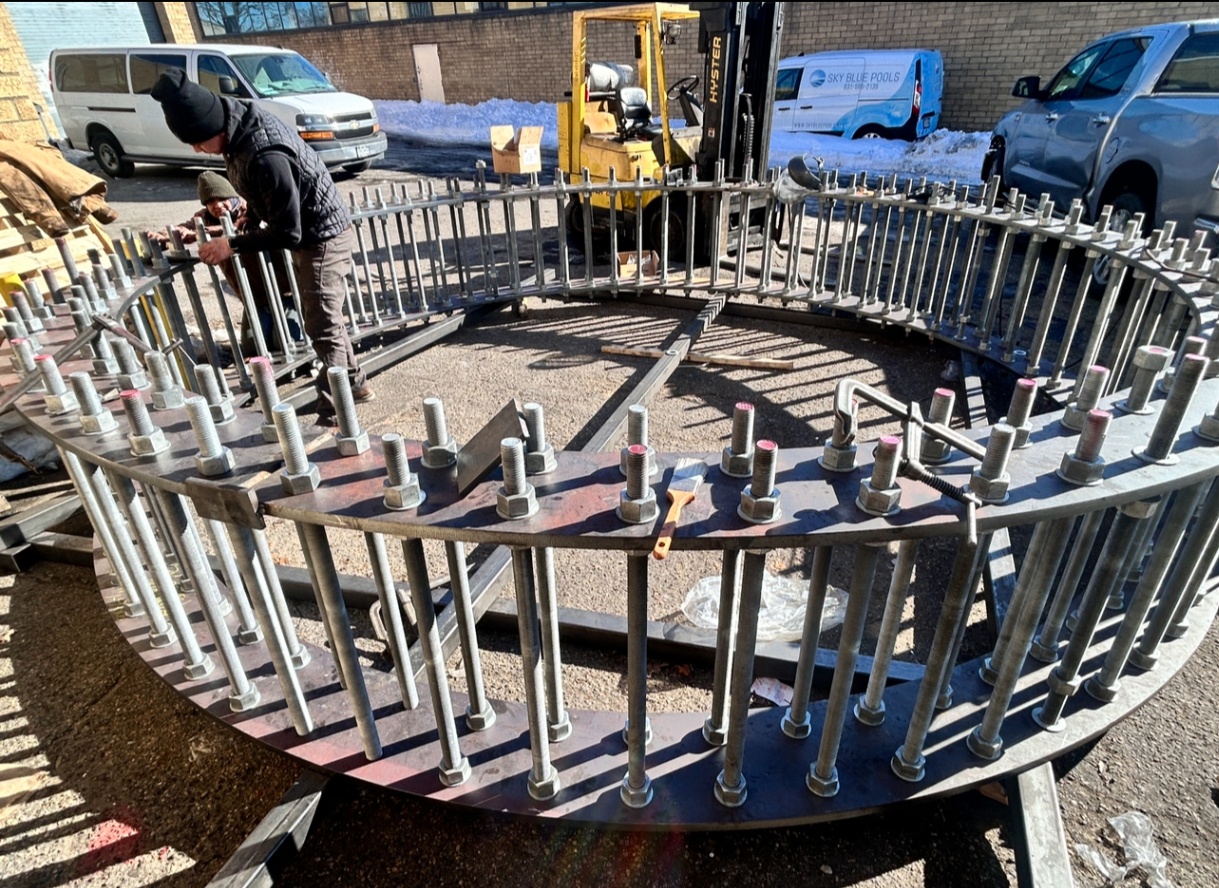
In heavy industrial and infrastructure projects, anchor bolts are rarely installed as individual units. Instead, they are assembled into complex anchor bolt cages. These cages ensure that dozens of bolts remain perfectly aligned during the concrete pour: a task where even a fraction of an inch of deviation can result in a catastrophic and expensive failure during steel erection.
At LRKD Industries, we specialize in the custom detailing and fabrication of these cages. For applications like wind turbine foundations or large support columns, we engineer cages that integrate the anchor bolts with high-strength templates and reinforcement.
Precision Detailing
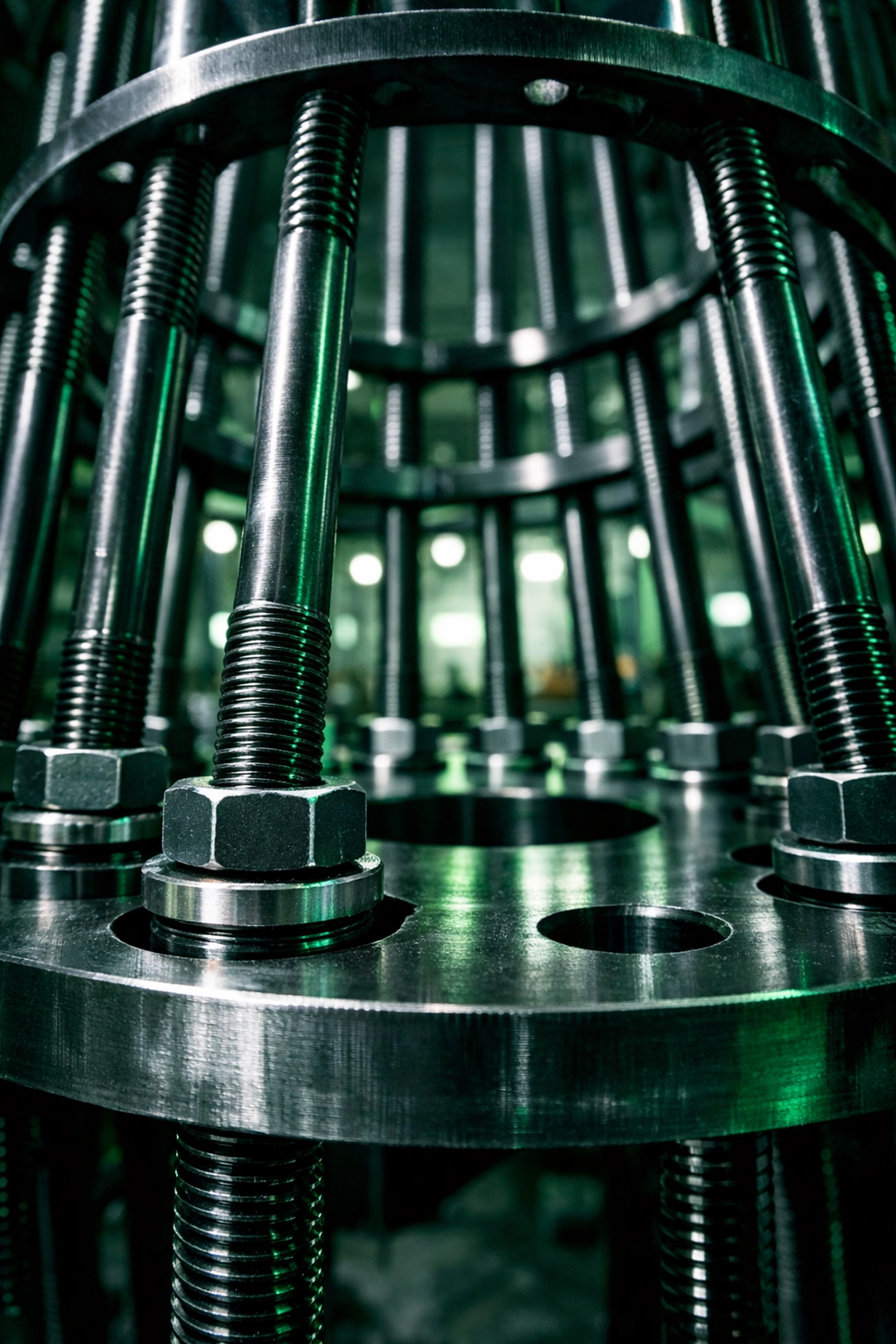
The detailing process involves more than just selecting bolt lengths. We consider the interaction between the bolts, the internal rebar, and the external structural members. Our team works closely with engineers to ensure that the spacing, projection, and embedment depths meet the exact specifications of the project's shop drawings.
Fabrication Expertise
Fabricating a cage requires a controlled environment and expert welding. When dealing with F1554 Grade 55 or Grade 105, welding procedures must be strictly followed to maintain the metallurgical integrity of the steel. We utilize heavy-duty steel templates to lock the bolts in place, ensuring that the bolt circle or grid remains perfectly concentric throughout transport and installation.
Mechanical Properties and Performance Standards
The success of a foundation relies on the mechanical properties of the fasteners. ASTM F1554 defines strict requirements for tensile strength, yield strength, and elongation.
| Property | Grade 36 | Grade 55 | Grade 105 |
|---|---|---|---|
| Yield Strength (min) | 36 ksi | 55 ksi | 105 ksi |
| Tensile Range | 58-80 ksi | 75-95 ksi | 125-150 ksi |
| Elongation (min) | 23% | 21% | 15% |
Beyond strength, the standard dictates dimensional tolerances. For bolts 24 inches or less, the length tolerance is ±1/2 inch. For longer bolts, it extends to ±1 inch. Threading follows the Unified Coarse (UNC) Thread Series, Class 2A, which ensures a consistent fit with nuts and washers.
Essential Components: Embed Plates and Templates
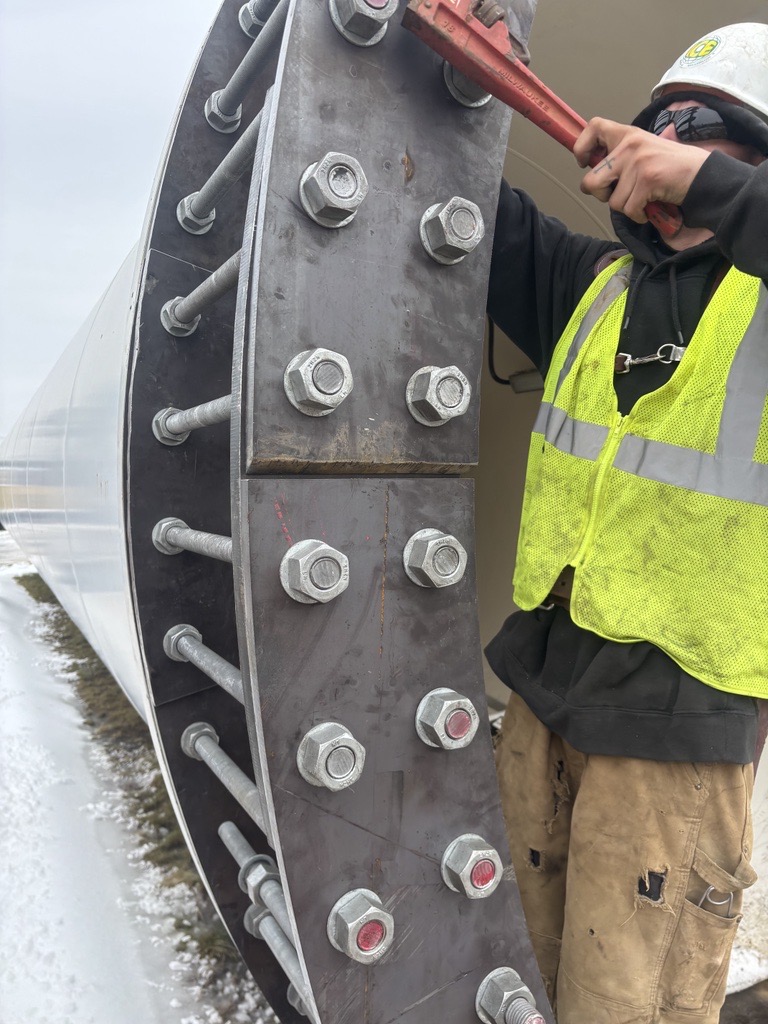
An anchor bolt system is incomplete without high-quality embed hardware. Embed plates act as the interface between the concrete and the steel structure, often serving as the base for welding or bolting structural columns.
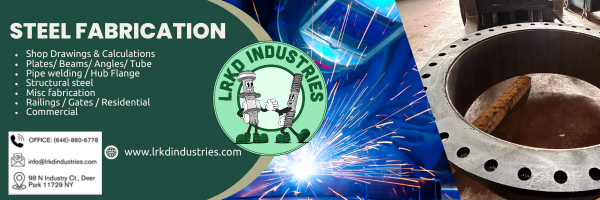
We provide comprehensive custom fabrication services that include the manufacturing of these plates alongside the F1554 bolts. By sourcing both the bolts and the plates from a single provider like LRKD Industries, contractors can ensure that tolerances match perfectly and that all components are delivered as a unified assembly.
Our capability statement highlights our proficiency in:
- Custom welding for structural supports
- Stainless steel and carbon steel fabrication
- Precision-drilled templates for complex bolt patterns
- Full documentation and certificates of compliance
Quality Control and On-Site Success
The lifecycle of an F1554 anchor bolt doesn't end at our fabrication shop. On-site handling and installation are just as critical. We recommend several best practices to ensure your foundation engineering succeeds:
- Verification of Marking: Ensure every bolt is marked or color-coded according to its grade. This prevents the accidental use of Grade 36 in an application designed for Grade 105.
- Template Stability: Use rigid templates at both the top and bottom of the cage. This prevents "walking" or leaning of the bolts when the wet concrete is vibrated.
- Thread Protection: Protect the protruding threads from concrete splatter and physical damage during the pour.
- Tensioning: For high-load applications, ensure that the nuts are tightened to the specified torque or tension, especially when using Grade 105 bolts in critical structural joints.
Why Partner with LRKD Industries?
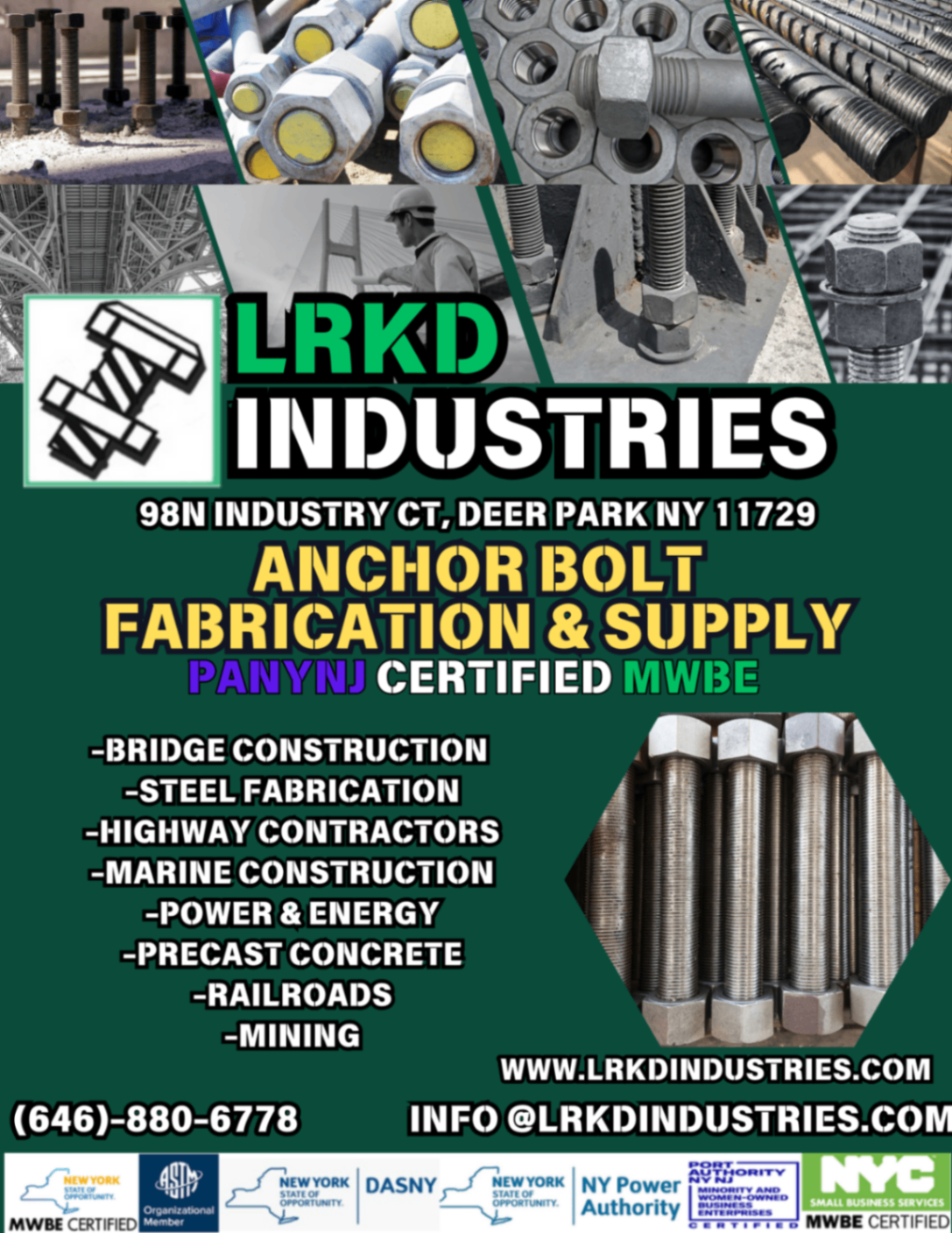
Navigating the complexities of ASTM F1554 and large-scale foundation engineering requires more than just a supplier; it requires a partner who understands the high stakes of structural integrity. As a certified Minority- and Woman-owned Business (MWBE) by the Port Authority of NY & NJ, LRKD Industries brings a commitment to quality and service that is deep-rooted in our company culture.
We provide a centralized solution for steel fasteners and construction supply. Our expertise extends beyond standard bolt supply into complex detailing and the fabrication of high-performance anchor cages for infrastructure, power, and commercial projects.
When you work with us, you are not just buying bolts; you are investing in the reliability of your foundation. From the initial Request for Quote to the final delivery of shop-assembled cages, we ensure every detail aligns with your engineering requirements.
Conclusion
ASTM F1554 anchor bolts are the foundation of modern infrastructure. By understanding the differences between Grades 36, 55, and 105, and recognizing the value of precision-engineered anchor cages, you can ensure the success of any foundation project. At LRKD Industries, we stand ready to support your next project with the technical expertise and high-quality fabrication needed to build structures that last.
Whether your project involves bridges, highways, or industrial centers, we recognize the challenges of the field and provide the tailored solutions required to meet them. Let’s build something strong together.
Author: MEDIA_LRKD