

Structural engineers and steel erection contractors working on complex infrastructure projects face an ongoing mandate: maximize joint reliability while driving down installation time. When your designs call for high-strength structural bolted connections that leave zero room for error, tension control bolts deliver unmatched performance. We recognize the rigorous standards required for bridges, high-rise buildings, and industrial facilities, which is why we supply precision-engineered TC bolts designed to streamline your assembly process from foundation to top-out.
Understanding the Demands of Modern Structural Steel Engineering
Structural steel erection leaves no margin for variability. Every connection in a commercial frame, bridge girder, or industrial facility must transfer calculated loads reliably throughout its operational lifespan. Traditional installation methods often introduce variables related to operator technique, tool calibration, and friction coefficients. When you are managing tight schedules across job sites in the New York area or nationwide, eliminating these variables is paramount to project success.
We understand that efficiency and structural integrity form the dual pillars of successful construction management. Contractors need fasteners that perform predictably under heavy cyclic loads and extreme environmental conditions. By selecting advanced fastener systems, engineering teams protect their structures against joint slip and fatigue. We provide the dependable supply chain and technical backing necessary to keep your structural projects moving forward without interruption.
What Are TC Bolts and How Do They Work?

A tension control bolt: commonly referred to as a TC bolt: is a heavy-duty structural fastener system engineered with a built-in tension indicator. Covered under specifications such as ASTM F3125 (including Grade F1852 for A325-equivalent strength and Grade F2280 for A490-equivalent strength), these assemblies consist of a heavy hex head, a shank, a threaded end, and a splined tip.
The installation mechanism defines the unique advantage of the TC bolt. Installers use a specialized electric or pneumatic shear wrench equipped with dual concentric sockets. The outer socket engages the nut and turns it clockwise, while the inner socket counter-rotates to grip the splined tip. As the nut tightens against the washer and structural steel ply, the clamping force increases until it reaches the precise pre-tension required by engineering specifications. At that exact threshold, the splined tip shears off cleanly and automatically.
This built-in shear mechanism removes guesswork from the job site. The sheared spline serves as an immediate visual confirmation that the correct pre-load has been achieved. We supply pre-certified, matched sets of bolts, nuts, and washers to ensure complete traceability and uncompromising structural performance on every connection.
TC Bolts Versus Traditional Heavy Hex A325 Bolts
Comparing TC bolts to conventional heavy hex A325 bolts reveals distinct operational differences in the field. Traditional A325 installation often relies on the turn-of-nut method or calibrated torque wrenches, both of which require rigorous multi-step inspection protocols and dual-operator coordination.
TC bolts transform the installation dynamic by enabling one-person, one-sided operation. Because the shear wrench controls the final tension internally, ironworkers do not need to hold the bolt head with a backup wrench. This dramatically accelerates assembly speeds on elevated steelwork, bridges, and industrial pipe racks.
Furthermore, inspection becomes a streamlined visual process. Instead of verifying torque values with manual wrenches or marking every single assembly, project inspectors simply verify that all splines have sheared off. We recognize that reducing inspection bottlenecks translates directly to labor savings and accelerated project delivery.
Accelerating Construction Timelines on Major Infrastructure

Major infrastructure projects demand fastening systems that withstand harsh weather, seismic activity, and heavy dynamic loading. TC bolts provide consistent, repeatable clamping force that resists vibration loosening in demanding environments like highway bridges, transit stations, and industrial processing plants.
The speed and reliability of tension control fasteners alter site logistics. Crews complete more connections per shift with less physical fatigue, thanks to the non-impacting, low-noise operation of modern shear wrenches. When working in urban environments or noise-sensitive zones, this operational advantage supports continuous productivity.
We recognize the logistical pressures faced by general contractors and steel fabricators, which is why we maintain robust inventories ready for prompt dispatch. Our structural supply solutions ensure your teams have the right fasteners on site exactly when erection sequences require them.
Partnering with LRKD Industries for Precision Fastening Solutions
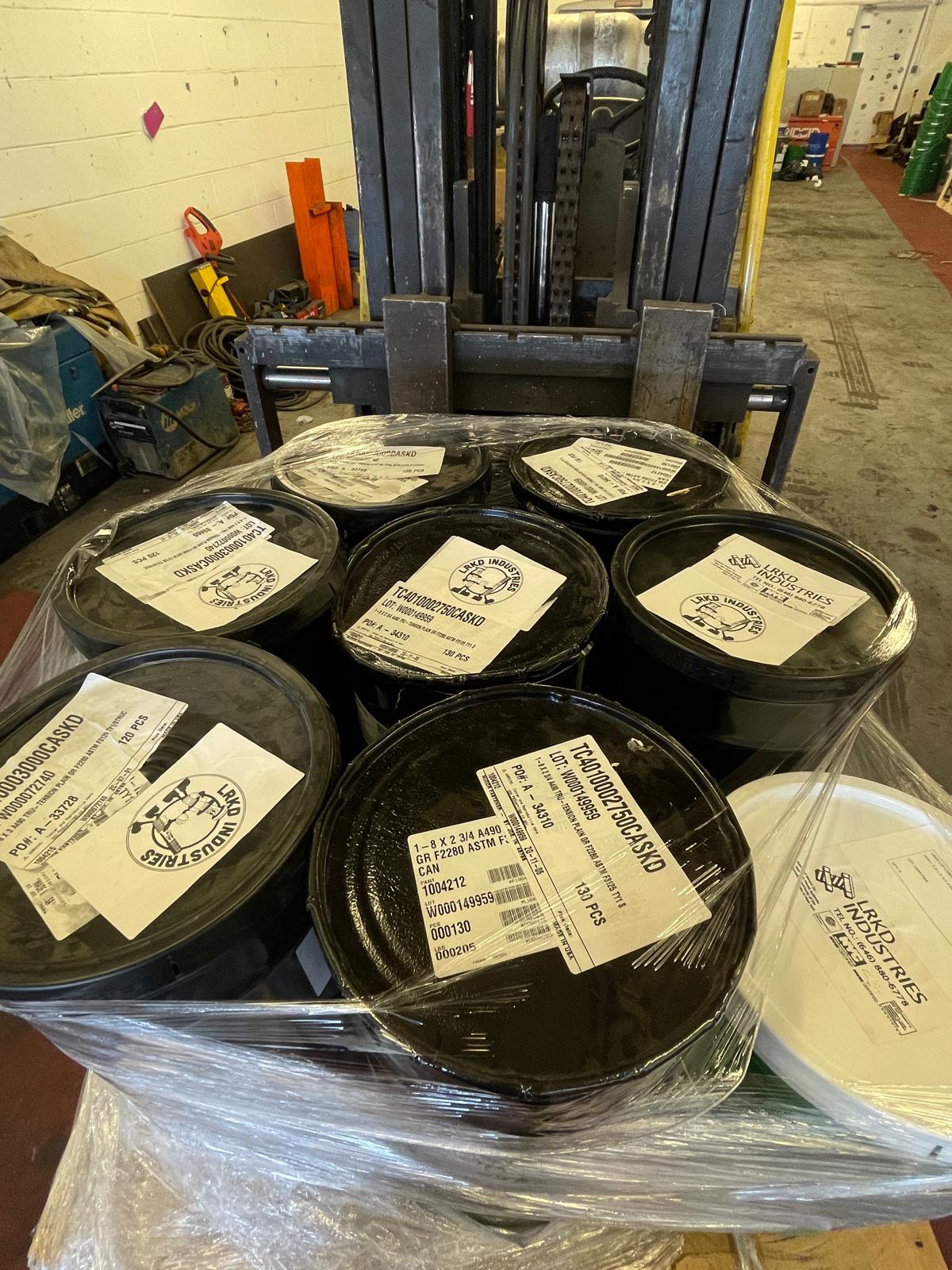
Choosing the right supplier is just as important as choosing the right fastener. At LRKD Industries, we combine high-quality product offerings with deep industry expertise to support commercial, residential, and industrial construction across New York and beyond. As a proud WMBE-certified enterprise, we bring unwavering commitment, precision detailing, and prompt customer support to every partnership.
Whether you are sourcing ASTM F3125 TC bolts, companion wedge anchors for your concrete foundations, or specialized structural components, our team delivers reliability you can trust. We invite you to explore our structural bolts collection or visit our main website to discuss your upcoming project requirements with our specialists. We provide the comprehensive steel supply solutions and engineering support needed to build the future securely.
Author: MEDIA_LRKD