

Structural steel projects demand absolute reliability, precision, and adherence to rigorous engineering standards. When contractors and engineers evaluate connection integrity for high-rise buildings, bridges, and industrial facilities, structural bolts remain the bedrock of safety. Among available fastening systems, tc bolts: commonly referred to as a325 tension control bolts: have established themselves as the industry benchmark for speed, accuracy, and consistent clamping force.
At LRKD Industries, we recognize the critical demands of modern structural construction, which is why we supply premium-grade fasteners engineered to meet exacting specifications. Understanding the mechanics, standards, and installation protocols of tension control assemblies ensures your projects achieve maximum structural performance.
What Are TC Bolts and How Do They Work?
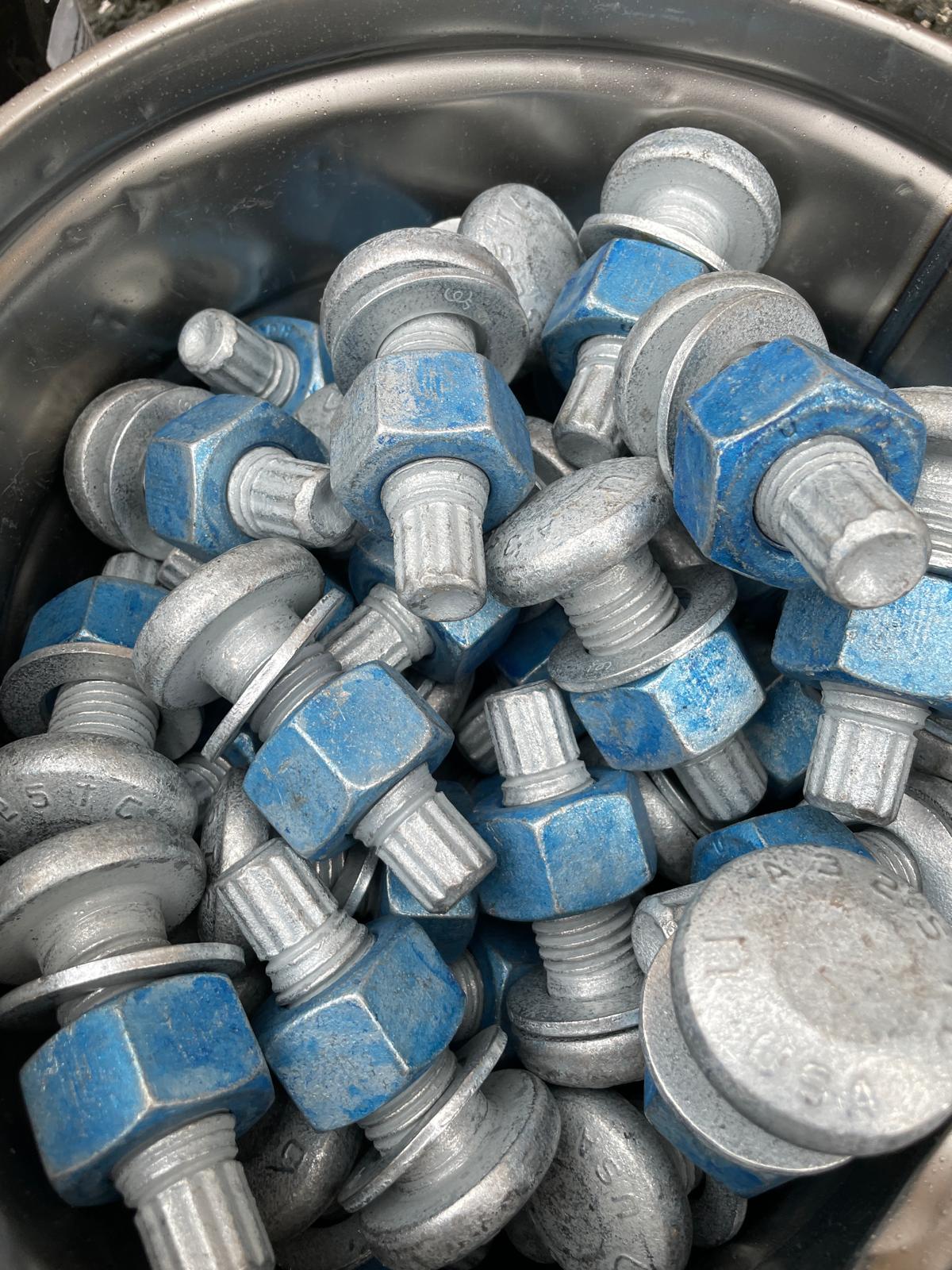
A tension control bolt is a pre-assembled, heavy-duty fastener consisting of a round-headed bolt, a heavy hex nut, and a structural washer. Unlike traditional hex bolts that require two ironworkers using calibrated torque wrenches to verify tension, TC bolts utilize a specialized twist-off or tor-shear design.
The defining feature of a tension control bolt is the splined end, or pintail, extending past the threaded portion of the bolt. During installation, a specialized electric shear wrench engages both the heavy hex nut and the splined end simultaneously. As the wrench applies tightening torque, counter-rotational force turns the nut while holding the splined pintail stationary.
Once the precise, required pretension is successfully reached within the assembly, the splined end shears off cleanly at a calibrated groove. This immediate mechanical failure of the pintail serves as a reliable, built-in visual indicator that the correct tension has been achieved. The installation process eliminates operator guesswork and dramatically accelerates field productivity without sacrificing quality.
Navigating ASTM Standards: F3125, Grades F1852, and F2280
Fastener specification requires careful attention to governing standards. Historically, engineers specified structural fasteners under standalone designations such as ASTM A325, A490, F1852, and F2280. To streamline quality control and manufacturing clarity, ASTM consolidated these separate standards into the comprehensive ASTM F3125 umbrella specification.
Under ASTM F3125, traditional heavy hex structural bolts and modern tension control assemblies are classified as specific grades:
- ASTM F3125 Grade F1852: Represents the modern a325 bolts equivalent in tension control format. These fasteners provide the reliable medium-carbon steel strength and ductility required for standard commercial buildings, highway bridges, and seismic-resistant structures.
- ASTM F3125 Grade F2280: Represents the modern a490 bolts equivalent, offering higher-strength alloy steel for heavy-load connections requiring elevated clamping force.
When reviewing structural drawings or ordering materials through our structural bolts collection, specifying ASTM F3125 Grade F1852 or F2280 guarantees compliance with current RCSC (Research Council on Structural Connections) guidelines. These assemblies are available in plain and mechanically galvanized finishes to resist environmental degradation in aggressive atmospheres.
Pre-Installation Verification and Field Installation Procedures
Achieving structural integrity requires rigorous adherence to pre-installation protocols. The RCSC Specification mandates that tension control assemblies undergo mandatory Pre-Installation Verification (PIV) before tightening structural connections on site.
Pre-installation verification confirms that the combination of bolts, nuts, washers, and wrenches will achieve the mandatory minimum bolt tension. Testing is conducted using a calibrated skidmore-wilhelm tension calibrator on the job site daily for each fastener lot and wrench combination. The torque wrench must shear the spline only after achieving the specified minimum fastener tension.
Field installation follows a streamlined, highly efficient sequence:
- Connection Assembly: Align structural steel plies, inserting the TC assembly through the bolt holes with a hardened washer under the rotated element (the nut).
- Snug-Tight Condition: Bring all plies into firm contact, ensuring the connected steel plates are snug.
- Shear Wrench Operation: Apply the electric shear wrench to the fastener until the splined pintail shears off.
- Final Inspection: Conduct visual inspections to verify that all pintails have sheared, leaving flush, uniform fastener ends across the connection joint.
This systematic approach minimizes human error, ensures uniformity across thousands of joints, and provides inspectors with immediate visual confirmation of proper pretension.
Demanding Applications Across Infrastructure and Industry
High-strength structural connections must withstand extreme static loads, dynamic vibrations, and environmental weathering. a325 tension control bolts and their high-capacity counterparts are specified across a wide array of critical infrastructure sectors:
- Bridges and Highway Overpasses: Where cyclic traffic loads and weather exposure demand superior fatigue resistance and long-term joint stability.
- High-Rise Commercial Buildings: Providing rigid frame connections that resist wind shear and seismic forces in dense urban environments like New York City.
- Stadiums and Large-Span Arenas: Supporting massive roof trusses and cantilevered structural steel frameworks with precision clamping force.
- Wind Turbines and Energy Infrastructure: Securing heavy tower flanges and foundation anchor connections against relentless rotational and environmental stress.

Partnering with LRKD Industries for Structural Excellence
Selecting the right fastener supplier is just as important as choosing the correct engineering specification. At LRKD Industries, we combine extensive inventory depth with technical expertise to support contractors, fabricators, and engineers on every project scale.
We recognize that complex construction schedules leave no room for delivery delays or material non-conformance. That is why we offer comprehensive in-house detailing and engineering services. Our team utilizes advanced drafting capabilities to model virtual connections before fabrication, eliminating errors and streamlining field assembly.
As a certified Woman-Minority Business Enterprise (WMBE), we take immense pride in fostering diversity while delivering uncompromising product reliability. Whether you are sourcing hardware for a major metropolitan bridge or a specialized industrial facility, our team provides prompt service and dependable supply chain execution.
To discuss your project requirements or request an itemized estimate, explore our services page or submit a request for quote today. Partner with LRKD Industries to secure your next structural steel project with confidence, accuracy, and proven industry leadership.
Author: MEDIA_LRKD