

Author: LRKD Team
Foundation design begins long before concrete is poured. The anchor bolts that connect your structure to its foundation represent the critical transition between earth and steel, and selecting the wrong specification can compromise everything above it. ASTM F1554 anchor bolts serve as the industry standard for structural anchorage, but understanding their nuances separates adequate foundations from exceptional ones.
We work with structural engineers, general contractors, and fabricators who recognize that anchor bolt selection demands the same rigor as beam sizing or connection design. The decisions you make during foundation detailing will determine load transfer efficiency, installation accuracy, and ultimately, structural performance for decades. Here are ten technical considerations that should inform your F1554 anchor bolt specification and foundation design process.
1. Three Strength Grades Provide Engineering Flexibility
F1554 anchor bolts are manufactured in three grades defined by minimum yield strength: Grade 36 (36 ksi), Grade 55 (55 ksi), and Grade 105 (105 ksi). This range allows you to match anchor bolts precisely to calculated load demands rather than over-specifying for every application.
Grade 36 serves residential and light commercial applications where loads are moderate and predictable. Grade 55 handles medium-load scenarios including most commercial buildings, parking structures, and industrial equipment foundations. Grade 105 is reserved for high-stress environments: bridge piers, wind turbine foundations, seismic zones, and heavy industrial plants where failure is not an option.
The grade you specify directly impacts material cost, lead time, and fabrication complexity. We detail anchor bolt cages for all three grades, and we recognize that proper grade selection requires thorough load analysis, not default specifications carried over from previous projects.
2. Material Composition Determines Performance Characteristics
F1554 bolts are manufactured from carbon steel, carbon boron steel, alloy steel, or high-strength low-alloy steel. The specific blend of elements: carbon, manganese, silicon, and trace additives: determines mechanical properties and environmental resistance.
Grade 55 typically uses carbon steel or carbon boron formulations that balance strength with weldability. Grade 105 requires alloy or high-strength low-alloy steel to achieve the necessary tensile and yield characteristics. Understanding material composition matters when you're designing anchor bolt cages that require welding to templates, plates, or structural shapes.
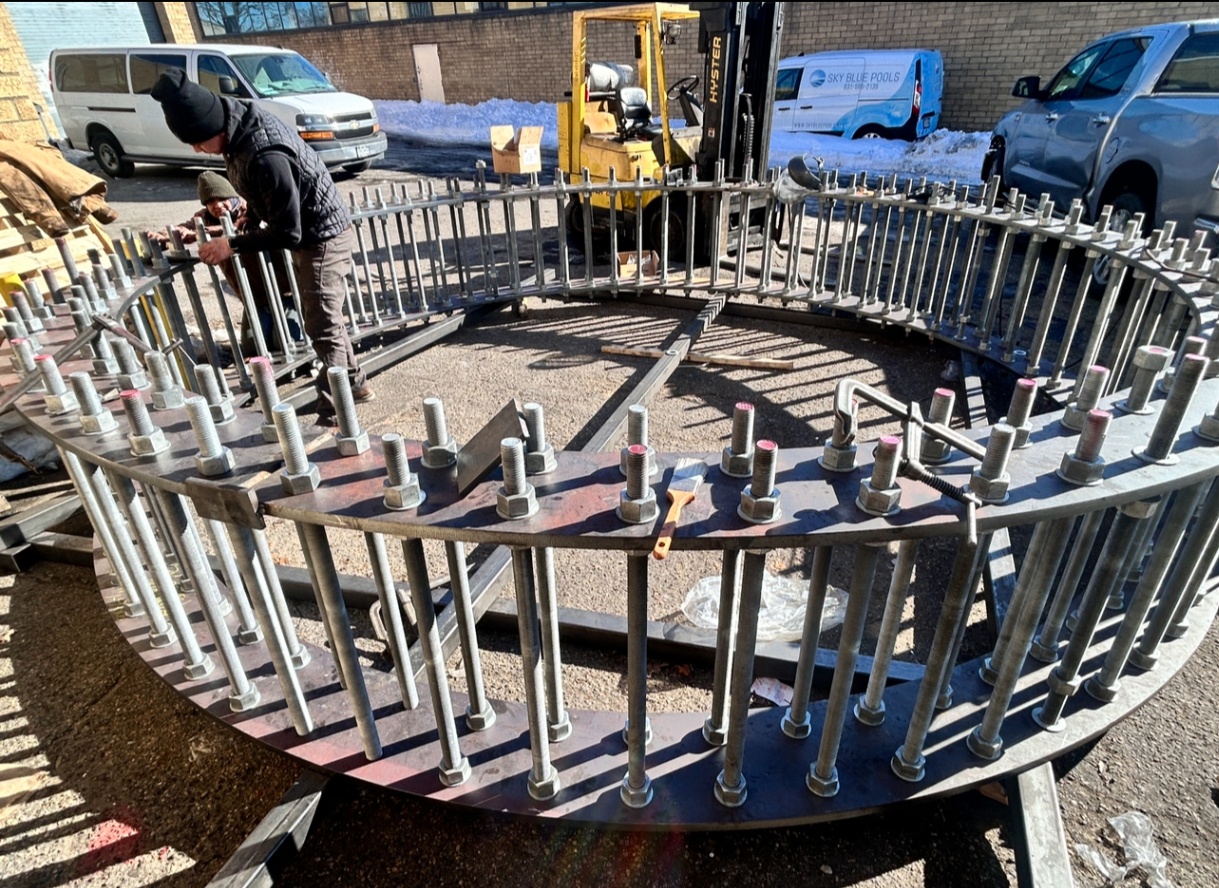
We fabricate custom anchor bolt assemblies that often incorporate welded connections between bolts and embed plates or structural templates. Material selection impacts weld procedures, heat treatment requirements, and inspection protocols. When we detail an anchor bolt cage, we consider not just the bolt specification but how that material will perform during fabrication and installation.
3. Mechanical Properties Define Load Transfer Capacity
Before finalizing foundation design, evaluate three critical mechanical properties: tensile strength (maximum stress before failure), yield strength (stress at which permanent deformation begins), and elongation (material ductility under load).
These properties aren't theoretical abstractions: they determine how your anchor bolts will respond when subjected to tension, shear, and combined loading conditions. Tensile strength establishes ultimate capacity, but yield strength governs serviceability and elastic behavior under working loads. Elongation indicates ductility, which becomes critical in seismic applications where energy dissipation prevents brittle failure.
We work with engineers who provide detailed load calculations, and we fabricate anchor bolt cages that account for actual load paths, not simplified assumptions. Understanding mechanical properties allows us to position bolts accurately, size embed plates appropriately, and detail connections that transfer loads efficiently from structure to foundation.
4. Standardized Tolerances Ensure Installation Accuracy
F1554 specifies precise manufacturing tolerances that impact foundation detailing. Bolt length tolerances are ±1 inch for lengths over 24 inches and ±½ inch for lengths 24 inches or less. Thread length tolerance is +1 inch, -0 inches. Hook length tolerance is ±10% or ±½ inch, whichever is greater.
These tolerances matter when you're coordinating anchor bolt projections with base plate thicknesses, grout pads, and structural steel shop drawings. An anchor bolt cage fabricated with precision accounts for these tolerances while maintaining bolt spacing that matches your structural steel connection design.
We detail anchor bolt cages with tolerances that recognize both F1554 manufacturing standards and field installation realities. Our fabrication process includes dimensional verification before shipment, reducing the risk of bolt projection errors that delay steel erection and require costly field modifications.
5. Configuration Options Address Different Structural Conditions
F1554 covers multiple anchor bolt configurations: straight rods with heavy hex nuts, L-bolts with 90-degree bends, J-bolts with hooked ends, and headed anchor bolts. Each configuration serves specific structural and embedment requirements.
Straight anchor bolts with heavy hex nuts provide the simplest installation and highest adjustability but require adequate embedment depth to develop tensile capacity through nut bearing against concrete. L-bolts and J-bolts develop tension through mechanical interlock and are preferred when embedment depth is limited or when you need to resist uplift without relying solely on nut bearing.
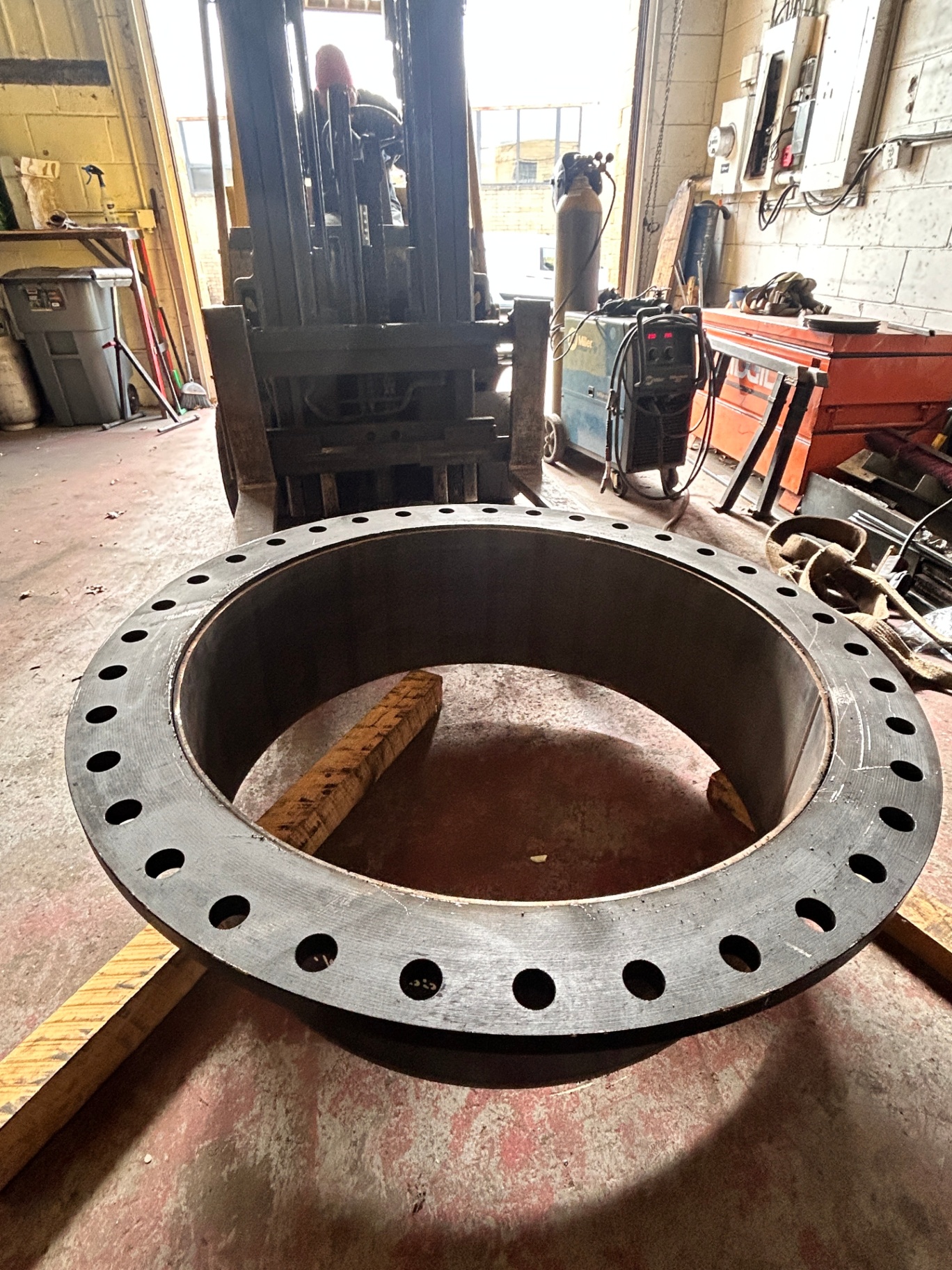
The configuration you specify impacts anchor bolt cage design and fabrication complexity. We fabricate cages that maintain proper bolt orientation during concrete placement, prevent bolt rotation, and ensure consistent embedment depth across all anchor points. Configuration selection should account for concrete placement methods, reinforcement congestion, and accessibility for bolt installation and tightening.
6. Thread Standards Ensure Component Compatibility
F1554 anchor bolts use Unified Coarse Thread Series per ANSI/ASME B1.1 with Class 2A thread tolerance. This standardization ensures compatibility with heavy hex nuts, washers, and structural steel connection components.
Thread length must extend sufficiently above the concrete surface to accommodate base plates, grout pads, washers, nuts, and thread engagement requirements. Insufficient thread projection creates field problems that delay construction and compromise connection integrity. Excessive thread projection wastes material and complicates formwork design.
When we fabricate anchor bolt cages, we calculate required thread length based on your base plate thickness, grout pad dimensions, and nut height. We account for concrete surface tolerance and provide thread projection that accommodates field conditions without excess material. This attention to detail prevents common installation problems that result from inadequate specification coordination.
7. Environmental Conditions Influence Grade Selection and Protection
F1554 anchor bolts demonstrate reliable performance across temperature extremes, but environmental exposure affects corrosion resistance and long-term durability. Coastal environments, chemical exposure, and deicing salt all accelerate corrosion and may require protective measures beyond standard mill finish.
Hot-dip galvanizing provides robust corrosion protection for anchor bolts in aggressive environments, but galvanizing introduces complications for high-strength Grade 105 bolts due to hydrogen embrittlement risks. Epoxy coatings, zinc-rich primers, and stainless steel alternatives each present trade-offs in cost, performance, and fabrication complexity.
We fabricate anchor bolt cages for projects ranging from interior building foundations to marine structures and bridge piers. Environmental assessment should occur during design, not after fabrication, because protective measures impact bolt sizing, thread engagement calculations, and cage assembly procedures. We work with engineers to detail protection systems that maintain structural performance while addressing site-specific exposure conditions.
8. Installation Precision Determines Structural Performance
Correct anchor bolt installation is as critical as proper specification. Bolt spacing accuracy, projection height consistency, and plumbness directly impact structural steel erection and connection performance. Even properly specified and fabricated anchor bolts fail to perform when installation introduces position errors or embedment problems.
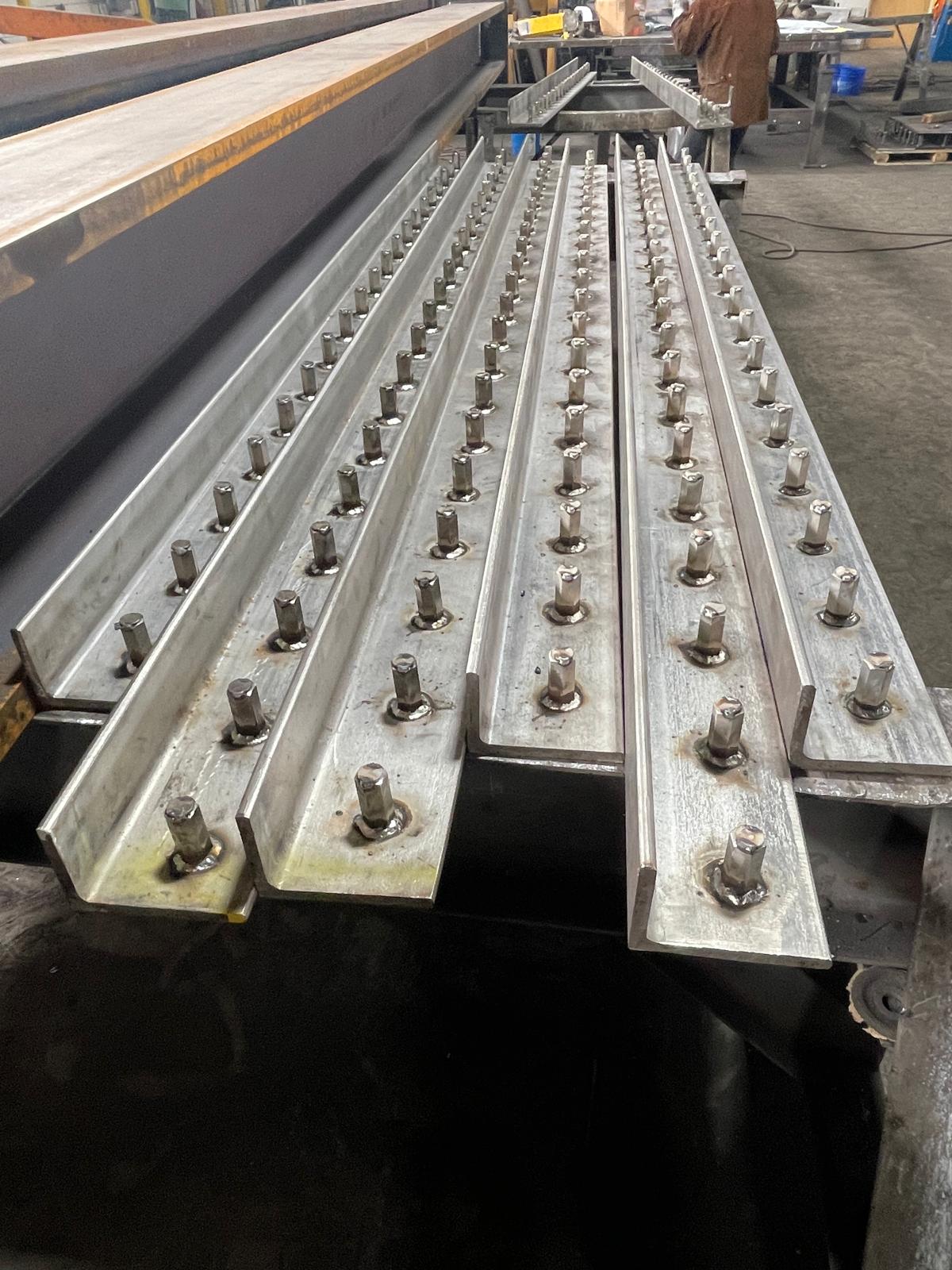
Anchor bolt cages provide the most reliable method for maintaining bolt position during concrete placement. A properly designed cage resists concrete pressure, prevents bolt rotation, and maintains dimensional accuracy even when vibration is required for consolidation. Template plates, structural shapes, and reinforcing bar frames all serve as cage components depending on bolt configuration, spacing, and load magnitude.
Our fabrication process centers on installation accuracy. We detail anchor bolt cages using structural templates, embed plates, and reinforcement that maintain bolt position throughout concrete placement and curing. We provide shop drawings that coordinate with structural steel base plate dimensions, ensuring bolt spacing matches connection holes without field drilling or modification.
9. Coordination Between Disciplines Prevents Costly Errors
Foundation anchor bolts exist at the intersection of structural engineering, concrete construction, and steel fabrication. Errors in this coordination zone create expensive problems: steel that doesn't fit, foundations that must be modified, and schedules that slip while solutions are engineered in the field.
Successful coordination requires detailed shop drawings that capture structural steel base plate dimensions, foundation plan geometry, reinforcement placement, and concrete forming constraints. These drawings must be reviewed by all affected parties before fabrication begins, because changes after concrete placement range from difficult to impossible.
We provide detailed shop drawings for every anchor bolt cage we fabricate. These drawings show bolt spacing, projection heights, template configuration, and coordination notes that address potential conflicts with reinforcement, formwork, and adjacent foundation elements. This documentation serves as the communication bridge between design intent and field reality.
10. Professional Fabrication Ensures Specification Compliance
F1554 provides the specification framework, but fabrication quality determines whether anchor bolts perform as designed. Welding procedures, dimensional control, material handling, and quality verification all impact final product reliability.
Professional fabrication begins with certified material, follows documented procedures, and includes inspection at critical stages. Welds connecting anchor bolts to templates or embed plates must meet structural welding codes. Dimensional verification must confirm that bolt spacing and projection heights fall within specified tolerances. Material handling must prevent damage to threads, protective coatings, and bolt configuration.
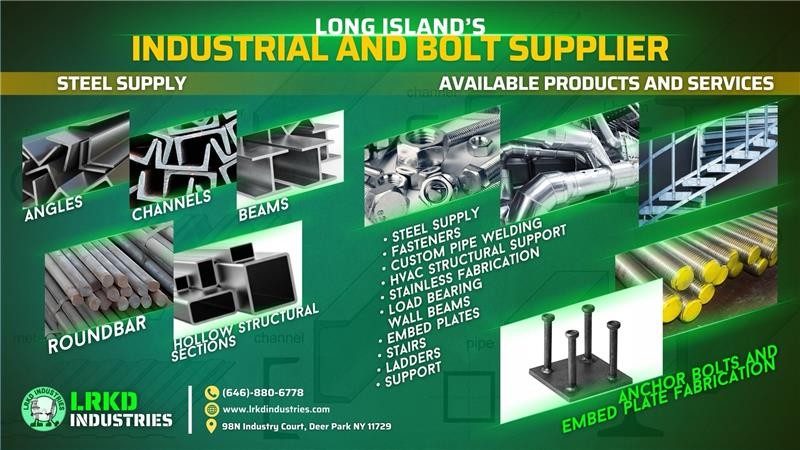
We fabricate anchor bolt cages in a controlled shop environment where welding, dimensional control, and inspection occur under consistent conditions. Our fabricators understand that anchor bolt cages represent critical structural connections, not commodity components. We treat each cage as a precision assembly that must perform reliably when embedded in concrete and loaded by the structure above.
Foundation Success Begins With Informed Specification
F1554 anchor bolts represent the critical connection between foundation and structure. The decisions you make during specification and design: grade selection, configuration, environmental protection, and fabrication approach: determine whether your foundation performs as intended or introduces problems that compromise the entire project.
We work with professionals who recognize that anchor bolt cages are engineered assemblies, not field improvisations. Our fabrication capabilities support projects ranging from single-column foundations to complex structures with hundreds of anchor points. We provide the detailing expertise, fabrication precision, and documentation that ensure your anchor bolts arrive on site ready to perform.
Foundation design demands attention to details that aren't visible once concrete is placed. F1554 anchor bolts, properly specified and professionally fabricated, provide the reliable structural connection your project requires. The time invested in thorough specification and coordination prevents the costly problems that arise when foundation anchors fail to meet structural demands.