

We recognize that for contractors and structural engineers in the New York area, winter is not just a season; it is a variable that must be managed with absolute precision. When the temperature drops across the Bronx, Long Island, and the greater tri-state region, the physics of structural fastening changes. One of the most critical components affected by these shifts is the Tension Control (TC) bolt.
TC bolts, specifically those meeting ASTM F1852 (A325 equivalent) and ASTM F2280 (A490 equivalent) standards, are engineered for high-performance, predictable tensioning. However, their reliability depends heavily on the condition of their factory-applied lubricant. Cold weather introduces specific risks: primarily premature spline shear and inconsistent tension: that can compromise the structural integrity of bridges, high-rise buildings, and industrial facilities.
At LRKD Industries, we firmly believe that environmental challenges should never dictate the quality of a build. We provide more than just premium steel supply; we offer the technical insight required to maintain unwavering safety standards in any climate.
THE INVISIBLE THREAT: LUBRICANT VISCOSITY
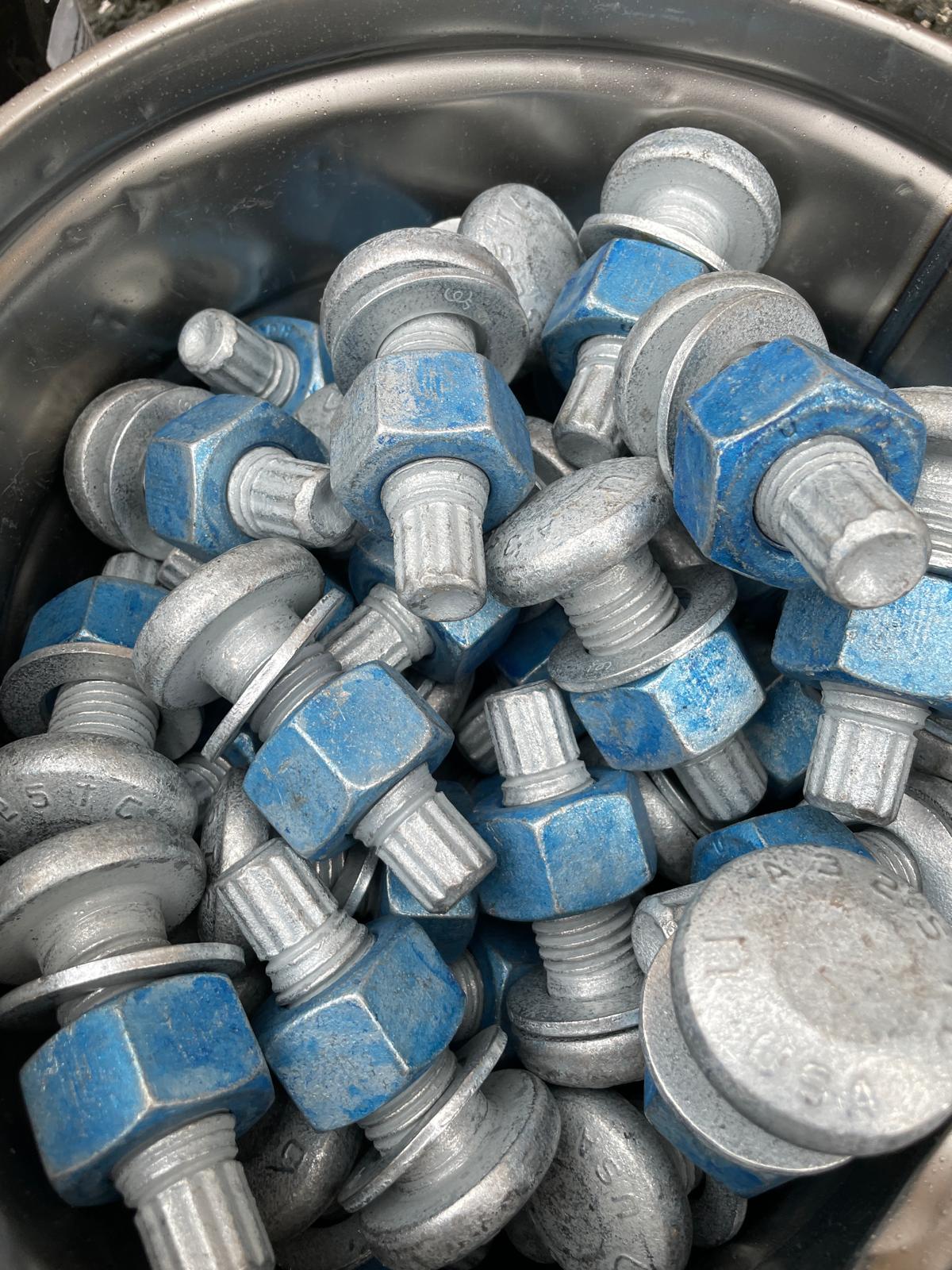
TC bolts are designed as "matched assemblies." This means the bolt, nut, and washer are calibrated to work together. The factory lubricant is precisely applied to ensure that when the spline shears off under the force of a shear wrench, the bolt has achieved the minimum required pretension.
When temperatures plummet, this lubricant thickens. The increased viscosity creates higher friction between the threads of the bolt and the nut. We recognize that this added resistance often leads to the spline twisting off much earlier than intended. To the naked eye, the installation looks successful because the spline is gone, but the actual clamping force may fall significantly below the required ASTM or RCSC specifications.

1. IMPLEMENT CONTROLLED STORAGE PROTOCOLS
The preservation of factory lubrication begins the moment a shipment arrives at your jobsite. We recommend storing all TC bolt assemblies in a temperature-controlled environment whenever possible. Keeping the fasteners in a heated trailer or job shack until they are needed for installation prevents the lubricant from reaching the "stiffening" point.
Exposure to moisture: whether from snow, freezing rain, or simple condensation: can also degrade water-soluble lubricants common on plain (black) bolts. Galvanized TC bolts offer more protection, but they are not immune to the effects of extreme cold on their coating's friction coefficient.
2. ADHERE TO THE ONE-SHIFT INSTALLATION RULE
Time is a critical factor in winter bolting. We advocate for a "one-shift" workflow: only remove the quantity of bolts from protected storage that can be installed and fully tensioned within a single work shift.
Leaving bolts in a "snug-tight" condition overnight exposes the threads to fluctuating temperatures and moisture. This exposure can alter the lubrication state by the next morning, leading to unpredictable results during final tensioning. By tightening the assembly to its final state immediately after snugging, you lock in the reliability of the connection.
3. PERFORM DAILY PRE-INSTALLATION VERIFICATION (PIV)
In standard conditions, pre-installation verification (PIV) is a routine requirement. In cold weather, it is a lifeline. We suggest using a Skidmore-Wilhelm tension calibrator at the start of every shift, especially as ambient temperatures fluctuate throughout the day.
Testing a representative sample of your current bolt lot: subjected to the same environmental conditions as the steel structure: will confirm if the spline-shear-to-tension relationship remains accurate. If the calibrator shows the spline is shearing before reaching the minimum required tension (for example, 39 kips for a 7/8" A325 bolt or 49 kips for an A490 variant), you know your installation method or storage needs adjustment.

4. PROTECT THE "AS-RECEIVED" CONDITION
A common mistake on winter jobsites is the attempt to "fix" cold bolts with field-applied lubricants, oils, or WD-40. This practice is strictly prohibited for TC bolt assemblies. RCSC (Research Council on Structural Connections) guidelines state that TC bolts must be used in their as-received, factory-lubricated condition.
Adding field lubricant changes the torque-to-tension ratio. If a bolt fails its PIV test due to cold or environmental damage, it must be returned to the manufacturer for professional re-lubrication. We recognize the pressure of project timelines, but we also know that field-altering high-strength fasteners introduces unacceptable liability.
5. MONITOR TOOL PERFORMANCE AND POWER
Cold weather doesn't just affect the steel; it affects your equipment. Shear wrenches can experience sluggish performance in sub-freezing temperatures as internal grease thickens. Furthermore, if you are running electric wrenches off a generator, ensure the power output is consistent.
"Soft" or fluctuating power can lead to incomplete cycles or erratic wrench behavior. Keep your tools clean, properly serviced, and if possible, store them in a warmed area between uses to ensure they provide the consistent torque necessary to complement the bolt's tension indicator.

6. MANAGE MOISTURE AND CONDENSATION
It is a misconception that covering bolt buckets with a tarp is sufficient. In reality, condensation can build up under tarps, creating a humid environment that can strip away water-soluble lubricants faster than direct rain. We recommend keeping bolts in their original, sealed containers until the moment of use.
If bolts do become wet, they should be dried immediately. Research shows that once the moisture is removed and the lubricant is allowed to stabilize at a warmer temperature, the original performance characteristics often return. However, this must always be verified with a tension calibrator before returning those bolts to production.
7. PARTNER WITH AN EXPERT STEEL SUPPLIER
Reliability in structural projects is built on a foundation of trust and quality material. At LRKD Industries, we provide high-quality, affordable, and reliable fasteners engineered to meet the most stringent industry standards. Our structural bolt collections include domestic and mechanical galvanized options designed to withstand the rigors of New York infrastructure projects.
We provide professional in-house detailing and engineering services, utilizing virtual modeling to anticipate challenges before they reach the field. This proactive approach, combined with our status as a proud representative of the Women-Minority Business Enterprises (WMBEs), ensures that your project is supported by a partner committed to both excellence and community enrichment.
ENSURING STRUCTURAL INTEGRITY THROUGH THE WINTER
Structural integrity is a constant requirement, regardless of the thermometer. By recognizing the impact of cold weather on TC bolt lubrication and implementing these seven tips, contractors can avoid the pitfalls of premature spline shear and under-tensioned joints.
Whether you are working on bridge rehabilitation or high-rise steel erection, the goal remains the same: accurate, dependable tensioning that stands the test of time. We invite you to explore our full range of high-strength fasteners and F1554 anchor bolt solutions to ensure your next winter project is built to last.
Author: MEDIA_LRKD