

When you're anchoring critical infrastructure to its foundation, corrosion isn't just an inconvenience: it's a structural liability. For projects in marine environments, coastal zones, or anywhere moisture and salt are constant threats, the question isn't whether your anchor bolt cages will face corrosion, but how well they'll resist it.
Hot-dip galvanizing provides the answer. This proven coating process transforms standard steel anchor bolt cages into corrosion-resistant systems capable of withstanding decades of environmental assault. For fabricators, engineers, and contractors working on foundations that demand longevity, understanding the protective power of hot-dip galvanizing is essential.
What Hot-Dip Galvanizing Actually Does
Hot-dip galvanizing is a metallurgical bonding process where steel components are immersed in molten zinc heated to approximately 840°F. The zinc doesn't simply coat the surface: it reacts with the steel to form multiple layers of zinc-iron alloy, creating a protective barrier that becomes part of the base metal itself.
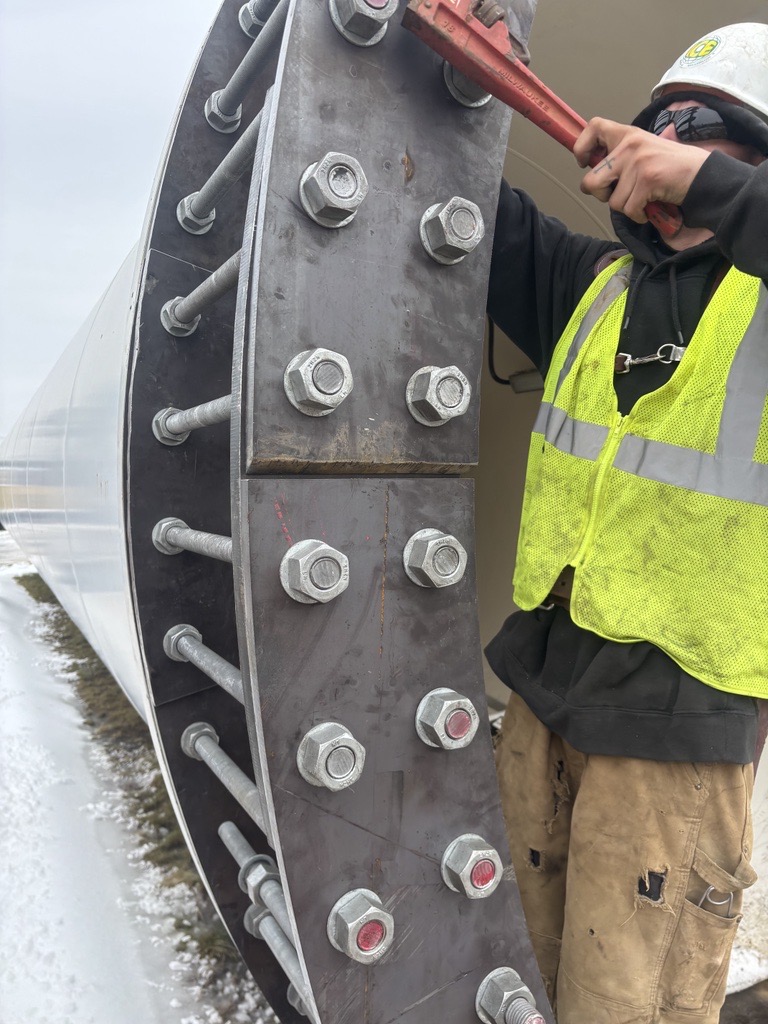
For anchor bolt cages, this thick zinc coating offers exceptional protection against rust and oxidation. The coating typically measures between 3.5 to 5 mils thick, providing a robust shield that extends the service life of these critical foundation components by decades. Unlike paint or other surface treatments that can chip, peel, or wear away, hot-dip galvanizing creates a durable, abrasion-resistant finish that protects every surface of the cage, including interior angles, weld seams, and hard-to-reach areas where corrosion typically initiates.
The zinc coating provides protection through two mechanisms: barrier protection and galvanic protection. As a barrier, it prevents moisture and oxygen from reaching the steel substrate. As a galvanic protector, zinc sacrifices itself to protect the underlying steel, corroding preferentially even if the coating is scratched or damaged.
Why Marine and Coastal Projects Demand This Protection
Anchor bolt cages serve as the critical connection point between a structure and its foundation. They secure anchor bolts in precise positions, maintaining alignment during concrete pours and transferring massive structural loads from buildings, towers, and equipment to the foundation below. When these components fail due to corrosion, the integrity of the entire structure is compromised.
Marine and coastal environments present particularly aggressive conditions. Salt spray, constant humidity, temperature fluctuations, and direct water exposure create the perfect environment for accelerated corrosion. Standard black steel anchor bolt cages in these environments can begin showing surface rust within weeks and experience significant structural degradation within years.
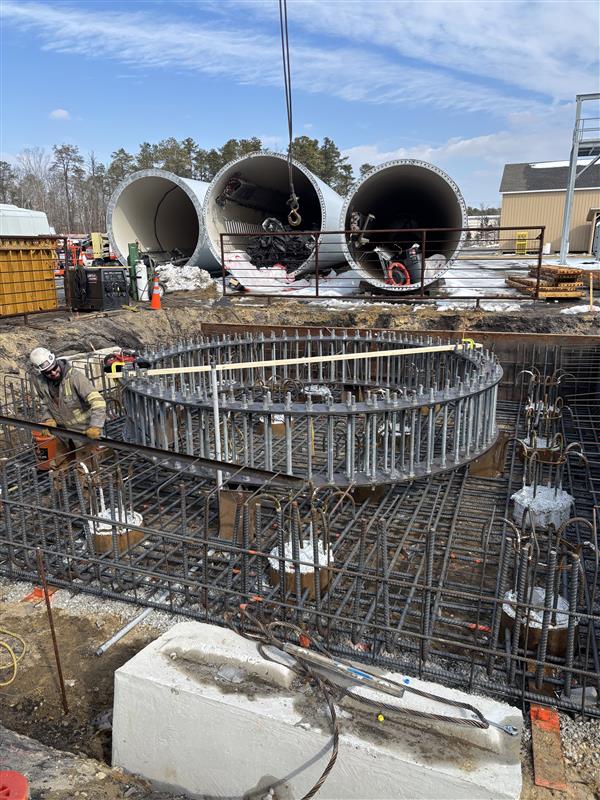
Hot-dip galvanized anchor bolt cages resist these conditions effectively. The zinc coating reacts with moisture to form a stable zinc patina that further slows corrosion rates. Field studies have shown that galvanized steel in marine atmospheres can last 50 to 75 years before requiring maintenance, compared to just 5 to 10 years for unprotected steel.
For projects like offshore wind turbines, coastal bridges, port facilities, waterfront developments, and marine industrial structures, hot-dip galvanizing isn't an upgrade: it's a fundamental requirement for long-term performance.
Specifications and Standards for Galvanized Anchor Bolt Cages
When specifying hot-dip galvanizing for anchor bolt cages, understanding the relevant standards ensures you receive the protection your project requires. ASTM A123/A123M covers the standard specification for zinc (hot-dip galvanized) coatings on iron and steel products, including structural steel components like anchor bolt cages.
Anchor bolt cages are typically fabricated to accommodate ASTM F1554 anchor bolts, which are specifically designed for anchoring structural supports to concrete foundations. ASTM F1554 covers three grades: Grade 36 for standard applications, Grade 55 for moderate-strength requirements, and Grade 105 for high-strength applications such as seismic zones or heavy equipment foundations.
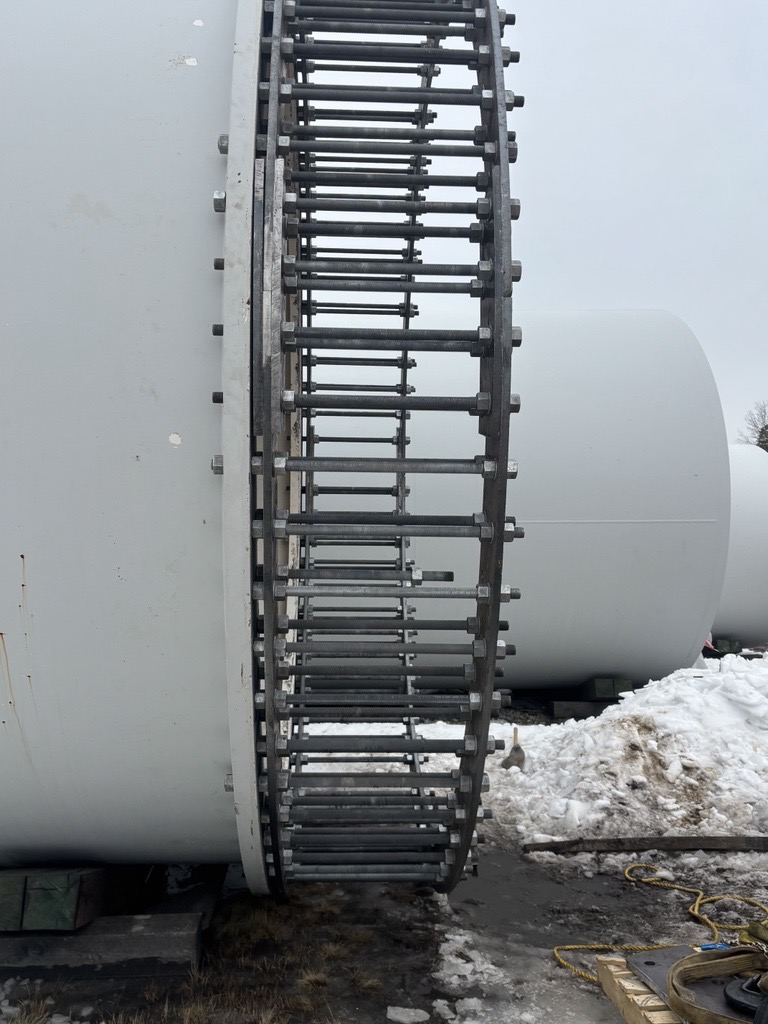
Standard anchor bolt cages are available in diameters commonly ranging from 1 3/4″ to 2 1/4″, with lengths extending up to 60 feet depending on fabrication capabilities and project requirements. Custom dimensions are readily achievable through experienced fabricators who understand both the structural demands and the galvanizing process.
The galvanizing specification should address several key points: minimum coating thickness requirements, surface preparation standards prior to galvanizing, post-galvanizing inspection criteria, and handling procedures to prevent damage to the coating. Working with fabricators who understand these specifications ensures your anchor bolt cages meet both structural and corrosion-resistance requirements.
The Fabrication and Galvanizing Process
Creating hot-dip galvanized anchor bolt cages requires coordination between fabrication and finishing. The process begins with precision fabrication, where steel components are cut, formed, and welded to exact specifications. Weld quality is particularly important: all welds must be continuous and free of voids, as gaps can trap galvanizing flux or create incomplete coating coverage.
Before galvanizing, the fabricated cages undergo thorough surface preparation. This multi-step process includes degreasing to remove oils and organic contaminants, pickling in acid solutions to remove mill scale and rust, and fluxing to promote zinc bonding. Proper surface preparation is critical for achieving the metallurgical bond between zinc and steel.
The actual galvanizing happens in large tanks of molten zinc. The cage is fully immersed, allowing the zinc to coat all surfaces uniformly, including interior spaces, threads, and complex geometries. Immersion time and temperature are carefully controlled to ensure proper alloy layer formation. Upon removal, excess zinc drains off, and the coating solidifies rapidly.
Post-galvanizing inspection verifies coating thickness, uniformity, and adhesion. Quality galvanizers measure coating thickness at multiple points using magnetic thickness gauges and visually inspect for completeness, smoothness, and the absence of defects like bare spots or excessive buildup.
Critical Infrastructure Applications
The durability of hot-dip galvanized anchor bolt cages makes them essential for infrastructure projects where replacement or maintenance is difficult, dangerous, or prohibitively expensive. Wind energy facilities rely on these components extensively. Each wind turbine foundation requires precisely positioned anchor bolt cages to secure the tower base, and these installations often sit in coastal zones where wind resources are strongest: and corrosion potential is highest.
Transmission and distribution structures also depend on galvanized anchor bolt cages. Electrical towers, substation equipment pads, and tubular pylon structures all require foundation anchoring systems that will maintain structural integrity for 50 years or more without maintenance. Hot-dip galvanizing provides this longevity while eliminating the need for ongoing coating maintenance or corrosion monitoring programs.
Bridge foundations, especially for coastal and over-water structures, benefit significantly from galvanized anchor bolt cages. These components secure pier columns, abutments, and bearing assemblies to concrete foundations that are constantly exposed to splash zones, tidal action, and salt spray. The alternative: stainless steel or exotic alloys: typically costs three to five times more than galvanized carbon steel while offering only marginally improved performance in many applications.
The Economics of Long-Term Protection
When evaluating protection systems for anchor bolt cages, initial cost represents only one factor in the decision. Life-cycle cost analysis reveals the true economic advantage of hot-dip galvanizing.
The initial cost premium for hot-dip galvanizing over plain steel typically ranges from 20% to 40%, depending on component size and complexity. However, this upfront investment eliminates the need for field-applied coatings, ongoing maintenance painting, corrosion monitoring programs, and premature replacement. Over a 50-year service life, the total cost of ownership for galvanized components is substantially lower than painted steel alternatives.
Maintenance accessibility is another economic consideration. Anchor bolt cages are embedded in concrete foundations, making post-installation maintenance virtually impossible. Applying protective coatings in the field introduces quality control challenges, requires specialized labor, and still demands recoating on 5- to 10-year cycles. Hot-dip galvanizing provides maintenance-free protection for the structure's entire service life.
For projects in harsh environments, the risk mitigation value of hot-dip galvanizing extends beyond direct costs. Structural failures due to corroded foundations result in catastrophic expenses: emergency repairs, equipment downtime, liability issues, and potential safety incidents. Hot-dip galvanizing effectively eliminates corrosion as a failure mode, providing reliability that pays dividends throughout the structure's life.
Working with Experienced Fabricators
Successful hot-dip galvanizing of anchor bolt cages requires fabricators who understand both structural requirements and galvanizing process considerations. Design details matter significantly: sharp edges, enclosed spaces without vent holes, and excessively thick material sections can all create galvanizing challenges that affect coating quality.
We recognize that foundation components demand precision fabrication and comprehensive corrosion protection, which is why we provide both custom anchor bolt cage fabrication and hot-dip galvanizing coordination. Our fabrication team details cages to structural specifications while incorporating design features that optimize galvanizing coverage and coating uniformity.
This integrated approach ensures your anchor bolt cages arrive on site ready for installation, with precise bolt positioning, complete corrosion protection, and the documentation required for project compliance. Whether you're anchoring wind turbines along the coast, securing bridge foundations over water, or establishing industrial equipment pads in corrosive environments, properly galvanized anchor bolt cages provide the foundation integrity your project demands.
When your structure needs to stand for decades in conditions that destroy unprotected steel, hot-dip galvanizing transforms anchor bolt cages from vulnerable components into permanent foundation systems. It's protection from the inside out: exactly where your foundation needs it most.
Author: MEDIA_LRKD