

Fabrication errors are expensive. A misaligned anchor bolt template discovered on-site can halt construction for days. A clash between structural steel and mechanical systems means rework, material waste, and schedule delays. The traditional approach: detailing on paper, fabricating in the shop, and hoping everything fits on-site: leaves too much to chance.
In-house detailing using virtual 3D models eliminates these problems before the first cut is made. At LRKD Industries, we build digital twins of every anchor bolt cage, embed plate assembly, and structural component before fabrication begins. This approach catches errors in the virtual environment, where corrections cost seconds instead of thousands of dollars.
The Digital-First Fabrication Process
Virtual modeling transforms how structural components move from concept to completion. Using advanced CAD and BIM (Building Information Modeling) software, our detailing team creates data-rich 3D models that represent every dimension, connection point, and material specification with precision.
These aren't simple drawings. They're intelligent models that contain fabrication information, material grades, welding specifications, and assembly sequences. When we model an ASTM F1554 Grade 55 anchor bolt cage, the virtual model includes bolt spacing, projection heights, template dimensions, and even the galvanizing considerations that affect final measurements.
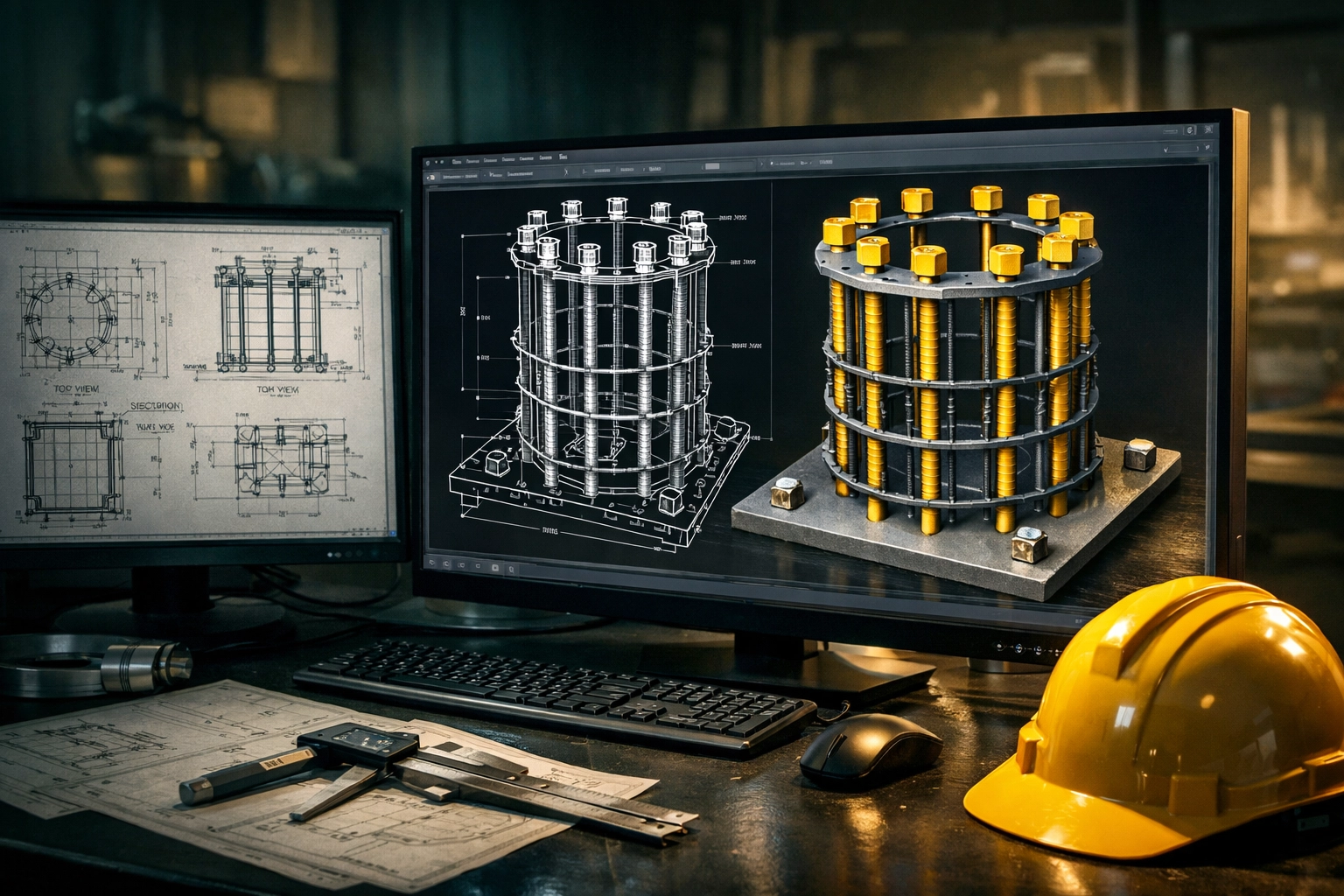
The process begins when project specifications arrive. Our detailing team reviews structural drawings, foundation plans, and mechanical/electrical layouts. We build the virtual model directly from these documents, cross-referencing dimensions and tolerances as we work. The model becomes a central coordination hub where every trade can verify their requirements before steel is cut.
Real-Time Clash Detection Prevents Costly Mistakes
One of the most powerful features of virtual modeling is automatic clash detection. The software continuously analyzes the 3D space, identifying conflicts between structural elements, mechanical systems, electrical conduits, and plumbing runs.
We combine our anchor bolt models with the architect's structural model and the mechanical contractor's equipment layouts. The system flags interference issues immediately. An anchor bolt that would conflict with a planned HVAC duct shows up as a red collision in the virtual space. A foundation embed plate that clashes with rebar placement gets caught before the concrete pour.
These conflicts are resolved during the design phase, where adjustments are simple. Moving an anchor bolt location by three inches in the virtual model takes minutes. Making that same change on-site after concrete is poured requires jackhammers, new pours, and project delays measured in weeks.
Real-time clash detection makes the coordination process continuous rather than reactive. As mechanical systems shift or structural requirements change, the virtual model updates and automatically rechecks for conflicts. We catch problems as they develop, not after fabrication is complete.
Precision That Eliminates Guesswork
Traditional shop drawings rely on 2D representations of 3D components. Interpreting those drawings requires experience and often involves assumptions about how pieces fit together. Virtual models eliminate interpretation entirely.
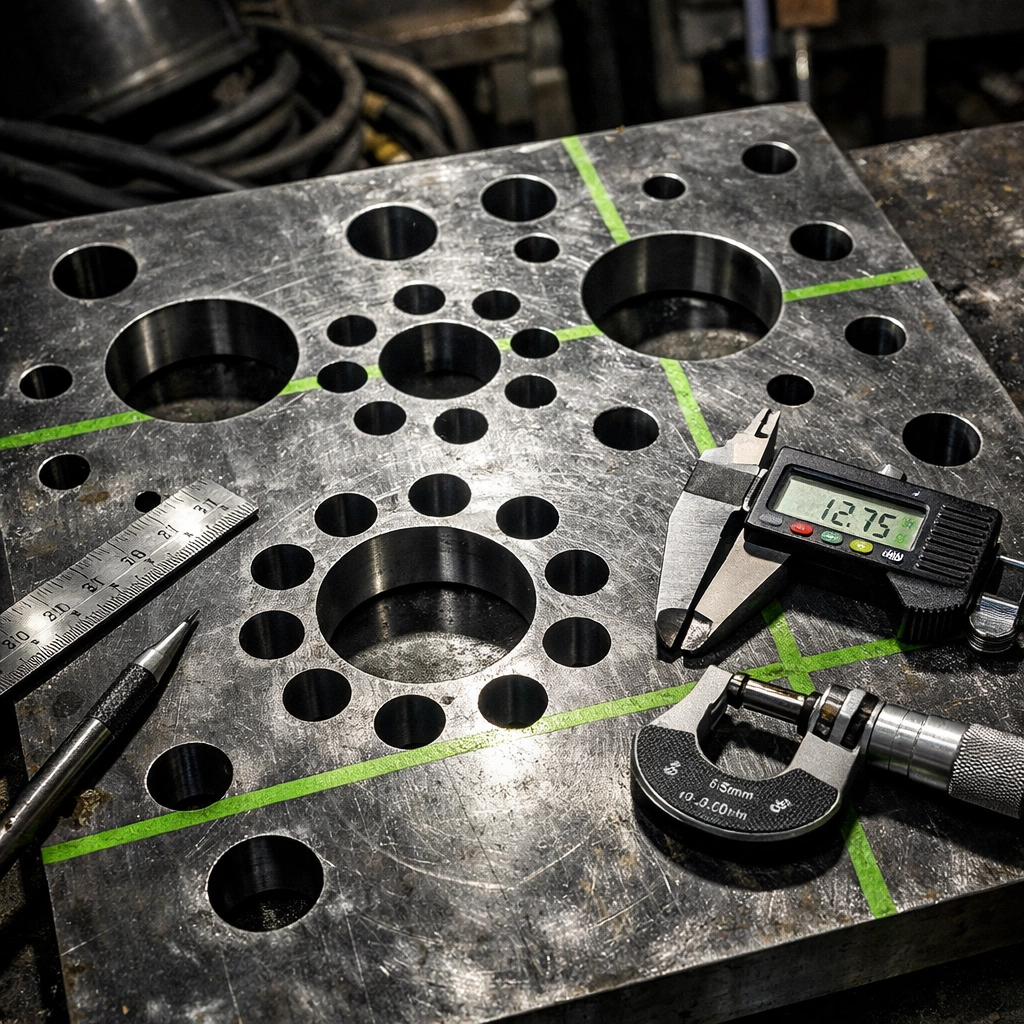
When our fabrication team receives a 3D model, they see exactly what needs to be built. Bolt hole patterns aren't calculated from dimension strings: they're displayed in three-dimensional space with precise coordinates. Weld locations aren't described in notes: they're shown on the model with specified types and sizes.
This precision extends to material calculations. The virtual model calculates exact material quantities, accounting for cuts, waste, and fabrication requirements. We order the right amount of plate steel for an embed assembly because the model has already optimized the nesting pattern. Material waste drops significantly when fabrication is planned virtually first.
Measurement errors that compound through traditional detailing processes simply don't occur. If a dimension is wrong in the virtual model, it's wrong everywhere the model is used. Fix it once, and every downstream document, cut list, and fabrication instruction updates automatically. This consistency ensures that what's modeled is what's built.
Standardization Speeds Production
Virtual shop models establish working standards that streamline fabrication. When our detailing team follows consistent modeling conventions: standard bolt representations, uniform layer structures, established naming protocols: the fabrication process becomes more efficient.
A welder viewing a virtual model knows immediately which connections require full-penetration welds versus fillet welds because we model them consistently. A quality inspector can verify dimensions against the 3D model without converting between drawing views. The fabrication shop floor operates with a single source of truth that everyone interprets the same way.
These standards reduce the cognitive load on fabrication teams. They're not constantly switching between different drafting styles or interpreting unclear details. The virtual model presents information uniformly, allowing fabricators to focus on execution rather than interpretation.
From Virtual Simulation to Physical Validation
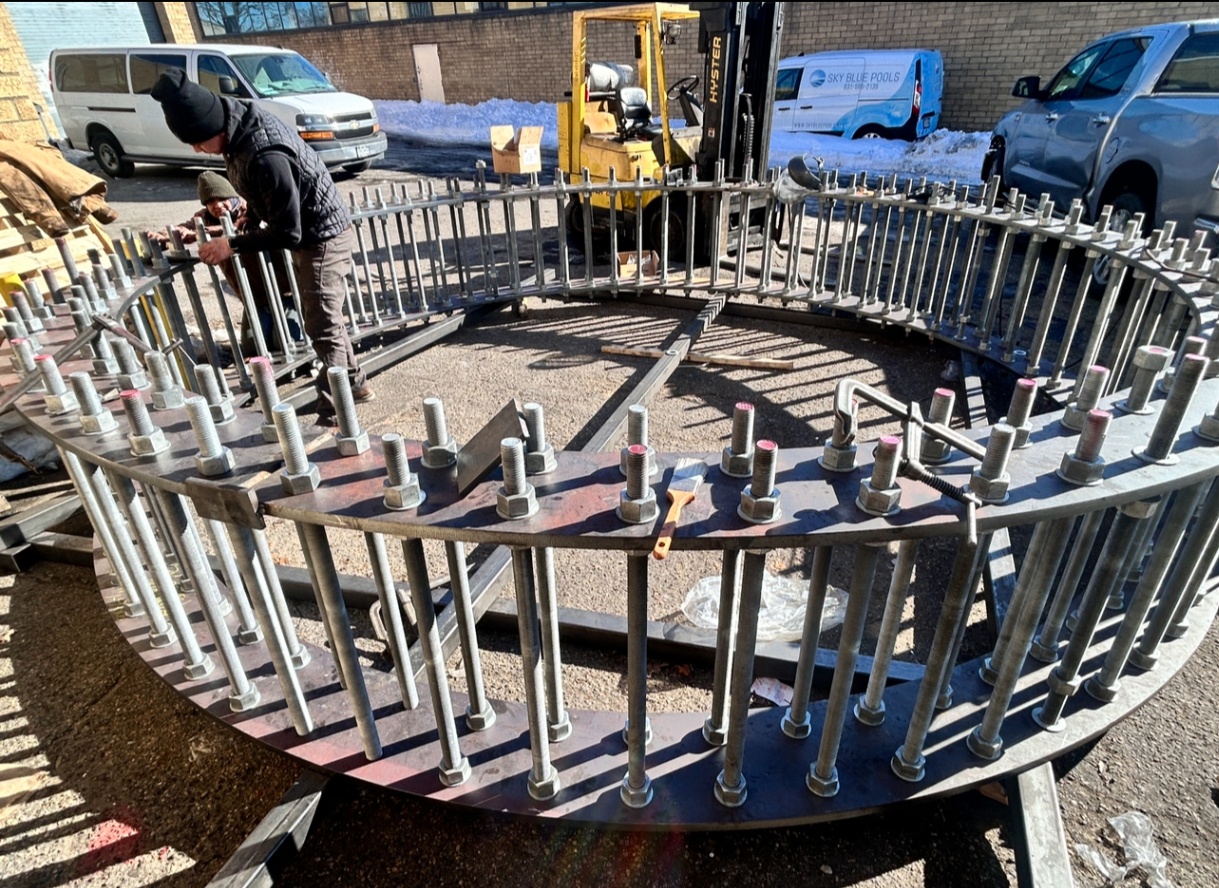
Sophisticated virtual modeling systems can simulate the entire fabrication and assembly process before production begins. We virtually "build" anchor bolt cages in the software, verifying that template plates fit together correctly, that bolts project at the specified angles, and that the finished assembly will fit within transportation constraints.
This simulation capability reveals problems that wouldn't appear on traditional drawings. An anchor bolt cage that's too large to fit through a standard door becomes obvious when we simulate moving it from the welding bay to the galvanizing area. A template configuration that creates access issues for welding shows up when we simulate the fabrication sequence.
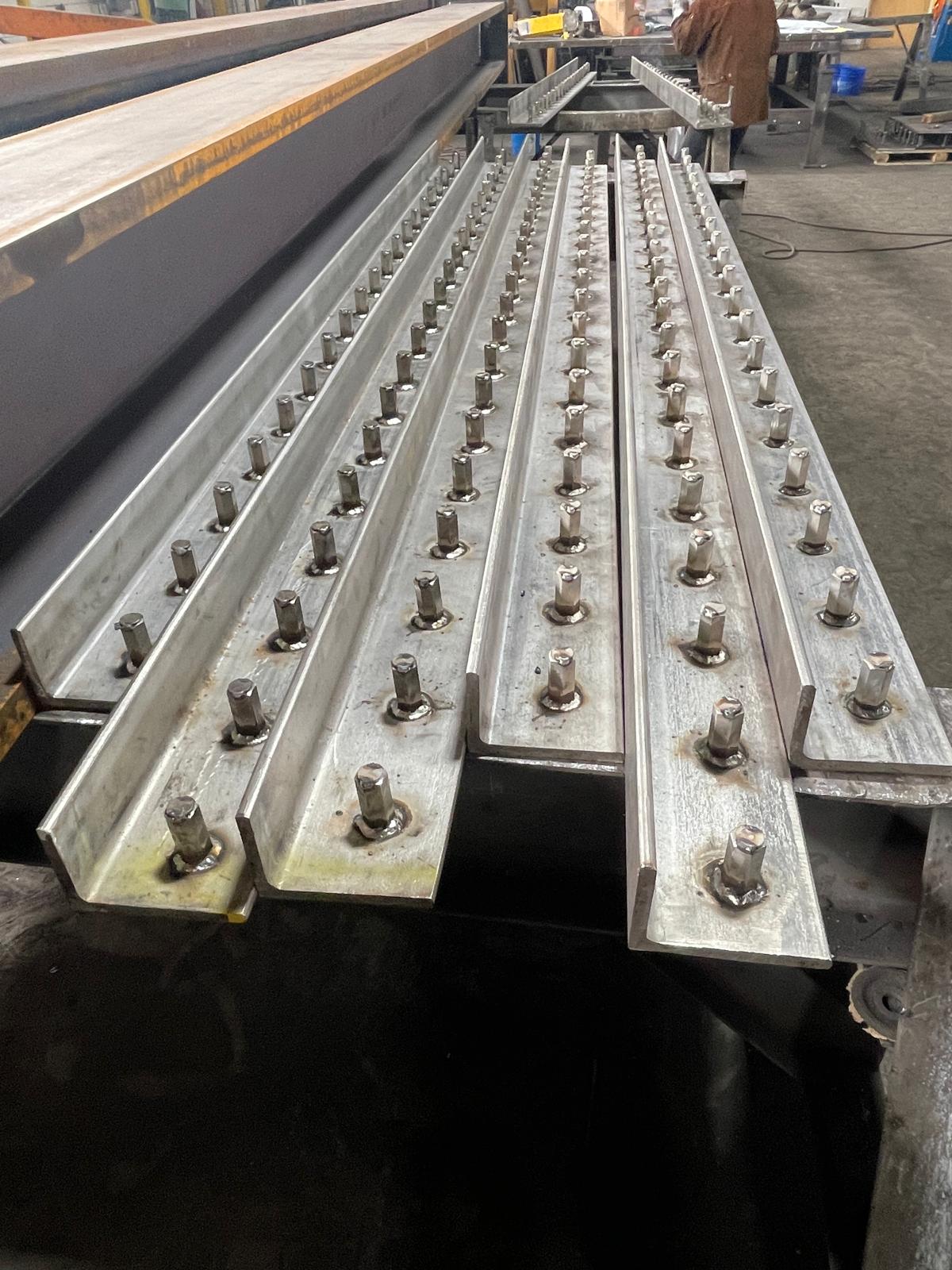
We validate material estimates, schedule requirements, and resource allocation through virtual simulation. If a complex embed plate assembly requires specialized welding procedures that will extend fabrication time, we know that before making commitments to the project schedule. This foresight prevents the schedule surprises that plague traditional fabrication workflows.
Applications in Anchor Bolt Fabrication
For anchor bolt fabrication specifically, virtual modeling eliminates the most common error sources. Bolt projection heights must be exact: too short and the structural connection fails, too long and you're cutting threads on-site. Virtual models calculate these projections accounting for template thickness, nut dimensions, washer specifications, and the final concrete surface elevation.
Template configurations become verifiable before fabrication. We model the template plate with all bolt holes, verify spacing against project specifications, and check that the pattern matches the structural steel base plate. The virtual model can overlay the structural steel connection to verify perfect alignment.
Complex anchor bolt cages with multiple elevation changes or non-standard geometries are particularly suited to virtual modeling. Traditional 2D drawings struggle to represent three-dimensional bolt arrangements clearly. The virtual model shows exactly how bolts are positioned in space, eliminating the ambiguity that leads to fabrication errors.
The LRKD Industries Approach
Our in-house detailing and engineering services leverage virtual modeling as standard practice, not as an optional upgrade. Every custom anchor bolt cage, embed plate assembly, and structural fabrication project starts with a detailed 3D model built by our experienced detailing team.
We maintain our modeling standards internally, ensuring consistency across all projects regardless of size or complexity. Our fabrication team works directly from these virtual models, with shop floor tablets displaying 3D views that can be rotated, zoomed, and dimensioned as needed during production.
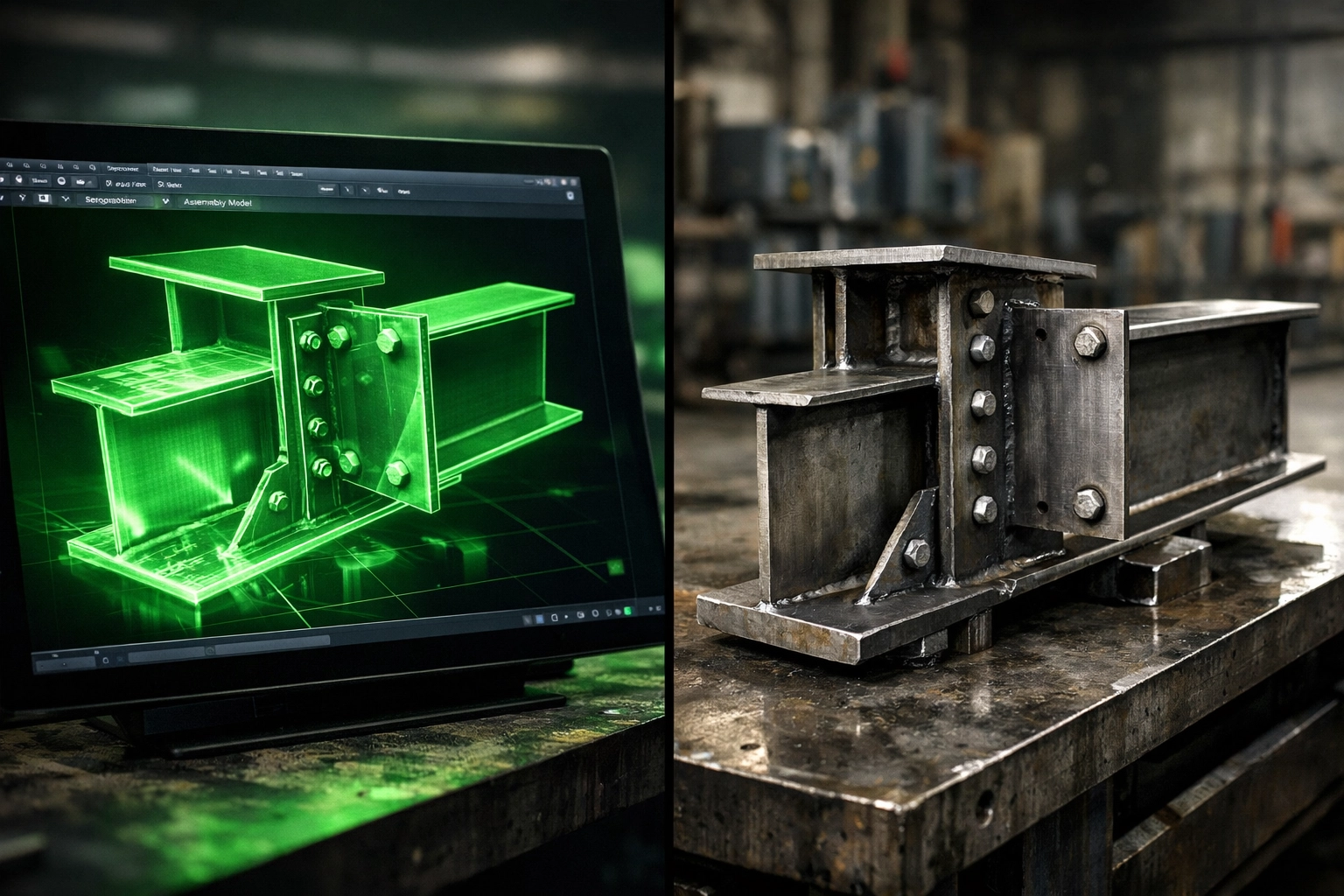
This integration between detailing and fabrication happens under one roof. When questions arise during fabrication, our detailers are available immediately to clarify intent or adjust the model if field conditions change. We're not coordinating across multiple companies: we're refining a single virtual model that both our detailers and fabricators reference continuously.
Quality control becomes more rigorous when we can compare finished components directly to the virtual model. Critical dimensions are verified against the 3D representation, not against 2D drawings that may have been updated separately. The model serves as the quality benchmark throughout the fabrication process.
The Competitive Advantage of Error-Free Fabrication
Projects that use virtually modeled components move faster through construction. Structural steel erectors receive anchor bolt cages that fit perfectly on the first attempt. Concrete contractors work with embed plates that align exactly with architectural features. Mechanical trades install equipment on structural supports that clear all interferences.
This reliability translates to schedule certainty. General contractors value suppliers who deliver components that install without field modifications. Virtual modeling enables that level of dependability by eliminating the errors that cause installation delays.
Cost savings compound throughout the project lifecycle. Less rework means lower labor costs. Accurate material quantities mean reduced waste. Faster installation means earlier project completion. The investment in virtual modeling returns value at every stage from fabrication through final inspection.
For structural components where precision is non-negotiable: foundation anchor bolts, critical embedments, specialized fabrications: virtual modeling isn't optional. It's the standard that modern construction demands.
We build digital models because steel doesn't forgive mistakes, and construction schedules don't accommodate do-overs. Virtual modeling eliminates fabrication errors by catching them before they become physical problems. For projects where accuracy matters, this approach is simply how professional fabrication is done.
Author: MEDIA_LRKD