

Structural integrity begins at the foundation. For engineers and contractors, the selection of anchor bolts is a decision that dictates the safety, longevity, and regulatory compliance of a project. Whether you are securing a high-rise in Manhattan or a bridge in the Bronx, the specific grade of steel used in your foundation anchors determines how well the structure resists uplift, shear, and tension.
While ASTM F1554, A36, and A449 are often discussed in the same context, they are not interchangeable. Understanding the mechanical differences and intended applications for each specification is essential for minimizing errors and ensuring structural reliability. We recognize the complexities of these choices, which is why we provide comprehensive engineering and supply solutions tailored to these exact requirements.
ASTM F1554: The Professional Standard for Foundation Anchors
ASTM F1554 is the primary specification for anchor bolts designed to be embedded in concrete foundations. Unlike general-purpose steel specifications, F1554 is specifically written for the purpose of fastening structural supports to concrete foundations. It covers straight rods, bent bolts, and headed bolts.
We provide F1554 anchor bolts in three distinct grades, each categorized by its minimum yield strength:
- Grade 36: A mild steel option with a minimum yield strength of 36 ksi. It is the most common choice for light-duty applications and is generally the most weldable of the grades.
- Grade 55: A low-alloy, medium-strength option with a 55 ksi yield strength. This grade is frequently utilized for its balance of strength and ductility.
- Grade 105: A high-strength, heat-treated alloy steel with a 105 ksi yield strength. It is comparable in strength to A325 or A449 bolts but is specifically tested for anchor bolt applications.
The industry-wide preference for F1554 stems from its rigorous testing requirements, including reduction of area and tensile strength ranges, which are not always present in general material specifications.
ASTM A36: Distinguishing Material from Specification
ASTM A36 is a widely recognized specification for structural steel shapes, plates, and bars. However, it is fundamentally a material specification rather than a fastener specification. When a project specifies "A36 anchor bolts," it typically refers to the raw material from which the bolt is manufactured.
While A36 material has a yield strength of 36 ksi, identical to F1554 Grade 36, it lacks the specific mechanical testing and quality control required for finished fasteners. For instance, F1554 requires specific testing for the finished bolt, whereas A36 testing is performed on the raw bar stock before it is threaded or bent.
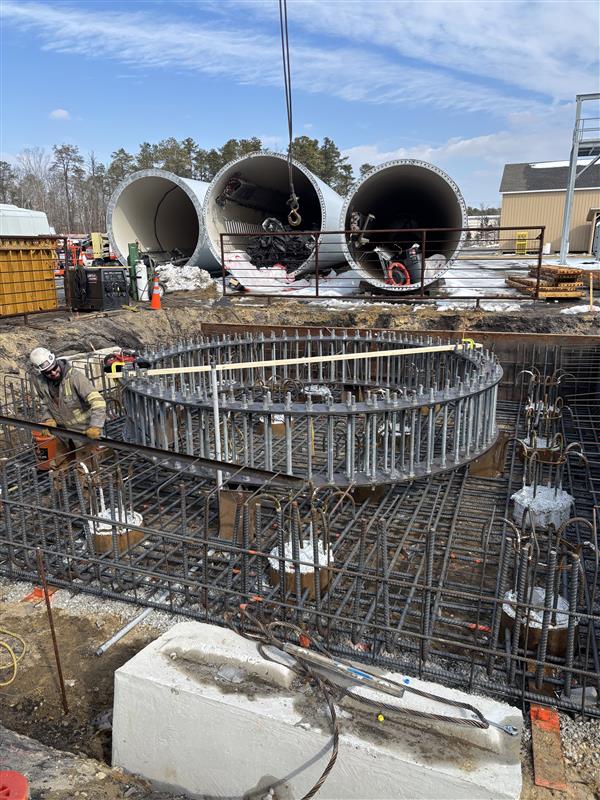
We recommend transitioning to F1554 Grade 36 for foundation projects. Using a dedicated fastener specification ensures that the anchor bolts meet all necessary performance criteria for tension and shear within a concrete embedment. This transition minimizes risk and provides a clearer trail of traceability for inspectors and engineers.
ASTM A449: High-Strength Performance and Utility
ASTM A449 covers quenched-and-tempered hex bolts and studs. It is often compared to a325 bolts in terms of strength, but A449 is more versatile in terms of diameter and thread length. It is a high-strength specification, but like A36, it is not primarily intended for foundation embedment.
A449 is frequently specified when a project requires higher strength than mild steel but does not strictly fall under structural bolting codes like those for tc bolts or a490 bolts. Its yield strength varies by diameter, generally ranging from 92 ksi down to 58 ksi as the diameter increases.
While A449 can be used for headed anchor bolts, it is critical to note its limitations regarding welding. Because A449 is a heat-treated material, welding can alter its mechanical properties, potentially compromising the bolt's strength. For high-strength foundation applications that do not require welding, F1554 Grade 105 or A449 are suitable choices, though F1554 remains the preferred standard for foundation-specific testing.
Mechanical Comparison and Weldability
Selecting the right grade requires a direct comparison of mechanical properties and how they interact with site-specific needs like welding.
| Property | F1554 Grade 36 | F1554 Grade 55 | F1554 Grade 105 | ASTM A36 | ASTM A449 |
|---|---|---|---|---|---|
| Yield Strength (min) | 36 ksi | 55 ksi | 105 ksi | 36 ksi | 58–92 ksi |
| Tensile Strength | 58–80 ksi | 75–95 ksi | 125–150 ksi | 58–80 ksi | 90–120 ksi |
| Weldable | Yes | With S1 Requirement | No | Yes | No |
| Primary Use | Foundations | High-Strength Foundations | Heavy-Duty Foundations | Structural Steel | General Hardware |
We recognize that many structural projects in areas like Long Island and Bronx, NY, require complex assemblies like anchor bolt cages. These cages often involve welding structural components to the bolts. In these instances, F1554 Grade 36 or Grade 55 (with S1 supplementary requirements) are the only viable options.
The Importance of Precision Detailing and Fabrication
In-house detailing and engineering are at the core of successful structural projects. We believe that accuracy in the virtual phase prevents errors during the fabrication and installation phases. Our team utilizes advanced drafting tools to build virtual projects before a single piece of steel is cut.
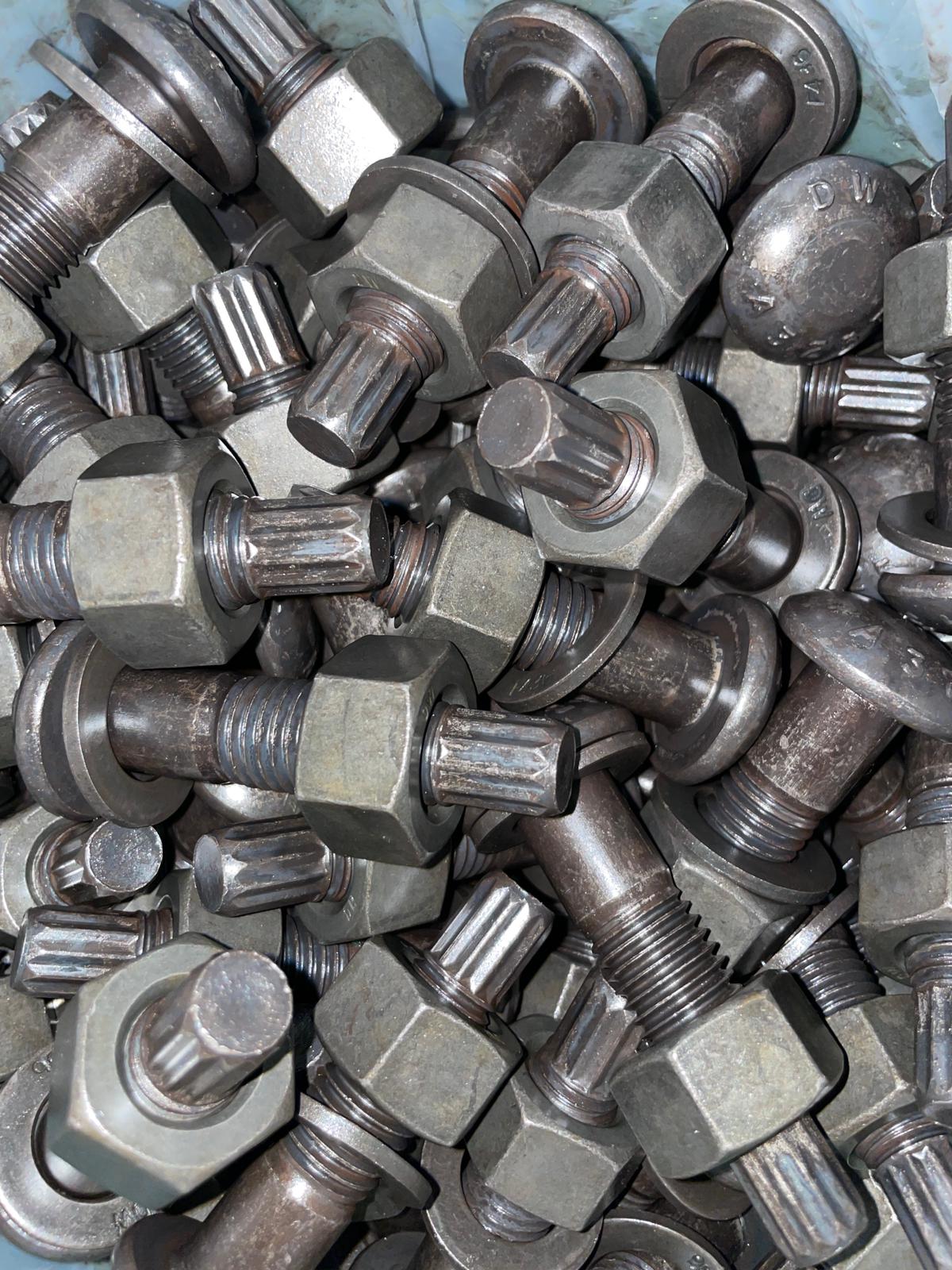
By visualizing anchor bolt cages and foundation embeds in a 3D environment, we identify potential clashes between rebar and anchor bolts before they reach the jobsite. This proactive approach is particularly beneficial for projects utilizing tc bolts (Tension Control Bolts) and a325 tension control bolts, where precision in structural connections is paramount.
Our fabrication process ensures that every F1554 anchor bolt, whether it is headed or bent, meets the exact dimensions required by your structural drawings. We offer specialized thread rolling services and mechanical galvanizing for A325 and A490 bolts to ensure long-term durability in harsh environments.
Committed to Diversity and Industry Excellence
As a certified Women-Minority Business Enterprise (WMBE), we are proud to represent the global community of minority-owned businesses. We firmly believe that fostering diversity and inclusion enriches our industry and strengthens our partnerships.
Our certifications, including those from the Port Authority of NY & NJ, reflect our unwavering commitment to quality and service. We position ourselves not just as a supplier, but as a collaborative partner capable of navigating the complex procurement requirements often found in public infrastructure projects and high-scale commercial builds.
We provide more than just fasteners; we provide confidence. From supplying wedge anchors for base plate connections to delivering complete anchor bolt cages for industrial facilities, our focus remains on dependability and accuracy.
Securing Your Next Project
Choosing the correct anchor bolt grade is a balance of strength requirements, material properties, and regulatory standards. While A36 and A449 have their place in general construction, ASTM F1554 remains the industry standard for foundation anchors.
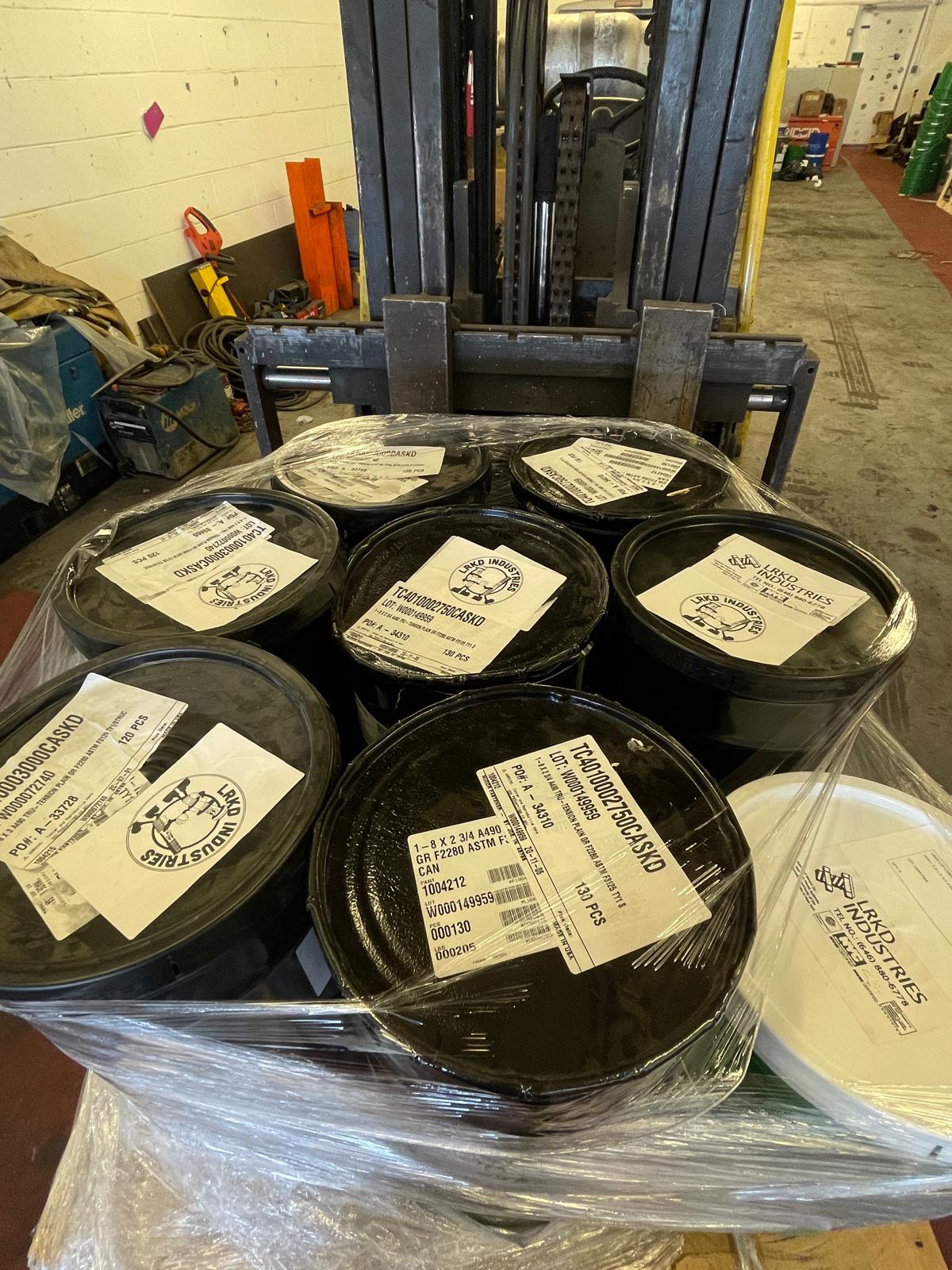
We are ready to support your next project with high-quality steel fasteners and comprehensive in-house detailing. Whether you need domestic A325 bolts, specialized tension control solutions, or custom-fabricated anchor bolt cages, we have the expertise to deliver.
Contact our team today to discuss your project requirements or to request a quote for your structural fastening needs in the New York area and beyond.
Author: MEDIA_LRKD