

Foundation engineering serves as the literal and metaphorical bedrock of the modern built environment. Whether the project is a sprawling industrial warehouse, a towering skyscraper, or a high-capacity wind turbine, the integrity of the entire structure depends on how effectively it is anchored to the earth. Within this discipline, the ASTM F1554 specification represents the gold standard for anchor bolts.
We recognize that for engineers, contractors, and project managers, selecting the correct anchor bolt is not merely a matter of hardware procurement; it is a critical safety decision. Understanding the nuances of ASTM F1554: from material grades to the complexities of anchor bolt cage fabrication: is essential for ensuring long-term structural reliability.
Defining the ASTM F1554 Specification
Introduced in 1994 by the American Society for Testing and Materials, the ASTM F1554 specification was developed to provide a centralized standard for anchor bolts designed to anchor structural supports to concrete foundations. Before its inception, engineers often had to rely on various other steel specifications that were not specifically tailored for anchoring applications.
Today, ASTM F1554 covers straight, bent, headed, and headless anchor bolts made of carbon, medium-strength low-alloy, and high-strength alloy steel. These fasteners are the primary connection point between a concrete foundation and the structural steel columns or poles they support. They are ubiquitous in highway signage, street lighting, traffic signals, and heavy industrial steel frames.
The Three Pillar Grades: 36, 55, and 105
The most critical aspect of the F1554 specification is its division into three distinct grades, based primarily on minimum yield strength. Choosing the right grade is a balance of required load capacity, ductility, and environmental conditions.
Grade 36: The Standard for Reliability
Grade 36 is manufactured from low-carbon steel and offers a minimum yield strength of 36 ksi. This is the "workhorse" grade for standard construction applications where extreme tensile strength is not the primary concern. It is favored for its excellent ductility and ease of weldability. For light-to-moderate loads, such as small commercial buildings or standard lighting poles, Grade 36 provides a cost-effective and reliable solution.
Grade 55: The Balanced Choice
Grade 55 is a medium-strength, low-alloy steel with a minimum yield strength of 55 ksi. It bridges the gap between the standard Grade 36 and the high-strength Grade 105. Grade 55 is often specified when the design requires more strength than low-carbon steel can provide but still requires a level of ductility to handle dynamic loads. It is a common choice for mixed-use construction and significant infrastructure projects.
Grade 105: The High-Strength Specialist
Grade 105 is a heat-treated, alloy steel designed for high-stress applications, offering a minimum yield strength of 105 ksi. This grade is reserved for critical infrastructure, such as high-rise buildings and heavy industrial equipment, where the anchor bolts must withstand massive loads. While it offers superior strength, it has lower ductility than Grades 36 and 55, making precision in design and installation even more paramount.
Physical Configurations and Threading Standards
ASTM F1554 anchor bolts are not "one size fits all." The specification allows for several physical configurations to accommodate different engineering requirements:
- Headed Bolts: These feature a forged head (usually hex or heavy hex) at the end embedded in the concrete. The head provides the necessary pull-out resistance.
- Bent Bolts: Often referred to as L-bolts or J-bolts, these use a hook at the embedded end to create mechanical interlock with the concrete.
- Straight Rods: These are headless rods, often used with a nut and an anchor plate at the embedded end to provide the required anchorage.
- All-Thread Rods: Used when continuous threading is required for the specific design of the foundation connection.
Standardization extends to the threading as well. F1554 bolts typically follow the Unified Coarse (UNC) Thread Series, Class 2A tolerances. Precision in threading ensures that nuts and washers can be applied smoothly and torqued to the exact specifications required by the project’s structural engineer.
The Engineering of Anchor Bolt Cages
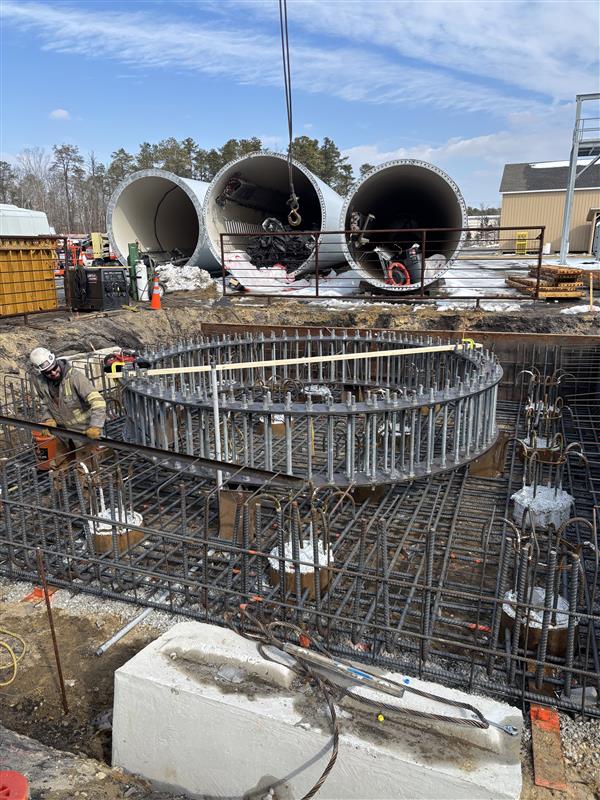
In large-scale industrial and infrastructure projects, anchor bolts are rarely installed as individual pieces. Instead, they are engineered into "anchor bolt cages." These cages are complex assemblies of anchor bolts, heavy-duty templates, and reinforcing steel, designed to be cast directly into the concrete foundation.
The primary purpose of a cage is to maintain the exact positioning and verticality of the bolts during the concrete pour. Even a slight deviation in the placement of a bolt can lead to a "misalignment" with the base plate of the steel column, resulting in costly delays and field modifications.
We recognize that detailing and fabricating these cages requires an exceptional level of precision. A wind turbine foundation, for instance, may require a circular cage with dozens of high-strength F1554 Grade 105 bolts. The tolerances for these assemblies are often measured in fractions of an inch, requiring sophisticated shop drawings and expert fabrication.
LRKD Industries: Precision in Detailing and Fabrication
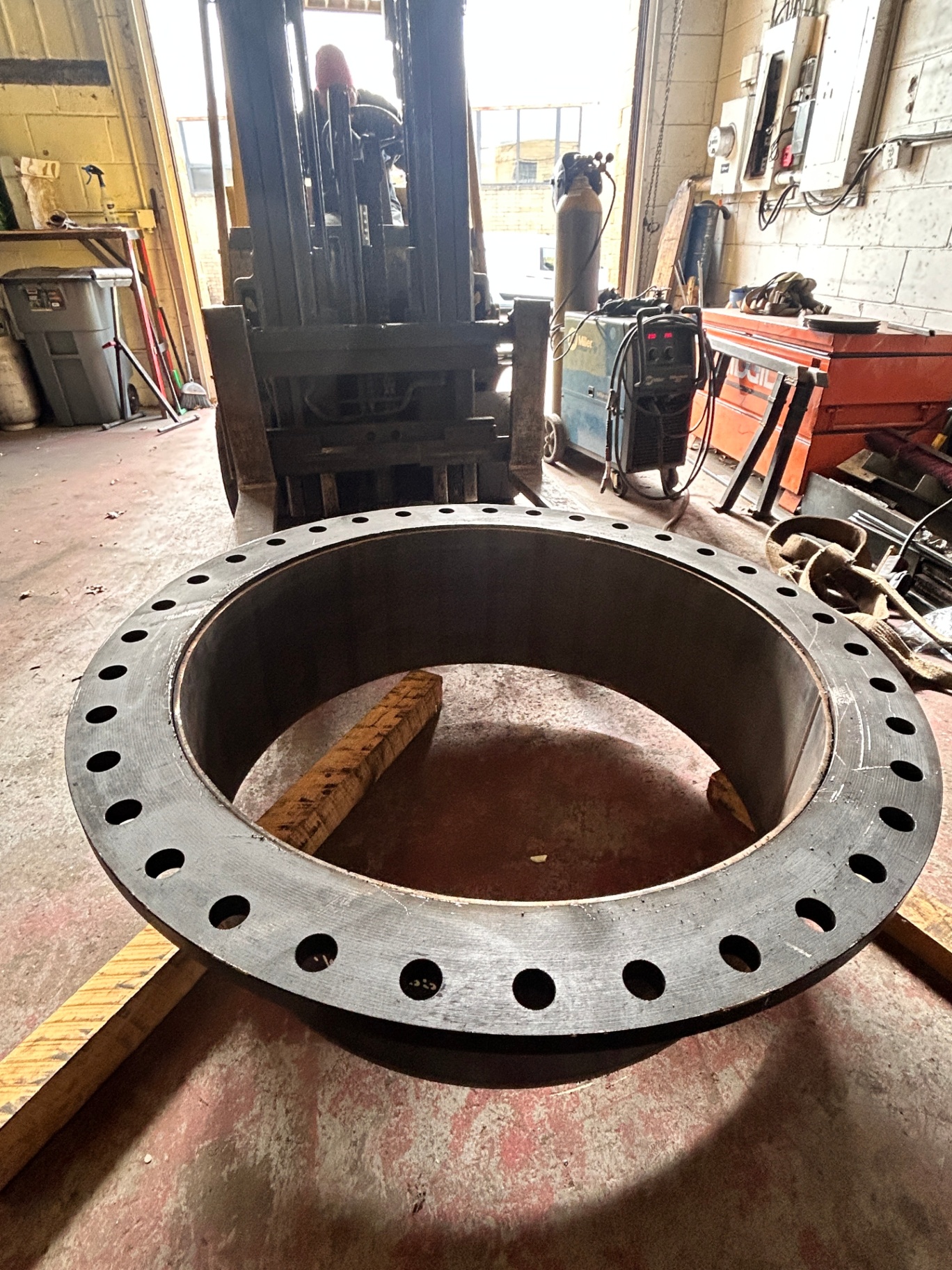
At LRKD Industries, we position ourselves as more than a supplier; we are a collaborative partner in the foundation engineering process. Our expertise in custom steel fabrication allows us to take complex engineering specifications and translate them into high-quality, project-ready hardware.
Our detailing services ensure that every anchor bolt, nut, and washer meets the specific requirements of the project. We provide comprehensive shop drawings that outline the exact dimensions and configurations of anchor bolt cages, ensuring that the transition from design to site installation is seamless.
Whether your project requires standard F1554 Grade 36 hex bolts or complex, custom-fabricated cages for high-stress environments, our team delivers products that adhere to the strictest industry standards. We understand the pressures of construction timelines, which is why we maintain a robust inventory of priority products to keep your project moving forward.
Quality Control, Compliance, and Identification
Compliance with ASTM F1554 is verified through rigorous testing and clear identification. Each grade has specific mechanical property requirements, including tensile strength, elongation, and area reduction. Furthermore, Grades 55 and 105 must often meet Charpy Impact requirements: a test of the material's toughness and its ability to resist brittle fracture at low temperatures.
To prevent onsite errors, F1554 bolts are identified by specific markings:
- Grade 36: Often left unmarked or marked with the manufacturer's identification.
- Grade 55: Typically marked with a green color code or stamped with "A".
- Grade 105: Generally marked with a red color code or stamped with "D1" or "DH2".
These visual indicators are vital for inspectors and contractors to ensure that the correct grade is being installed in the corresponding location as per the structural drawings.
Why Local Expertise and Certification Matter
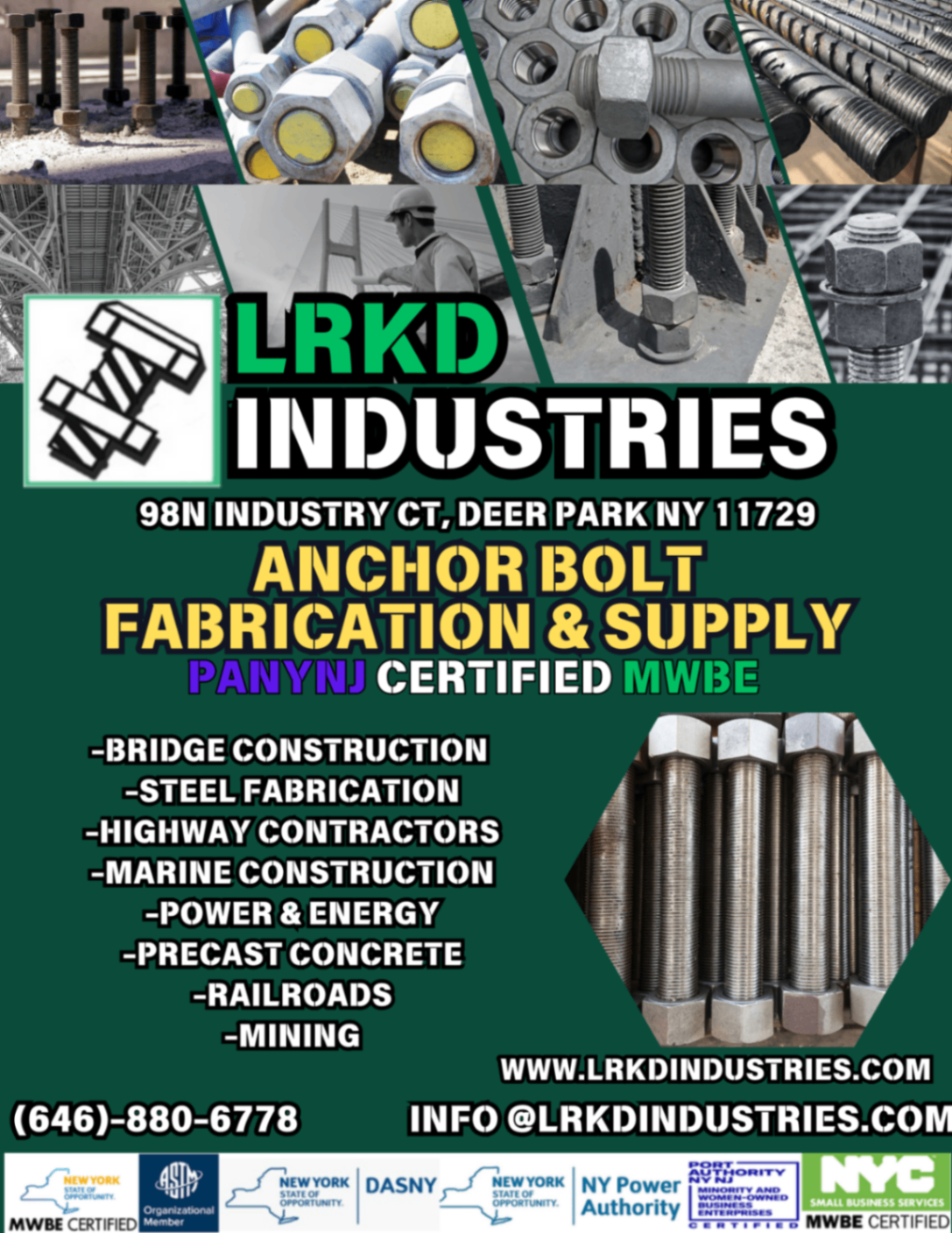
In the highly regulated world of construction and infrastructure, who you source from is as important as what you source. LRKD Industries is proud to be a Minority- and Woman-Owned Business Enterprise (MWBE), certified by the Port Authority of NY & NJ. This certification, combined with our deep understanding of PANYNJ and NYC construction standards, makes us a strategic partner for public and private sector projects alike.
We believe that high-quality steel fasteners are the silent guardians of our infrastructure. By specializing in the detailing and fabrication of ASTM F1554 anchor bolts and cages, we contribute to the safety and longevity of the bridges, buildings, and power structures that define our communities.
For your next foundation project, we invite you to leverage our technical expertise and commitment to quality. From threaded rods to custom-engineered anchor assemblies, LRKD Industries provides the reliable connections your project demands.
Author: MEDIA_LRKD