

We recognize that for many contractors and structural engineers, the "A325" designation is more than just a specification: it is a decades-old industry standard representing reliability in steel-to-steel connections. However, as we navigate 2026, the landscape of structural fasteners has undergone a significant formal transformation. While you may still hear the term "A325 bolts" on every jobsite from the Bronx to Long Island, the technical reality has shifted under the ASTM F3125 umbrella.
Understanding this shift is not merely a matter of semantics; it impacts your procurement, your design calculations, and your project’s compliance with modern building codes. At LRKD Industries, we prioritize ensuring our partners are equipped with both the high-quality fasteners and the technical knowledge required to navigate these evolving standards.
THE CONSOLIDATION OF STRUCTURAL STANDARDS
We have seen the industry move toward simplification through the adoption of ASTM F3125. This standard was introduced to consolidate six major structural bolt specifications into one comprehensive document. Previously, engineers had to juggle separate standards for A325, A325M, A490, A490M, F1852, and F2280. Today, these are unified as "grades" within the F3125 specification.
What was once a standalone ASTM A325 is now formally ASTM F3125 Grade A325. This consolidation was designed to eliminate discrepancies between the various standards and provide a centralized resource for mechanical properties, chemical requirements, and coating standards. For your next project, specifying "F3125 Grade A325" ensures you are working with the most current safety and quality metrics recognized by the AISC and AASHTO.

UNIFORM STRENGTH ACROSS ALL DIAMETERS
One of the most critical technical advancements under the F3125 standard involves the tensile strength of larger diameter bolts. Historically, under the legacy ASTM A325 specification, there was a "strength drop" for bolts with diameters larger than one inch. A 1/2" to 1" bolt was rated at 120 ksi, while a 1-1/8" to 1-1/2" bolt dropped to 105 ksi.
We highlight this change because it directly impacts your connection design. Under ASTM F3125 Grade A325, this diameter-based drop has been eliminated. All bolts from 1/2" through 1-1/2" are now standardized at a minimum tensile strength of 120 ksi. This allows engineers to optimize connections using larger bolts without sacrificing the higher strength levels previously reserved for smaller fasteners. This uniformity streamlines the engineering process and reduces the risk of calculation errors in heavy industrial applications.
IDENTIFICATION IN THE FIELD
We understand that field confusion can lead to project delays and inspection failures. It is important to note that while the governing specification has changed, the physical markings on the bolt heads have remained consistent. A structural bolt compliant with F3125 Grade A325 will still be stamped with "A325." Similarly, Grade A490 bolts still bear the "A490" mark.
Inspectors and contractors should look for these familiar stamps, but the supporting documentation: the Mill Test Reports (MTRs): must now reflect compliance with ASTM F3125. At LRKD Industries, we maintain rigorous inventory controls to ensure that every shipment of structural bolts is backed by the appropriate certification, providing peace of mind for site supervisors and building officials alike.
THE ROLE OF TENSION CONTROL (TC) BOLTS
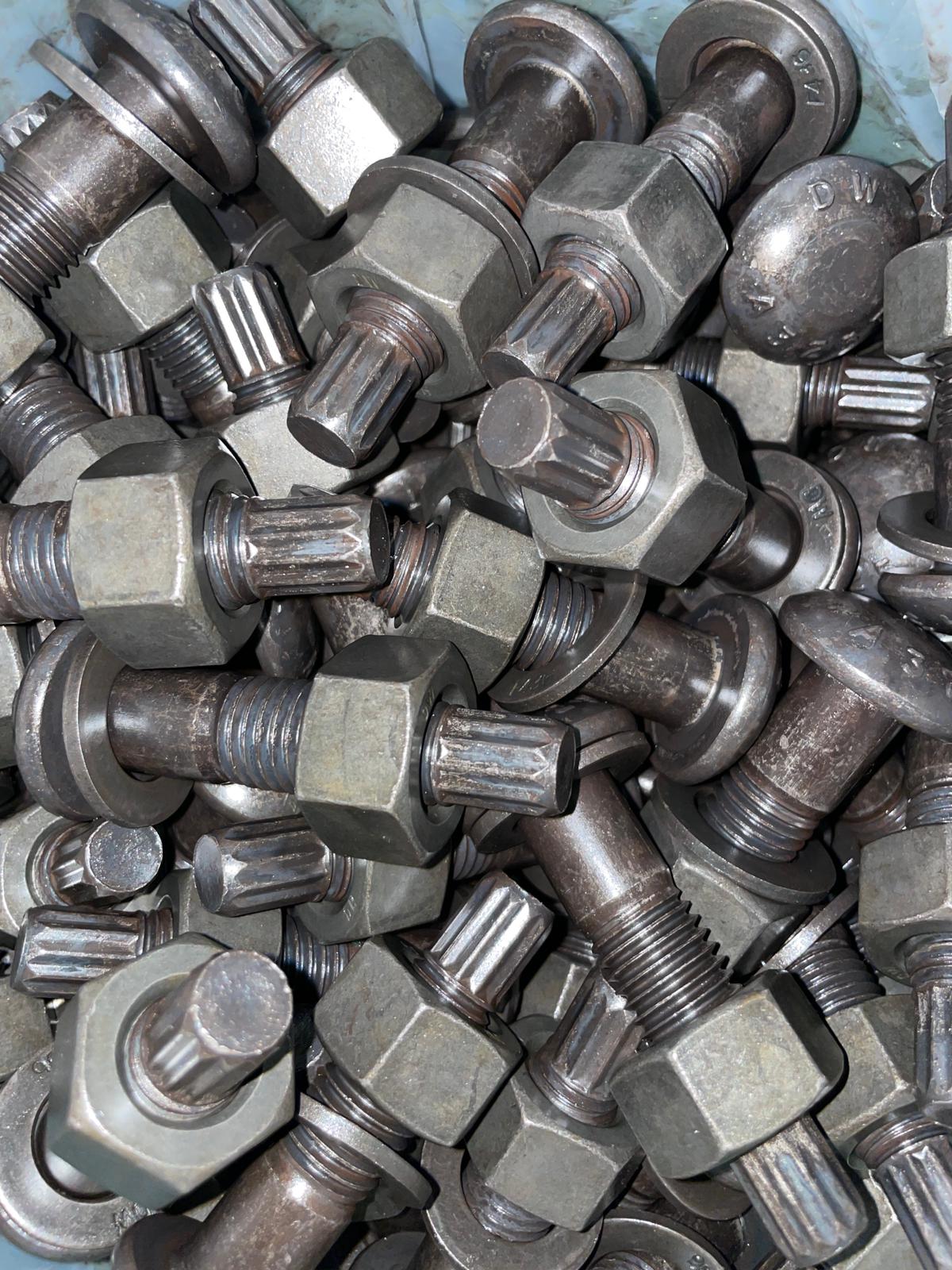
While heavy hex A325 bolts remain the workhorse of the industry, we have seen an increased demand for Tension Control (TC) Bolts (formally F3125 Grade F1852). These fasteners are engineered for efficiency and accuracy, featuring a built-in tension indicator spline that shears off when the correct tension is achieved.
TC bolts are particularly valuable in 2026 as labor costs and inspection requirements continue to rise. Because they can be installed by a single operator using an electric shear wrench, they eliminate the need for a second person to hold the bolt head, significantly reducing labor hours on bridges and high-rise structures. We supply high-strength TC bolts with pre-installed heavy hex nuts, ensuring that your crew can move quickly without compromising structural integrity.
CRITICAL REUSE POLICIES IN 2026
We advocate for the highest safety standards, which includes a clear understanding of bolt reuse policies. Under the current F3125 guidelines, there is a strict non-reuse policy for certain fastener types. Specifically, galvanized A325 bolts and all A490 bolts should never be reused once they have been fully tensioned.
The tensioning process induces significant stress on the threads and the material structure. Reusing these fasteners can lead to unpredictable performance or catastrophic failure in the field. While "black" (uncoated) A325 bolts may sometimes be reused if they pass a rotational capacity test, we generally recommend utilizing new fasteners for all critical structural connections to ensure maximum dependability.
BEYOND STRUCTURAL BOLTING: FOUNDATION SOLUTIONS
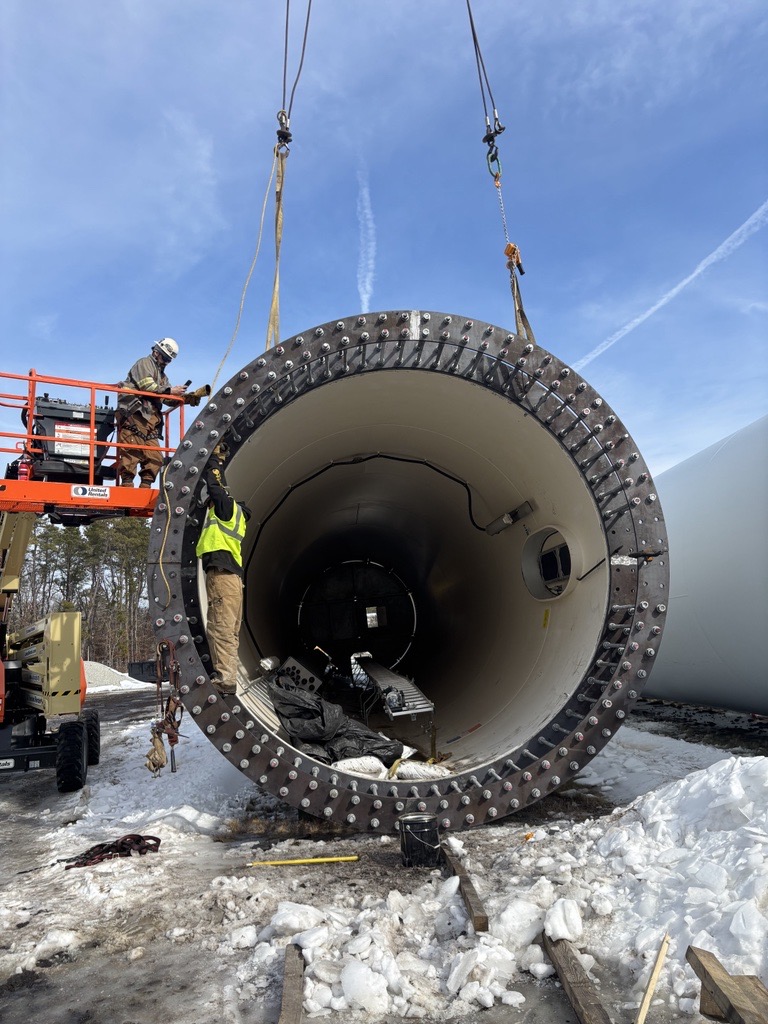
We recognize that a project's strength begins at the foundation. While A325 and A490 bolts are the standard for steel-to-steel connections, they are not appropriate for use as anchor bolts embedded in concrete. For foundation cages and base plate connections, we supply specialized anchor bolts engineered to meet ASTM F1554 (Grades 36, 55, or 105).
Pairing our wedge anchors and F1554 anchor bolts with our high-strength structural fasteners provides a comprehensive solution for your build. By sourcing all your fastening requirements from a single, reliable partner, you streamline your logistics and ensure that every component of your project meets the specific ASTM standards required for its application.
THE LRKD ADVANTAGE: DETAILING AND ENGINEERING
We believe that professional service goes beyond simply supplying hardware. LRKD Industries provides in-house detailing and engineering services that set us apart in the New York market. Our team utilizes advanced drafting technology to build virtual projects before fabrication begins. This allows us to identify potential conflicts and minimize errors, ensuring that every bolt, nut, and washer fits perfectly the first time.
As a proud representative of the Women-Minority Business Enterprise (WMBE) community, we are committed to fostering diversity and excellence in the construction industry. We offer more than just steel; we offer a partnership built on accuracy, dependability, and a deep understanding of the local infrastructure needs in Bronx, NY, and Long Island.
STREAMLINED PROCUREMENT AND LOCAL EXPERTISE
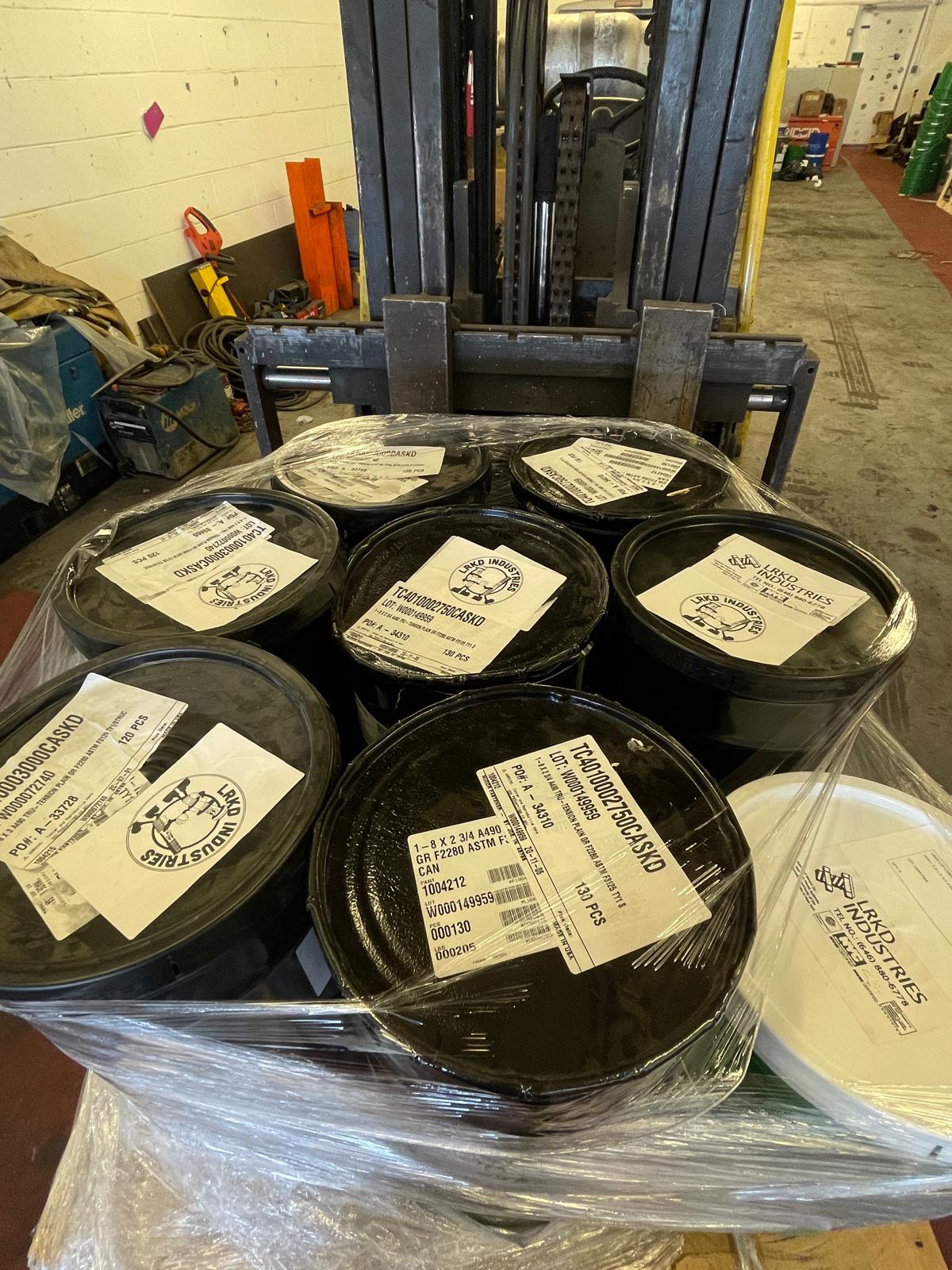
We recognize the pressure of project timelines. Whether you are working on a high-rise in Manhattan or a bridge project in the outer boroughs, having a dependable supply of ASTM F3125 fasteners is non-negotiable. We maintain a robust stock of hex lag screws, TC bolts, and structural hardware to ensure prompt service and customer support.
In 2026, the question is not whether A325 bolts are still relevant: it is whether your supplier is providing the modern ASTM F3125 certifications and technical support required to keep your project on schedule and in compliance. We invite you to leverage our expertise and our commitment to quality for your next structural endeavor.
SUMMARY OF THE ASTM F3125 TRANSITION
To conclude, the transition from standalone A325 to the unified F3125 standard represents an advancement in industry safety and clarity. The core benefits for 2026 projects include:
- Consolidated Standards: A single source for all structural bolting requirements.
- Increased Strength: Uniform 120 ksi tensile strength for all A325 bolt diameters.
- Clear Documentation: Unified Mill Test Reports that simplify the submittal process.
- Enhanced Reliability: Updated guidelines for installation and reuse that prioritize structural safety.
We stay at the forefront of these changes so that you can focus on building the infrastructure of the future. For high-quality steel fasteners and professional engineering services, LRKD Industries remains your trusted partner in the field.
Author: MEDIA_LRKD