

When you manage structural steel detailing, fabrication, or erection, every connection represents a critical juncture of safety, precision, and load transfer. You operate in an environment where margins for error do not exist, and selecting the correct fastener specification dictates the long-term integrity of bridges, high-rise buildings, and industrial facilities. Among structural fastening systems, tension control (TC) assemblies have become the industry standard for reliable pre-tensioning. However, specifying between A325 TC bolts and A490 TC bolts requires a clear understanding of mechanical properties, environmental constraints, and installation dynamics.
At LRKD Industries, we partner with engineers and contractors across the New York area and nationwide to supply precision-engineered steel solutions. We recognize that choosing the right high-strength bolt is never a casual decision. This comprehensive comparison examines the fundamental distinctions between A325 TC and A490 TC fasteners to help you determine which option aligns with your structural requirements.
Understanding the Foundation of Modern Tension Control Fastening
The structural steel industry relies on standardized specifications to ensure uniform quality across every project phase. Historically designated under separate ASTM standards, high-strength structural bolts are now unified under ASTM F3125, with TC counterparts designated under ASTM F1852 for Grade A325 equivalents and ASTM F2280 for Grade A490 equivalents. Despite this unification under a single umbrella specification, the distinct mechanical behaviors of medium-carbon steel and alloy steel remain unchanged.
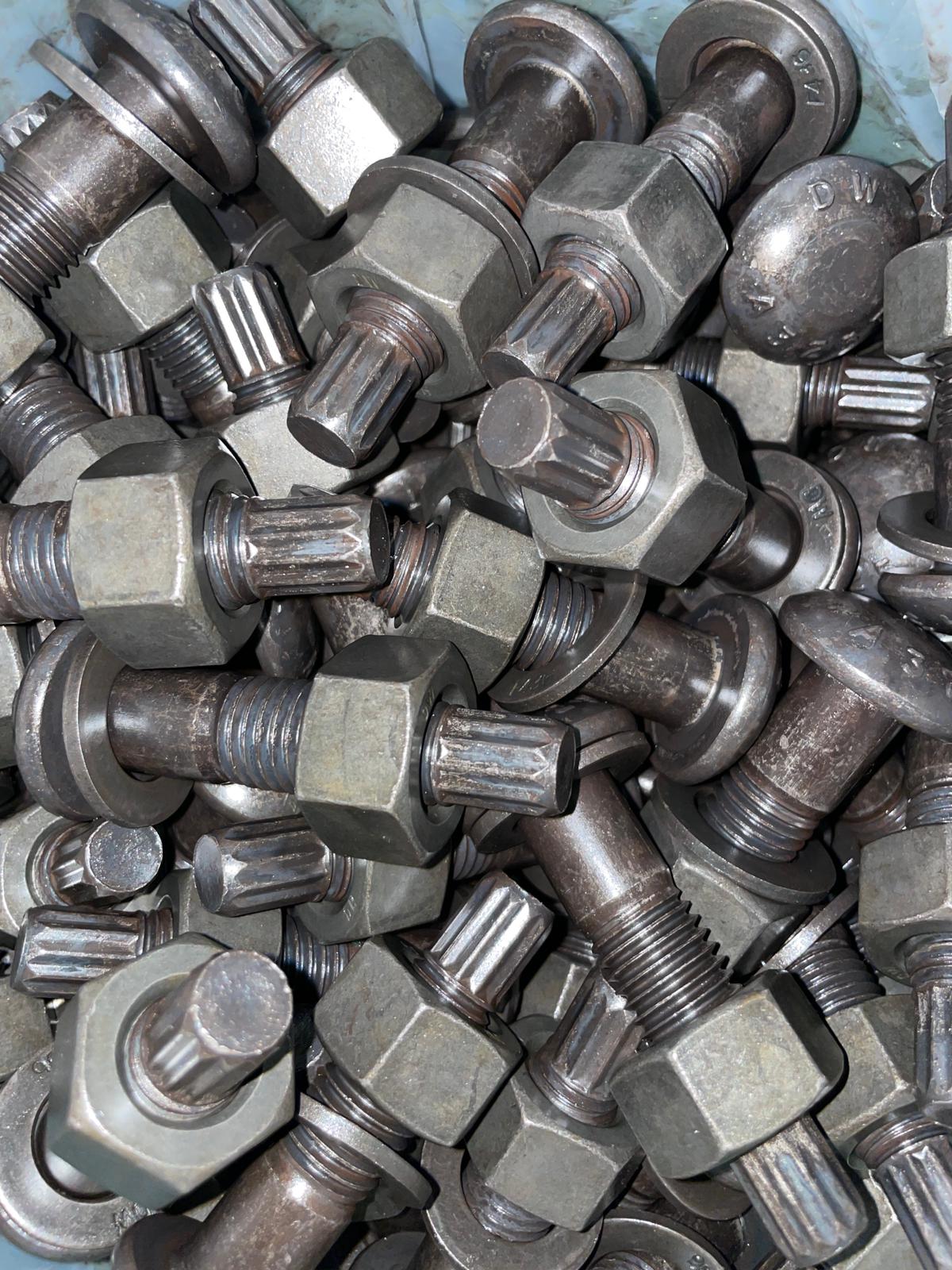
TC bolts are engineered with a built-in spline that shears off when the correct pre-tension is achieved during installation. This mechanism eliminates guesswork on the job site and provides visual verification of proper tensioning. Yet, the underlying material strength of the bolt assembly fundamentally alters how loads are distributed and how connections must be detailed. When reviewing structural requirements for foundational embedments and anchor systems, engineers often pair superstructure connections with certified anchor bolts such as ASTM F1554 Grades 36, 55, or 105, ensuring seamless load paths from the steel frame down to the concrete foundation.
Material Composition and Tensile Strength Disparities
The primary divergence between A325 TC and A490 TC fasteners lies in their chemical composition and ultimate tensile strength. A325 TC assemblies utilize medium-carbon steel, quenched and tempered to provide reliable ductility and a minimum tensile strength of approximately 120 ksi for diameters up to one inch. This formulation delivers dependable performance across standard commercial and industrial framing applications.
Conversely, A490 TC assemblies are manufactured from alloy steel, undergoing aggressive heat treatment to achieve a minimum tensile strength ranging from 150 to 173 ksi. This superior strength profile makes A490 fasteners roughly twenty-five to forty-five percent stronger than their A325 counterparts of equivalent diameter. This enhanced capacity allows structural engineers to specify fewer bolts per connection or reduce gusset plate dimensions in high-stress zones. We recognize the demands of heavy structural loads, which is why we supply both grades with strict quality traceability and guaranteed compliance.
Coating Limitations and Environmental Resilience
While higher tensile strength is advantageous, it introduces critical limitations regarding surface protection and corrosion resistance. This single factor frequently dictates whether an engineer specifies A325 TC or A490 TC for a given project.
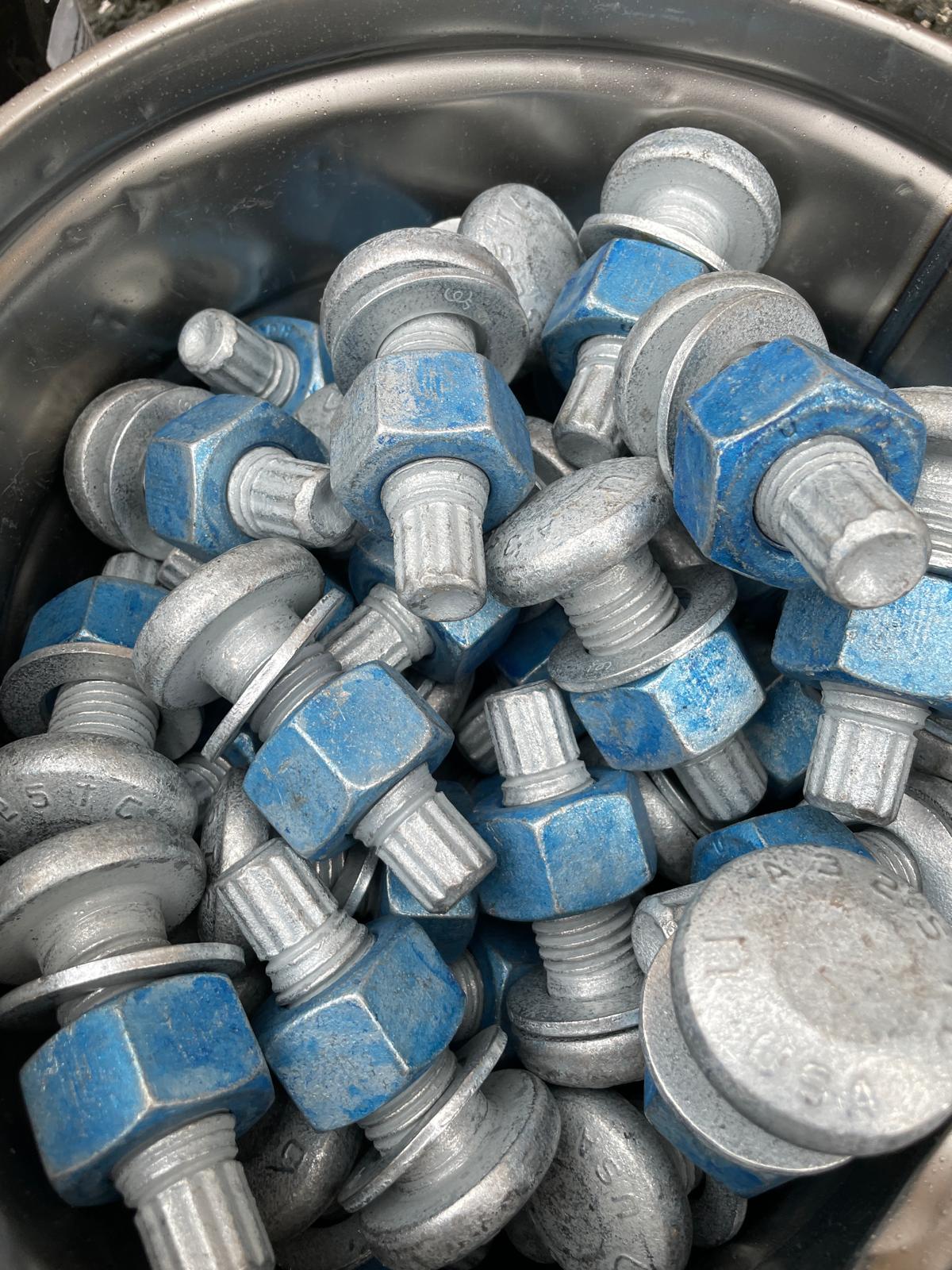
A325 TC bolts are fully compatible with hot-dip galvanizing (HDG), providing exceptional corrosion resistance for exterior structures, bridges, and marine environments. The medium-carbon steel matrix accepts zinc coatings without compromising structural integrity.
On the other hand, A490 TC bolts cannot be hot-dip galvanized. The high-strength alloy steel utilized in A490 fasteners is highly susceptible to hydrogen embrittlement when subjected to traditional pickling and galvanizing processes, which can lead to catastrophic, brittle failure under load. Consequently, A490 TC bolts are supplied in plain finish or with specialized, non-embrittling mechanical coatings. For outdoor or corrosive environments requiring robust zinc protection, A325 TC remains the definitive choice.
Installation Dynamics, Preload, and Job Site Tooling
Both fastener types utilize the specialized twist-off installation method using dedicated electric or pneumatic TC guns. The inner socket engages the nut while the outer socket counter-rotates the spline until it shears clean. However, the physical realities of higher strength demand more rigorous job site protocols for A490 assemblies.
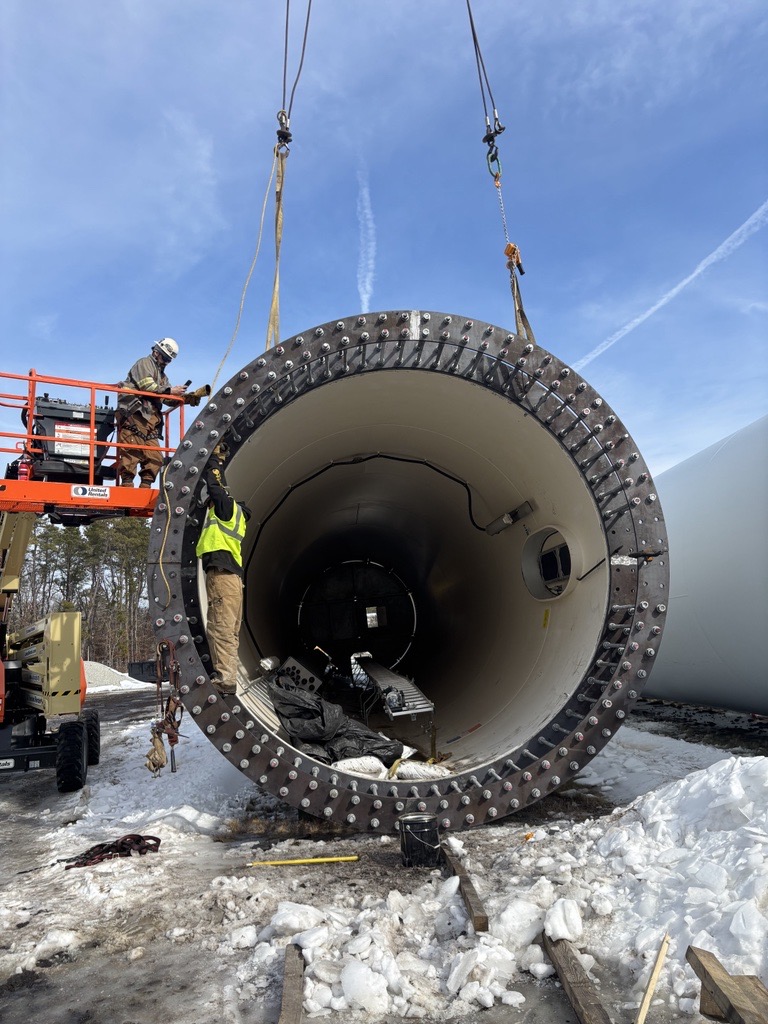
Because A490 TC bolts possess significantly higher yield and tensile strengths, they require a substantially higher minimum preload clamping force. This translates into increased torque demands on installation equipment. Ironworkers operating TC guns on A490 connections must utilize appropriately sized, heavy-duty tooling capable of handling the increased reaction torque. Furthermore, A490 bolts are strictly single-use fasteners; unlike certain re-tensioning allowances sometimes evaluated for lower-grade bolts, A490 assemblies must never be reused after initial tensioning.
Strategic Application Selection for Structural Success
Selecting the optimal fastener requires balancing structural demand, environmental exposure, and economic efficiency. A325 TC bolts serve as the universal workhorse for standard framing, beam-to-column connections, and galvanized outdoor structures. They offer lower overall material costs, simplified logistics, and straightforward installation workflows.
A490 TC assemblies are engineered for heavy-demand environments where space is at a premium and connection size must be minimized. They excel in heavy moment frames, highly loaded bracing connections, and industrial crane runway supports where shear and tension demands exceed standard thresholds.
At LRKD Industries, we maintain a comprehensive inventory of structural fasteners, backed by in-house engineering and detailing services that virtualize your connections before fabrication. Whether your project calls for galvanized A325 TC bolts or high-capacity A490 assemblies, we deliver prompt service and uncompromising accuracy to keep your construction timeline moving forward without interruption.
Author: MEDIA_LRKD