

In the world of heavy construction and steel fabrication, the integrity of a structure is only as reliable as the components holding it together. We recognize that for engineers, project managers, and contractors, selecting the right fastener is not merely a line item on a purchase order; it is a critical safety decision. Among the most prevalent and essential fasteners in the industry is the ASTM A325 structural bolt.
While the standards governing these fasteners have evolved, the "A325" designation remains the industry shorthand for high-strength, heavy hex structural bolts. Whether you are working on a mid-rise commercial building, a highway bridge, or an industrial warehouse, understanding the nuances of A325 specifications is foundational to project success.
Defining the ASTM A325 Standard
The ASTM A325 specification covers high-strength, heat-treated steel bolts intended for use in structural steel connections. Formally titled the Standard Specification for Structural Bolts, Steel, Heat Treated, 120/105 ksi Minimum Tensile Strength, this standard ensures that every bolt produced meets rigorous mechanical and chemical requirements.
It is important to note that in 2016, ASTM International consolidated several structural bolt standards: including A325 and A490: under the umbrella of ASTM F3125. However, the industry continues to use the A325 terminology, and bolts are still marked with the "A325" head stamp to ensure clarity during inspection and installation. At LRKD Industries, we provide fasteners that meet these consolidated standards, ensuring your project remains compliant with modern building codes.
Material Composition and Manufacturing
A325 bolts are manufactured from medium carbon steel or carbon boron steel. The "Type 1" bolt is the most common variety, formulated to provide a balance of strength and ductility. To achieve their high-strength properties, these bolts undergo a quenching and tempering process: a heat treatment that alters the grain structure of the steel to handle immense loads without becoming brittle.
For projects located in corrosive environments or those requiring enhanced longevity, "Type 3" weathering steel bolts are also available. These contain alloying elements like copper, chromium, and nickel, which allow the bolt to develop a protective oxide coating (patina) over time, eliminating the need for additional coatings in certain applications.

Understanding Mechanical Properties: Tensile and Yield Strength
The primary reason professionals specify A325 bolts is their predictable mechanical performance. The strength of an A325 bolt is categorized by its diameter, as the heat treatment process affects different thicknesses of steel with varying levels of efficiency.
We provide the following technical breakdown for standard Type 1 A325 fasteners:
For diameters 1/2" to 1":
- Minimum Tensile Strength: 120,000 psi. This represents the maximum stress the bolt can withstand while being pulled before failing.
- Minimum Yield Strength: 92,000 psi. This is the point at which the bolt begins to deform plastically.
- Hardness: Rockwell C24–35.
For diameters 1-1/8" to 1-1/2":
- Minimum Tensile Strength: 105,000 psi.
- Minimum Yield Strength: 81,000 psi.
- Hardness: Rockwell C19–31.
These values ensure that the fasteners can handle the pre-tensioning required for "slip-critical" connections, where the friction between the steel members: rather than the bolt shank itself: carries the load.
Dimensions and Geometry
Unlike standard hex bolts found in general hardware, A325 bolts are "Heavy Hex" bolts. They feature a larger head than a standard hex bolt, which provides a greater bearing surface to distribute the clamping force across the structural steel.
The dimensions are standardized to ensure that sockets and wrenches fit perfectly on every job site. A 3/4" diameter A325 bolt, for instance, typically features a 1-1/4" width across the flats of the head. This increased head size is a deliberate design choice to prevent the bolt head from pulling through the steel or crushing the material under high tension.

Finish Options: Plain vs. Galvanized
Selecting the correct finish is as vital as selecting the correct strength grade. The environment in which the structure exists will dictate whether you require a plain finish or a protective coating.
Plain (Black) Finish
Plain finish bolts, often called "black" bolts, are oily to the touch from the manufacturing process but have no additional coating. We recommend these for interior applications or structures that will be encased in concrete or painted after assembly. They are the most cost-effective option and offer the best thread fit because there is no added thickness from a coating.
Hot-Dipped Galvanized (HDG)
For outdoor infrastructure, bridges, or coastal projects, Hot-Dipped Galvanized A325 bolts are the industry standard. These bolts are submerged in molten zinc, creating a thick, durable barrier against corrosion.
When utilizing galvanized A325 bolts, it is crucial to use galvanized heavy hex nuts that have been over-tapped to accommodate the thickness of the zinc coating. Mixing plain nuts with galvanized bolts: or vice versa: can lead to fitment issues or accelerated corrosion.
Application and Installation: TC Bolts vs. Heavy Hex
In modern steel erection, the traditional A325 heavy hex bolt is often supplemented or replaced by Tension Control (TC) bolts. TC bolts, which also meet the A325 physical requirements under the F3125 standard, feature a splined end that shears off when the correct tension is reached.
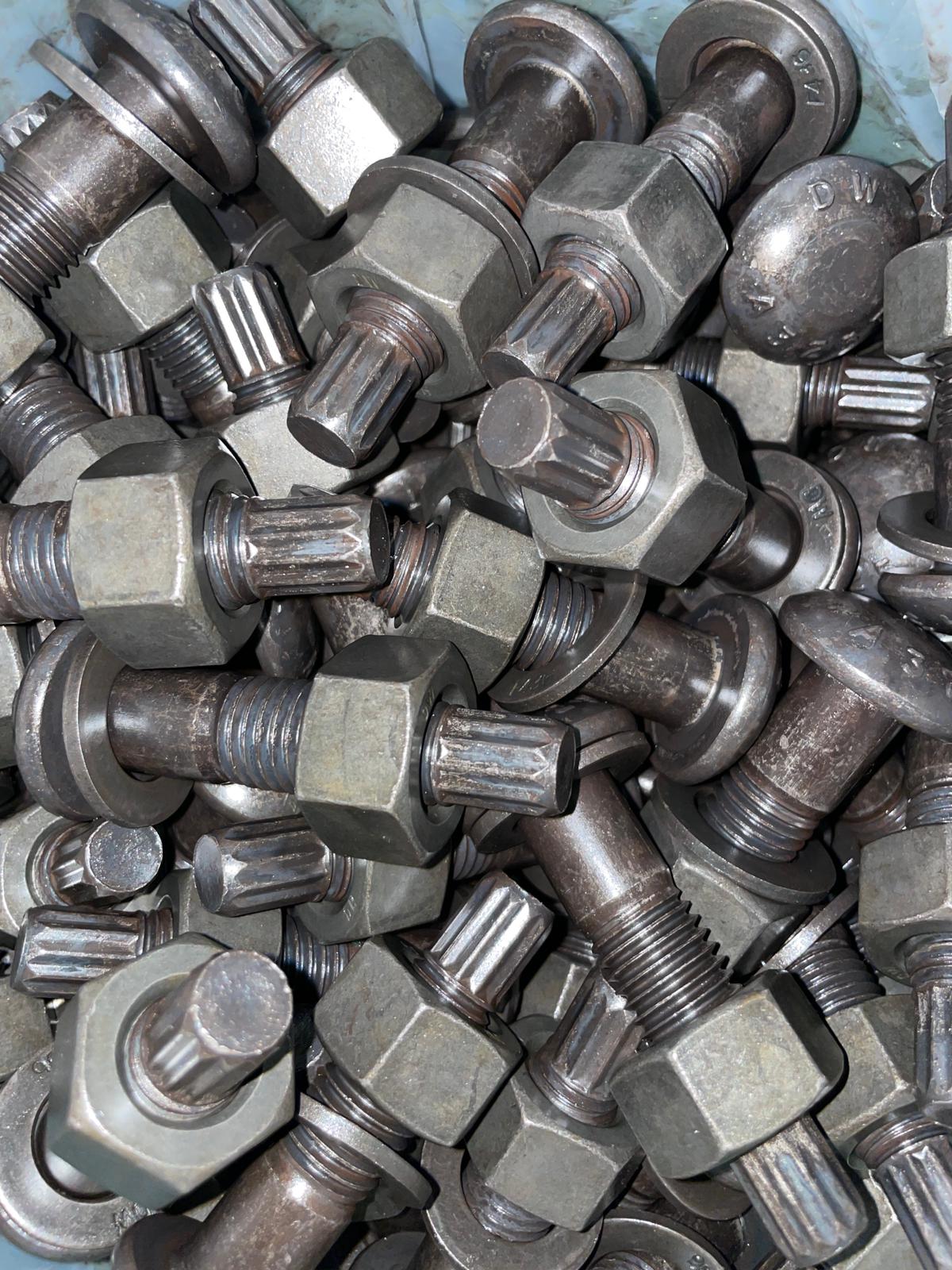
We recognize that efficiency on the job site is paramount. TC bolts allow for one-sided installation and visual inspection, significantly reducing labor costs compared to the "turn-of-nut" method required for standard heavy hex A325 bolts. Whether your project calls for traditional hex or modern TC configurations, the underlying strength of the A325 spec remains the constant.
A Note on Anchor Bolt Distinctions
A common point of confusion for those new to the industry is the difference between structural bolts and anchor bolts. While A325 bolts are designed for connecting steel-to-steel members (beams to columns, for example), they are not intended for use as anchor bolts embedded in concrete foundations.
For foundation work, including cages and embed hardware, the appropriate specification is ASTM F1554. F1554 anchor bolts are available in Grades 36, 55, and 105, specifically engineered for anchoring structural steel to concrete. We advocate for strict adherence to these distinctions to ensure the structural load path is maintained from the roof down to the dirt.
Domestic Sourcing and Compliance
In today's regulatory environment, sourcing is more than just a matter of price. Many public works projects, particularly those funded by federal or state agencies, require "Buy American" or "Domestic Only" fasteners.
LRKD Industries is committed to providing fully traceable, domestically manufactured A325 bolts. We provide comprehensive certification packages with our shipments, including Mill Test Reports (MTRs) that verify the chemical and physical properties of every lot. As a certified Minority and Woman-Owned Business (MWBE) and a vendor for the Port Authority of NY & NJ, we understand the rigorous documentation required for high-profile infrastructure projects.
Why Partner with LRKD Industries?
We believe that a supplier should be a partner in your project’s success. Fasteners are often the last item ordered but the first item needed on-site. Delays in receiving structural bolts can halt an entire erection crew, leading to cascading costs.
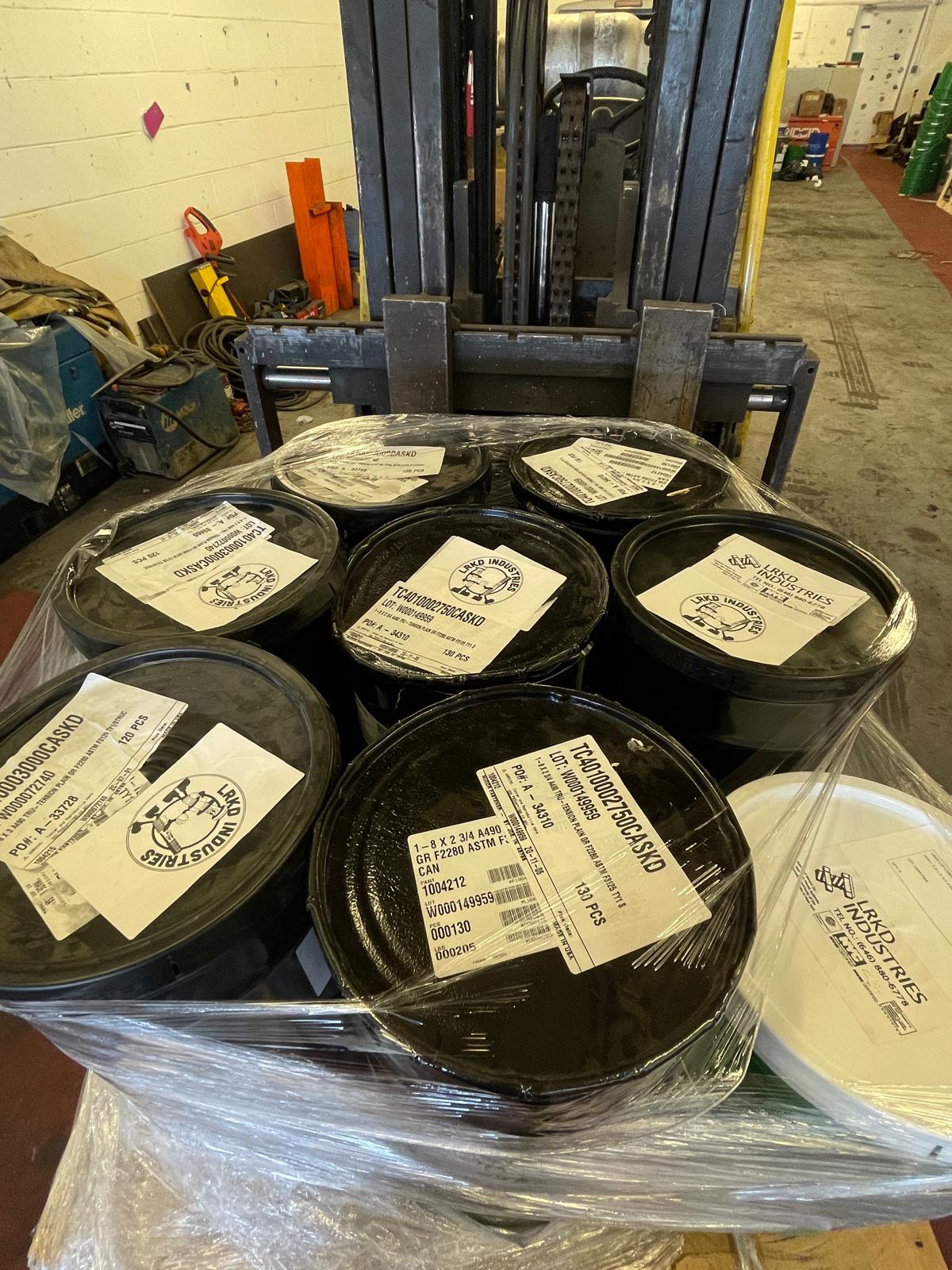
We streamline this process by maintaining a robust inventory of A325 bolts in both plain and galvanized finishes, ready for immediate dispatch. Our centralized supply chain is designed to handle the complexities of large-scale construction, providing not just the hardware, but the reliability that professional contractors demand.
From bridge construction to industrial warehousing, our team is equipped to provide technical guidance and rapid request-for-quote turnarounds. We don't just supply fasteners; we support the builders who are shaping our communities.
Summary of A325 Key Specs
To summarize the essential points for your next procurement cycle:
- Grade: High-strength, heat-treated structural steel.
- Head Style: Heavy Hex for increased bearing surface.
- Strength: 120 ksi (up to 1") or 105 ksi (over 1").
- Finish: Plain for interior/painted; HDG for exterior/corrosive environments.
- Standard: Now part of ASTM F3125 but still identified as A325.
- Usage: Steel-to-steel connections only (use F1554 for concrete anchors).
Selecting the right fastener requires a balance of technical knowledge and logistical foresight. By mastering the basics of the A325 specification, you ensure that your structural connections are secure, compliant, and built to last.
For more information on our full range of structural fasteners or to view our product catalog, contact our team today. We are here to ensure your next project starts on a firm foundation.
Author: MEDIA_LRKD