


Structural engineers and steel contractors working on complex building projects require precise, reliable, and instantly accessible technical data. When specifying high-strength structural connections for bridges, high-rise buildings, and industrial facilities, precision in fastener selection dictates structural integrity. We recognize the exacting demands placed on structural engineers, which is why we provide complete technical clarity on ASTM F3125 Grade A325 fasteners. This reference guide details A325 bolt dimensions, mechanical properties, strength values, and installation requirements to support efficient and accurate engineering design.
ASTM F3125 Grade A325 Specification Overview
The standardization of high-strength structural bolts underwent a major consolidation under ASTM F3125, which incorporates older legacy specifications into a single umbrella standard. Grade A325 represents the foundational 120 ksi strength class for heavy hex structural fasteners. We supply certified structural fasteners engineered to meet these stringent industry benchmarks without compromise.
ASTM F3125 Grade A325 bolts are produced primarily as heavy hex structural bolts with short thread lengths designed specifically for steel-to-steel connections. The specification covers two distinct material types: Type 1 carbon or alloy steel, and Type 3 weathering steel possessing atmospheric corrosion resistance. Standard nominal diameters typically range from 1/2 inch to 1-1/2 inch, providing robust clamping forces across diverse structural configurations. We ensure that every fastener meets rigorous manufacturing tolerances to maintain consistent performance on site.
Diameter, Length, and Thread Specifications
Accurate dimensional planning prevents costly delays and alignment issues during steel erection. Grade A325 heavy hex structural bolts feature specific head dimensions and thread lengths engineered for maximum engagement and clamping efficiency.
The heavy hex head design provides a larger bearing surface than standard hex bolts, distributing clamping loads securely across structural steel members. Nominal diameters of 1/2", 5/8", 3/4", 7/8", 1", 1-1/8", 1-1/4", 1-3/8", and 1-1/2" correspond to standardized thread pitches ranging from 13 UNC down to 6 UNC. Thread lengths for these bolts are calculated based on diameter and length, ensuring that the unthreaded shank can be excluded from shear planes when required by connection design. We maintain comprehensive inventories of structural bolts and compatible components to streamline your supply chain.

Heavy Hex Nuts and ASTM F436 Washers
A high-strength structural bolt assembly requires matching components engineered to handle identical mechanical demands. Grade A325 bolts must be paired with heavy hex nuts and hardened steel washers that meet corresponding ASTM standards.
For Grade A325 bolts, heavy hex nuts typically conform to ASTM A563 (such as Grade DH or DH3) or ASTM A194 Grade 2H, providing the necessary proof load strength to develop the full tensile capacity of the bolt. Additionally, hardened steel washers conforming to ASTM F436 are required under the rotated element during installation to protect structural steel surfaces and ensure uniform load distribution. We provide fully matched fastener assemblies including heavy hex nuts and washers to eliminate assembly discrepancies on your project sites.
Mechanical Properties and Strength Values
Structural calculations depend on precise mechanical property values to verify load-bearing capacity under ultimate and service loads. Under the ASTM F3125 specification, Grade A325 fasteners are classified within the 120 ksi tensile strength tier.
The mechanical properties for Grade A325 structural bolts remain consistent across standard diameters:
- Minimum Tensile Strength ($F_u$): 120 ksi (120,000 psi)
- Minimum Yield Strength ($F_y$): 92 ksi (92,000 psi)
- Minimum Elongation in 2 inches: 14 percent
- Minimum Reduction of Area: 35 percent
These properties ensure predictable behavior under high tensile stress. For example, a standard 3/4-inch diameter Grade A325 bolt possesses a tensile stress area of approximately 0.334 square inches, yielding a raw ultimate tensile capacity exceeding 40,000 pounds. We provide certified mill test reports with our structural bolts to verify that every batch meets these exacting mechanical thresholds.
Shear Strength and Design Considerations
While tensile strength defines the bolt's resistance to direct pull-out forces, shear strength governs its performance in resisting forces parallel to the connected steel plates. Engineering practice establishes ultimate shear strength at approximately 60 percent of the ultimate tensile strength ($F_u$).
When evaluating shear capacity, engineers must account for whether threads are included in or excluded from the shear plane. When threads are excluded, the larger unthreaded shank area provides superior shear resistance compared to threaded-plane conditions. We recognize the critical nature of shear design in structural connections, which is why our team offers in-house detailing and engineering services to review project specifications and optimize fastener selection before fabrication begins.
Installation Torque and Pretension Recommendations
Achieving structural stability relies not only on fastener dimensions and material strength, but also upon proper installation tension. ASTM F3125 Grade A325 bolts are designed as high-strength structural fasteners that require controlled pretensioning to function correctly in slip-critical or bearing-type connections.
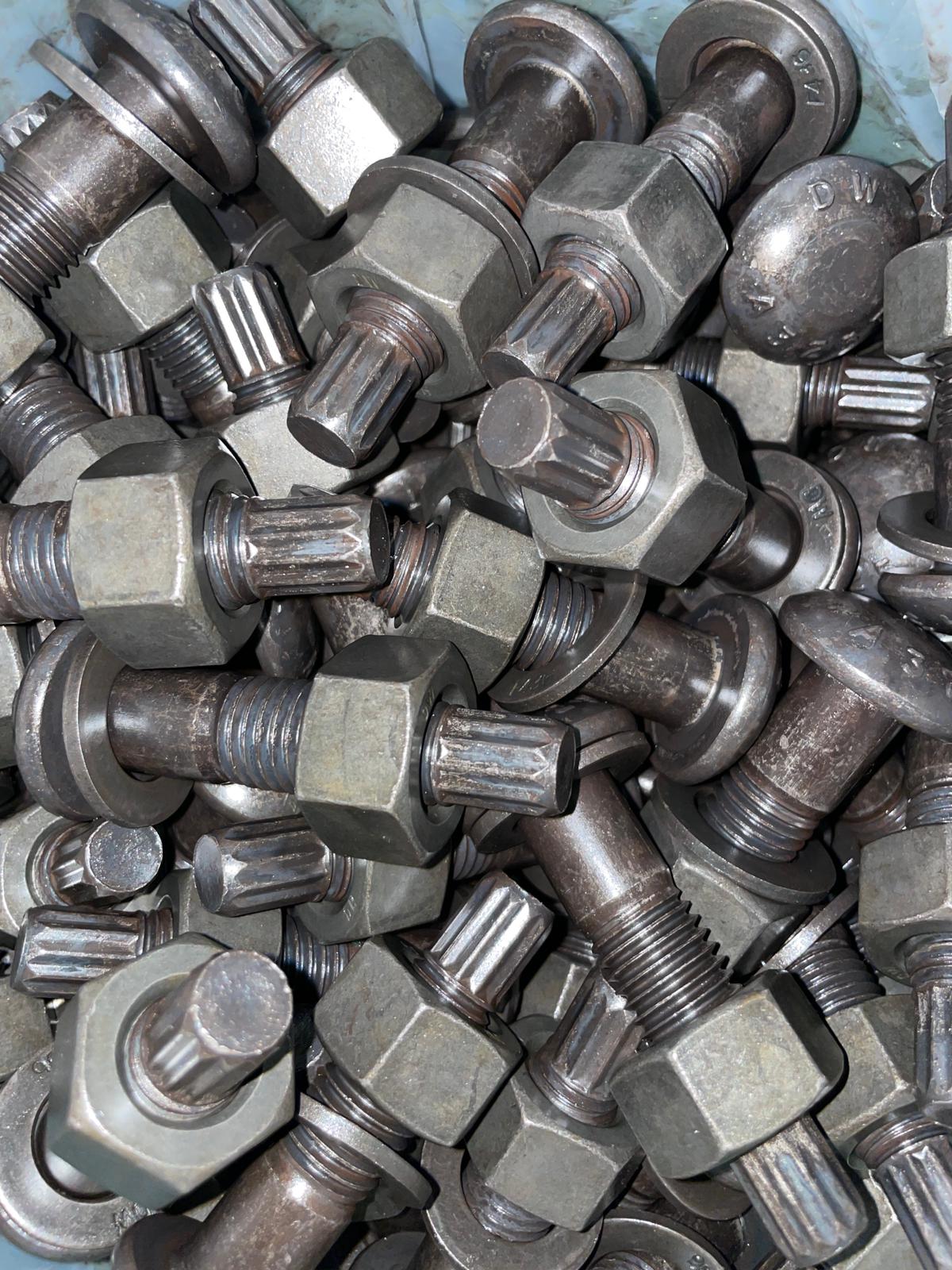
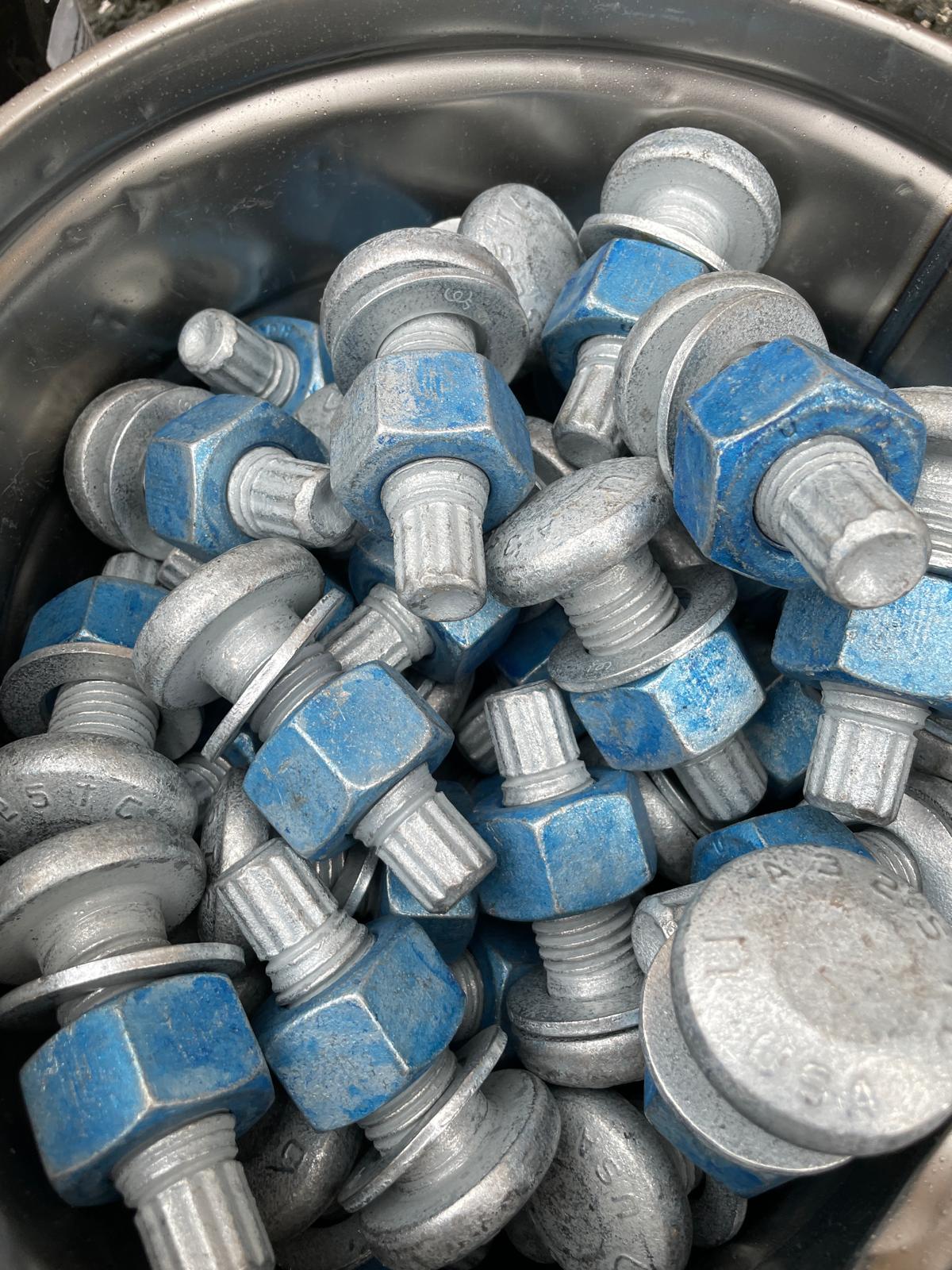
Installation methods typically include the turn-of-nut method, calibrated wrench tightening, or direct tension indicator (DTI) usage. Required minimum bolt pretension is specified at approximately 70 percent of the specified minimum tensile strength. When utilizing torque-based estimation methods, installers apply empirical nut factors dependent on lubrication and surface finishes (such as plain, galvanized, or coated). We supply high-performance fasteners alongside specialized tension control bolts that simplify pretensioning by shearing off at the correct tension level.

Comparing A325 and A490 Structural Fasteners
Engineering design frequently requires selecting between Grade A325 and higher-strength alternatives such as ASTM F3125 Grade A490 bolts. Understanding the distinction ensures optimal material utilization and safety.
While Grade A325 delivers a minimum tensile strength of 120 ksi, Grade A490 structural bolts provide a higher tensile strength tier of 150 ksi, engineered for extremely high-load applications. However, A490 bolts cannot be hot-dip galvanized due to hydrogen embrittlement risks, whereas A325 bolts are readily available in mechanical or hot-dip galvanized finishes. Furthermore, structural engineers must never confuse structural bolting specifications with anchor bolts; foundation embedments and anchor cages require dedicated specifications such as ASTM F1554 Grades 36, 55, or 105 rather than A325 or A490 bolts. We maintain extensive inventories of both A325 and A490 structural solutions to support any structural steel requirement.
Partnering with Reliable Fastener Specialists
Selecting the correct fastener dimensions, mechanical properties, and installation methods forms the bedrock of safe and durable construction. We recognize the complex pressures facing modern contractors and engineers, which is why we deliver unwavering reliability, prompt customer support, and comprehensive building solutions. Whether your project demands standard A325 heavy hex bolts, specialized tension control assemblies, or precision-engineered foundation components, we provide the dependable supply and technical expertise required to build with absolute confidence.
Author: MEDIA_LRKD