

In the demanding world of structural steel erection, precision and efficiency are not merely goals; they are requirements. For decades, the industry relied on traditional heavy hex bolts, requiring complex torque-tension calibrations and two-person installation teams. The introduction of Tension Control (TC) bolts: often referred to as "twist-off" bolts: revolutionized how we approach high-strength connections.
At LRKD Industries, we recognize the challenges project managers and engineers face when selecting the appropriate fastening system for heavy infrastructure and industrial projects. Understanding the nuances between A325 and A490 TC bolts is essential for ensuring structural integrity, regulatory compliance, and project profitability. This guide provides a comprehensive technical overview of TC fastening systems and their application in modern construction.
The Mechanics of Tension Control Fastening
A Tension Control bolt is a heavy-duty fastener designed with a unique "spline" at the end of the shank. Unlike traditional bolts where tension is measured indirectly through torque, a TC bolt is engineered to provide a specific level of tension automatically. This is achieved through the use of a specialized electric shear wrench.
The shear wrench features two counter-rotating sockets. The inner socket grips the bolt spline, while the outer socket rotates the nut. When the required tension is reached within the bolt, the spline shears off, leaving the fastener perfectly tensioned. This "twist-off" mechanism eliminates the need for manual torque wrenches and reduces the potential for human error in the field.
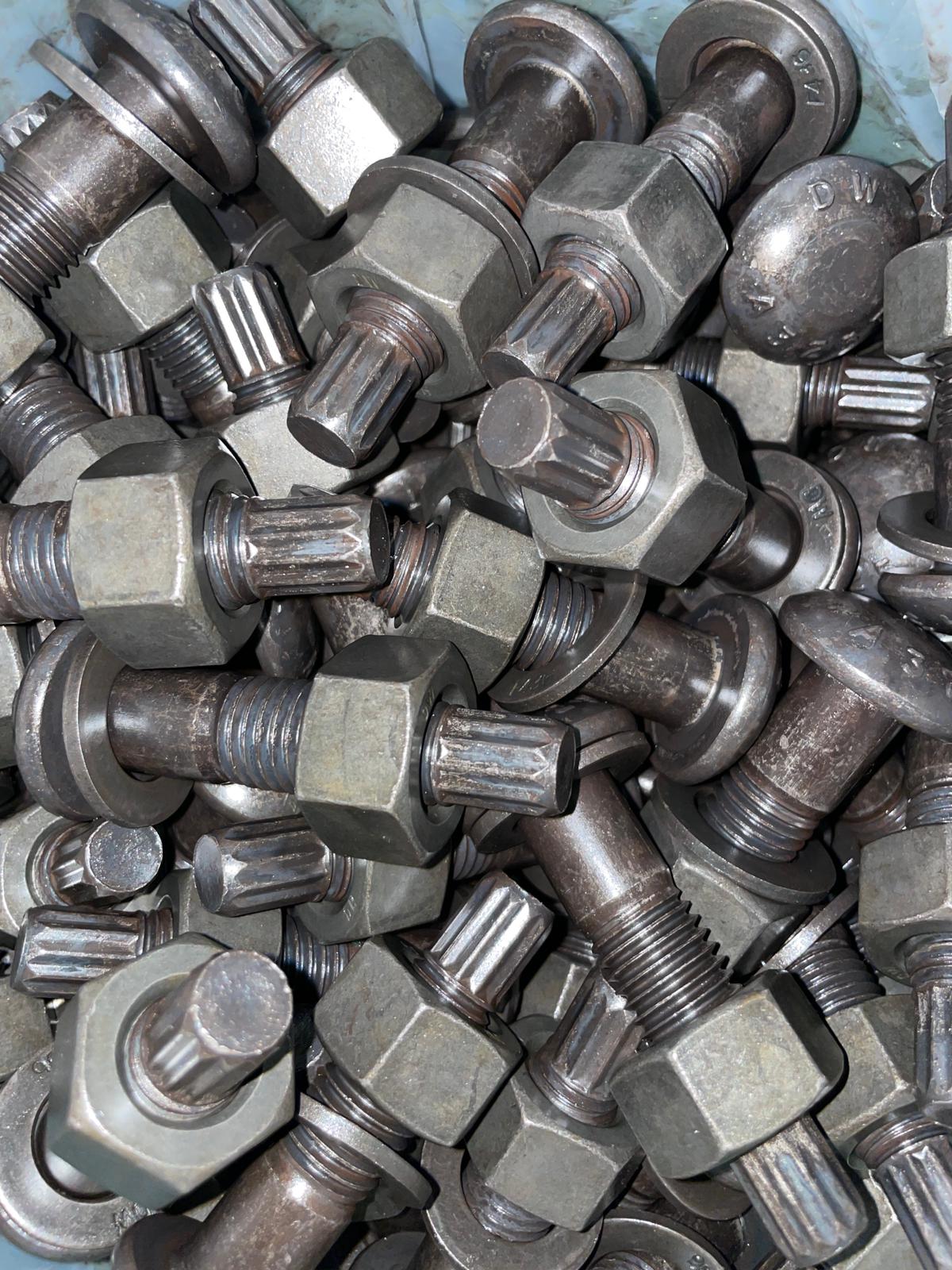
We provide these systems to ensure that our partners can achieve consistent, repeatable results across thousands of connections without the fatigue associated with traditional methods.
Comparing A325 and A490 TC Bolts
The two primary grades used in structural steel are ASTM A325 and ASTM A490 (now often categorized under the unified ASTM F3125 standard). While they may appear similar at a glance, their material properties and application limits differ significantly.
ASTM A325: The Structural Workhorse
ASTM A325 bolts are manufactured from medium carbon steel that has been quenched and tempered. They are the most common fasteners used in steel construction, providing a reliable balance of strength and ductility.
- Tensile Strength: Minimum 120,000 PSI for diameters up to one inch.
- Corrosion Protection: A325 bolts are compatible with hot-dip galvanizing. This makes them the preferred choice for bridges, highway structures, and any application exposed to the elements.
- Ductility: These bolts offer excellent deformation capacity, which is vital in seismic zones where structural flexibility can prevent catastrophic failure.
ASTM A490: The High-Strength Alternative
When a project demands higher load-bearing capacity without increasing the number of fasteners or the size of the steel members, A490 bolts are the solution. These are made from alloy steel and undergo a rigorous heat-treatment process to reach higher strength levels.
- Tensile Strength: 150,000 to 173,000 PSI.
- Loading Capacity: A490 bolts offer roughly 25% to 45% more strength than A325 bolts, allowing for more compact connection designs.
- Finish Limitations: A490 bolts cannot be hot-dip galvanized. The high strength of the alloy makes them susceptible to hydrogen embrittlement during the galvanizing process, which can lead to sudden, brittle fractures. Instead, they are typically used plain or with specific mechanical coatings.
We recommend thoroughly evaluating environmental factors before selecting A490 bolts, as their strength comes with a higher sensitivity to corrosion and environmental stress.
The Advantages of One-Man Installation
One of the primary reasons TC bolts have become the standard for bridge and high-rise construction is the simplified installation process. Traditional hex bolts often require a "backup" wrench to prevent the bolt head from spinning, necessitating a two-person crew.
TC bolts are installed entirely from one side of the connection. Because the shear wrench grips the spline, there is no need to hold the head of the bolt. This significantly reduces labor costs and enhances safety, particularly when working at heights or in confined spaces.
Furthermore, inspection is simplified. In a traditional setup, an inspector must use a calibrated torque wrench to verify a percentage of the fasteners. With TC bolts, the inspection is visual: if the spline is gone, the bolt is tensioned. This streamlined verification process accelerates project timelines and provides immediate peace of mind for site supervisors.
Finish Options and Environmental Considerations
Selection of the correct finish is just as critical as selecting the grade. For projects in corrosive environments, such as coastal regions or industrial processing plants, washers and bolts must be able to withstand the elements.
As noted, A325 bolts are frequently galvanized. This provides a sacrificial zinc coating that protects the underlying steel from rust. For weathering steel applications (ASTM A588 steel), both A325 and A490 bolts are available in Type 3, which develops a protective patina over time, matching the appearance and corrosion resistance of the structure.
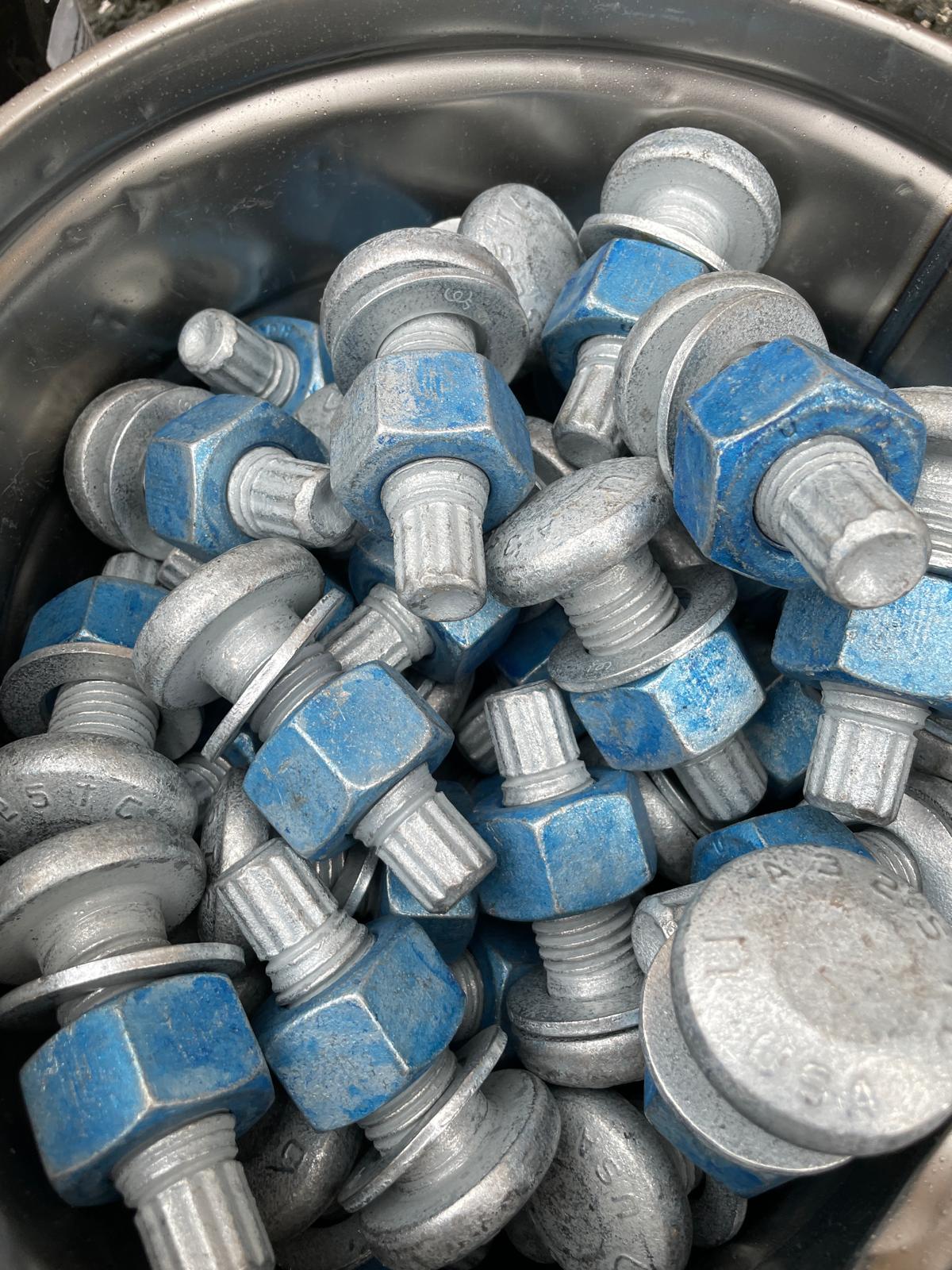
When dealing with hex bolts or TC fasteners in high-strength applications, we emphasize the importance of using compatible nuts and washers to maintain the integrity of the tensioning system.
Structural Integrity in Infrastructure Projects
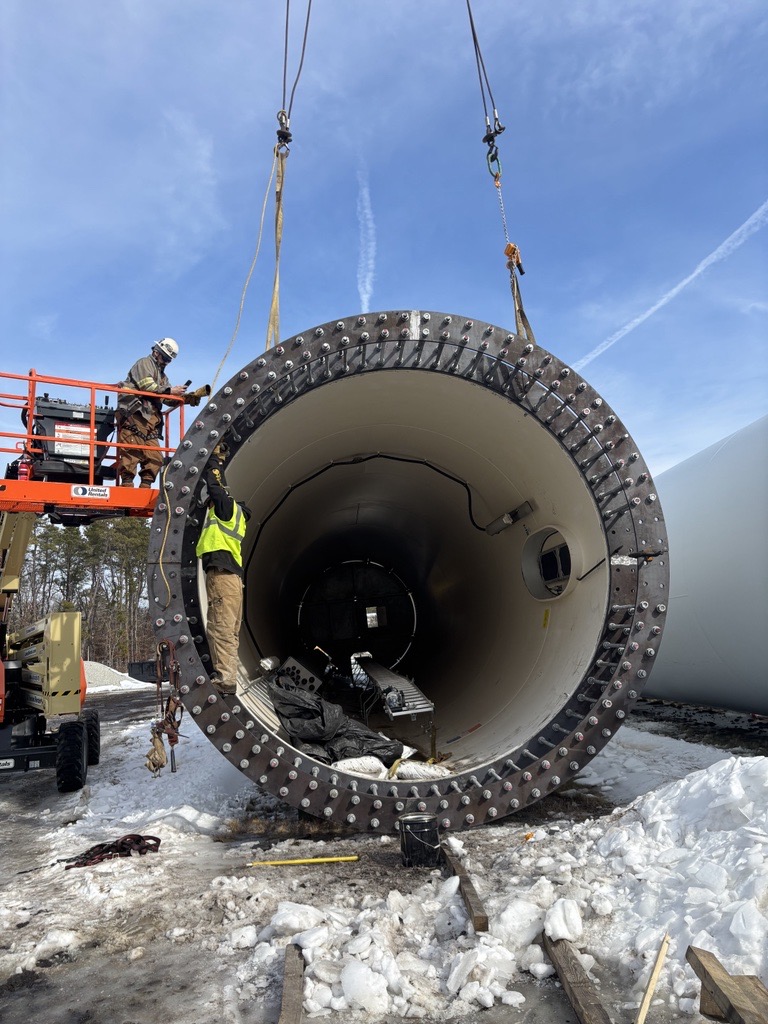
TC bolts are indispensable in infrastructure projects like bridges and power generation facilities. These structures are subject to dynamic loads: vibration, wind, and traffic: that can loosen standard fasteners over time. The high, consistent pretension provided by A325 and A490 TC bolts ensures that the friction between the steel plates (the slip-critical connection) remains intact, preventing movement and wear.
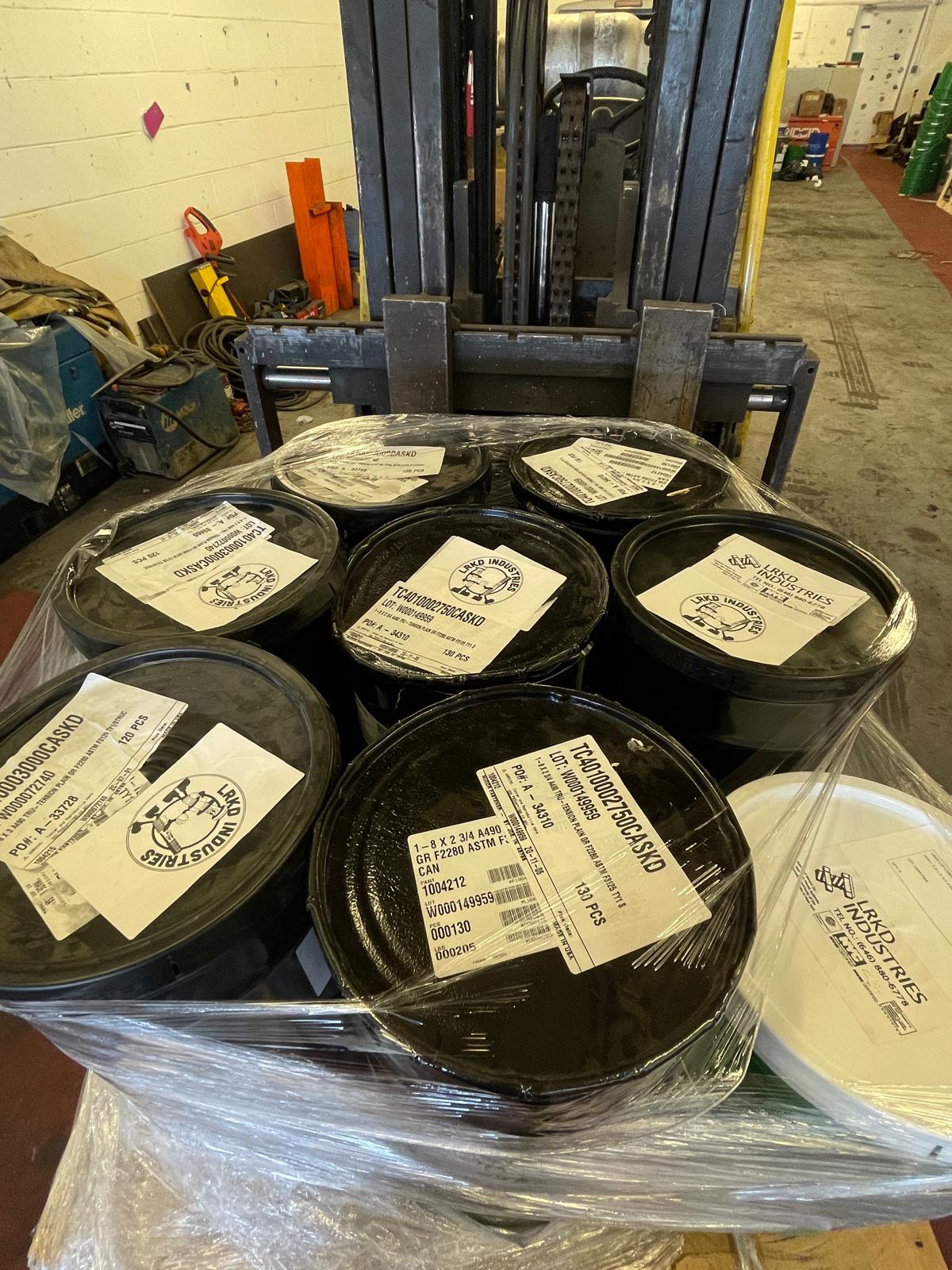
In heavy industry, such as wind turbine construction or large-scale manufacturing plants, the reliability of the fastener is the foundation of the entire operation. We understand that a single fastener failure can lead to significant downtime or safety hazards. That is why LRKD Industries prioritizes traceability and quality assurance for every bucket of structural bolts we ship.
Pre-Installation Testing and Quality Control
While TC bolts are designed for ease of use, they are precision instruments. The Research Council on Structural Connections (RCSC) mandates pre-installation testing using a tension calibrator (often called a Skidmore-Wilhelm machine). This test ensures that the bolt, nut, and washer assembly: along with the shear wrench being used: properly achieves the required tension before the spline shears.
Testing must be performed:
- At the start of the project.
- Whenever a new lot of fasteners is used.
- Whenever the condition of the fasteners changes (e.g., if they become dirty or lose their lubrication).
Lubrication is a critical component of TC bolt performance. If the lubricant on the nuts dries out, the friction increases, and the spline may shear off before the bolt reaches its required tension. We advise our clients to keep fasteners in their original, sealed containers until the moment of installation to maintain the factory-applied lubrication.
Choosing the Right Fastener for Your Project
Selecting between A325 and A490 TC bolts involves balancing strength requirements, environmental exposure, and budget. While A490 bolts offer superior strength, they require more stringent handling and cannot be galvanized. A325 bolts offer versatility and cost-effectiveness for the majority of structural applications.
It is also important to distinguish between structural fasteners and foundation components. While A325 and A490 bolts secure the steel frame, foundation cages and anchors require different specifications, such as ASTM F1554 Grades 36, 55, or 105. Using the correct specification for the correct application is the hallmark of professional engineering.
At LRKD Industries, we provide more than just hardware. We offer a comprehensive range of products, from TC bolts and screws to drill bits, ensuring that your team has the tools necessary to build with confidence.
Commitment to Excellence
We are dedicated to supporting the builders and fabricators who shape our infrastructure. As a minority- and woman-owned business certified by the Port Authority of NY & NJ, we understand the importance of reliability, transparency, and high-quality supply chains.
Whether you are working on a high-rise in the city or a bridge in a rural corridor, the fasteners you choose are the silent guardians of the structure’s integrity. By mastering the use of A325 and A490 TC bolts, you ensure that your projects are not only built to last but are also executed with the highest level of professional efficiency.
For more information on our structural fastening solutions and to view our full inventory, visit our collections page or contact our technical sales team today.
Author: MEDIA_LRKD