

Foundation work is the most unforgiving phase of any construction project. When a steel column arrives on-site and the base plate does not line up with the anchor bolt cage, the project comes to a grinding halt. At LRKD Industries, we recognize that precision in the fabrication and installation of anchor bolt cages is the difference between a seamless pour and a multi-thousand-dollar rework order.
The stakes are particularly high when dealing with heavy-duty infrastructure and industrial builds. Whether you are installing a wind turbine foundation or a high-rise support column, the integrity of your f1554 anchor bolts determines the long-term safety of the structure. Below, we outline seven common mistakes made during the design, assembly, and installation of anchor bolt cages and how to ensure your project remains on schedule.
1. Confusing ASTM Specifications: The F1554 vs. Structural Bolt Trap
One of the most frequent and critical errors in foundation design is the misidentification of bolt specifications. It is a common misconception that high-strength structural bolts, such as ASTM A325 or A490, are interchangeable with anchor bolts. This is incorrect and can lead to structural failure.
Structural bolts like A325 are designed for steel-to-steel connections and are limited in length and thread style. For foundation applications, f1554 anchor bolts are the industry standard. The ASTM F1554 specification covers three grades: 36, 55, and 105: each designed specifically for anchoring structural supports to concrete foundations. Grade 55, for instance, is often preferred for its weldability and ductility, while Grade 105 offers higher tensile strength for extreme load requirements.
We recommend reviewing our guide to F1554 grades to ensure your material callouts match the engineering requirements of your specific cage assembly.
2. Neglecting Template Precision and Jig Stability
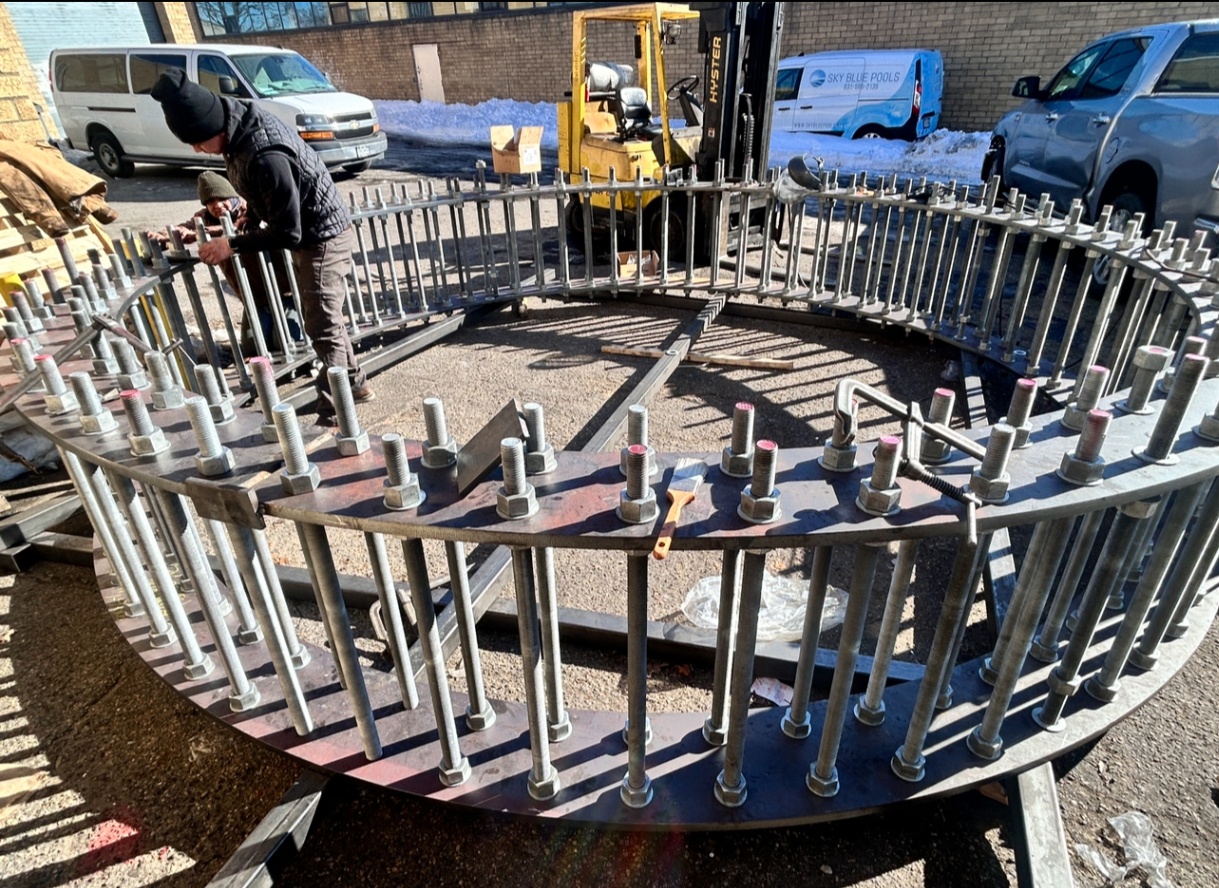
An anchor bolt cage is only as accurate as the template used to hold it together. Many contractors attempt to fabricate cages using field-cut plywood or thin metal scraps. These materials often warp or shift under the weight of the bolts or the pressure of the concrete pour.
When bolts are even a fraction of an inch out of alignment, the steel base plate will not fit. Precision-engineered steel templates are essential for maintaining the correct bolt circle or rectangular pattern. These templates should be rigid enough to withstand the vibration of the concrete and should be verified against shop drawings multiple times before the pour.
3. Improper Projection Height and Thread Exposure
The "projection" refers to the amount of bolt extending above the concrete surface. If the projection is too low, there will not be enough thread to engage the nut and washer after the base plate and grout are installed. If it is too high, the bolt may interfere with the column's internal components or require excessive shimming.
Calculations for projection must account for:
- The thickness of the embed plate (if used).
- The thickness of the leveling nuts and washers.
- The thickness of the column base plate.
- The required grout thickness (typically 1 to 2 inches).
- The minimum "nut engagement" (usually at least two threads above the top nut).
Failing to account for these variables during the cage assembly stage is a primary cause of field rework.
4. Failing to Protect Threads During the Pour
Concrete is a harsh, abrasive material. During the pour, slurry can easily coat the threads of your f1554 anchor bolts, making it impossible to thread nuts later. While this seems like a minor inconvenience, cleaning hardened concrete from dozens of bolts is labor-intensive and can damage the zinc coating or the threads themselves.
We advocate for a simple but mandatory protection protocol: wrap all exposed threads in heavy-duty tape or use specialized plastic caps. This small step ensures that once the concrete is set, the nuts can be applied smoothly, maintaining the integrity of the fastener system.
5. Poor Coordination Between the Cage and Rebar
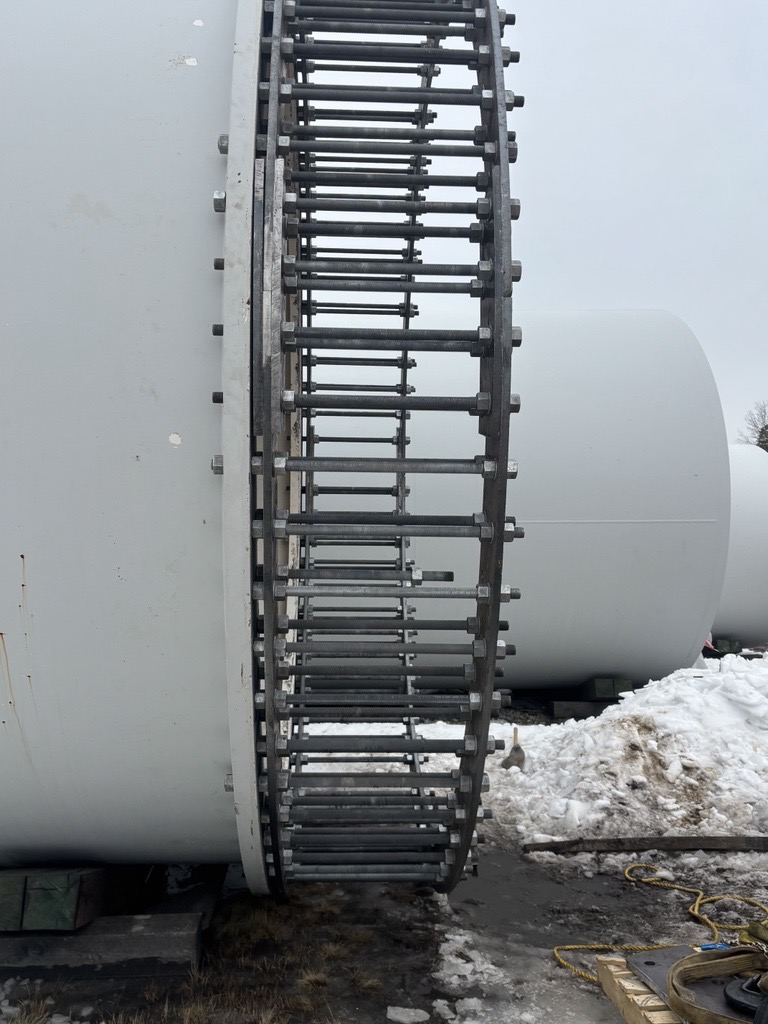
An anchor bolt cage does not exist in a vacuum; it must live inside a dense forest of reinforcing steel (rebar). A common mistake is designing a cage that looks perfect on a shop drawing but cannot be placed because it clashes with the rebar cage already in the hole.
Coordination between the steel fabricator and the rebar contractor is vital. In many cases, "headed" bolts or large hooks at the bottom of the cage require specific clearance. If the cage cannot be lowered into the foundation properly, workers may be tempted to force it, leading to misaligned bolts or compromised rebar coverage. Early communication regarding the anchor bolt fabrication process can prevent these physical clashes on-site.
6. Ignoring Verticality and "Lean"
It is not enough for the bolts to be in the right horizontal position; they must be perfectly vertical. A "leaning" bolt creates a massive headache when trying to slide a thick steel base plate over a group of bolts. If the bolts are not plumb, the plate will bind, and contractors are often forced to "torch out" the holes in the base plate: a practice that weakens the connection and often requires an engineer’s sign-off for repair.
Utilizing top and bottom templates within the anchor bolt cage helps maintain verticality. A single template at the top is rarely enough to prevent the bottom of the bolts from shifting during the pour. Double-template systems ensure the bolts remain parallel and plumb from top to bottom.
7. Overlooking the Integration of Embed Plates
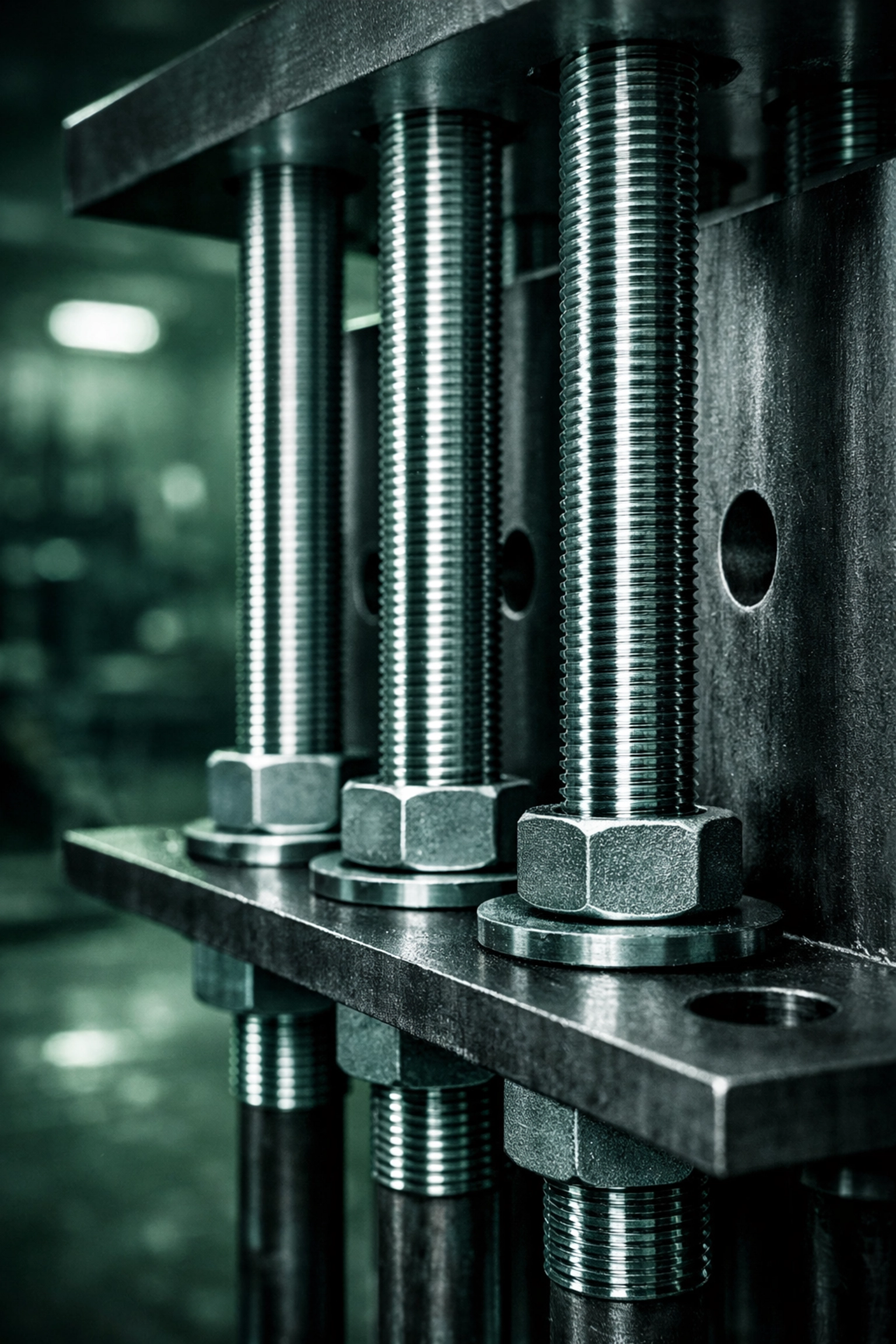
For many industrial applications, the anchor bolt cage is integrated with an embed plate to provide a flush mounting surface or to transfer shear loads more effectively. A common mistake is treating the cage and the embed plates as separate entities during procurement.
When these components are fabricated separately by different vendors, tolerances can stack up against you. We believe in a centralized approach where the cage and plates are fabricated and test-fitted as a single unit before shipping to the jobsite. This "pre-fit" strategy eliminates the risk of mismatched bolt holes and ensures that the assembly is ready for immediate installation upon arrival.
Summary: The Path to Precision
Avoiding rework in foundation construction requires a shift in mindset from "good enough" to "exact." By focusing on the correct f1554 anchor bolts specifications, utilizing rigid steel templates, and protecting the threads during the pour, you can ensure that your foundation is a solid asset rather than a liability.
At LRKD Industries, we specialize in the custom fabrication of anchor bolt cages and structural supply. We understand the pressures of New York construction timelines and the necessity for zero-error fabrication. From providing detailed shop drawings to delivering fully assembled cages to your site, our team is dedicated to supporting your project's structural integrity.
If you are preparing for a foundation pour and need expert guidance on anchor bolt fabrication and industry applications, contact us today to discuss your requirements.
Author: MEDIA_LRKD